
Salvador Carnival 2027 — Complete Guide to the World’s Largest Street Party
Salvador Carnival is the largest street party on Earth — around 2 million people per day dancing through the city behind trios elétricos for six straight days. There is no Sambadrome. There are no spectators. Everyone participates. This guide covers everything you need to know before you go.
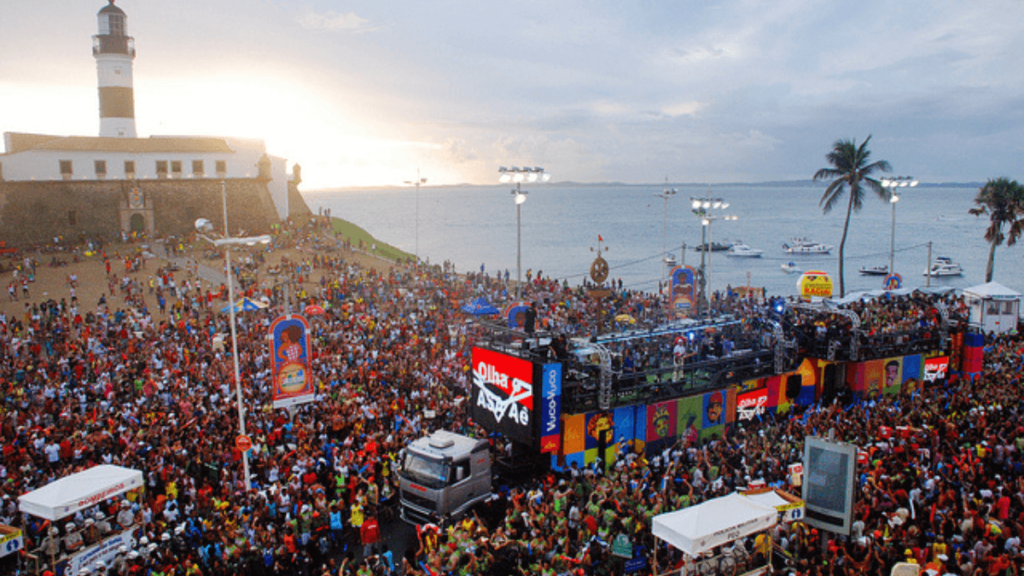
A trio elétrico at Salvador Carnival — a massive truck with a live band on top, surrounded by hundreds of thousands of people dancing through the city streets.
Dates & Schedule
How Salvador Carnival Works
Salvador Carnival has no Sambadrome, no parade route with grandstands, and no spectators. The format is entirely different from Rio. Sound trucks called trios elétricos — massive vehicles loaded with live bands and speaker systems powerful enough to be heard half a kilometer away — move slowly through the streets of three different circuits across the city, followed by hundreds of thousands of people dancing in their wake.
The music is axé — Salvador’s own genre rooted in Afro-Brazilian rhythms, created in the city and inseparable from its Carnival identity. The sound of a full trio elétrico with the bateria (percussion section) at full volume is an experience that has no equivalent anywhere else in the world.
The key distinction in Salvador Carnival is how you participate. There are three ways:
- Pipoca (free) — you follow the trios elétricos in the street outside the roped-off area. No ticket, no cost, total immersion. The most authentic experience but also the most intense and physically demanding.
- Abadá (paid) — a branded t-shirt that gets you inside the rope barrier directly behind a specific trio elétrico and its bloco. Includes access to the bloco’s structure, drinks service, and security personnel.
- Camarote (paid) — an elevated private area alongside the parade route with shade, food, open bar, private bathrooms, and security. You watch the trios pass rather than following them.
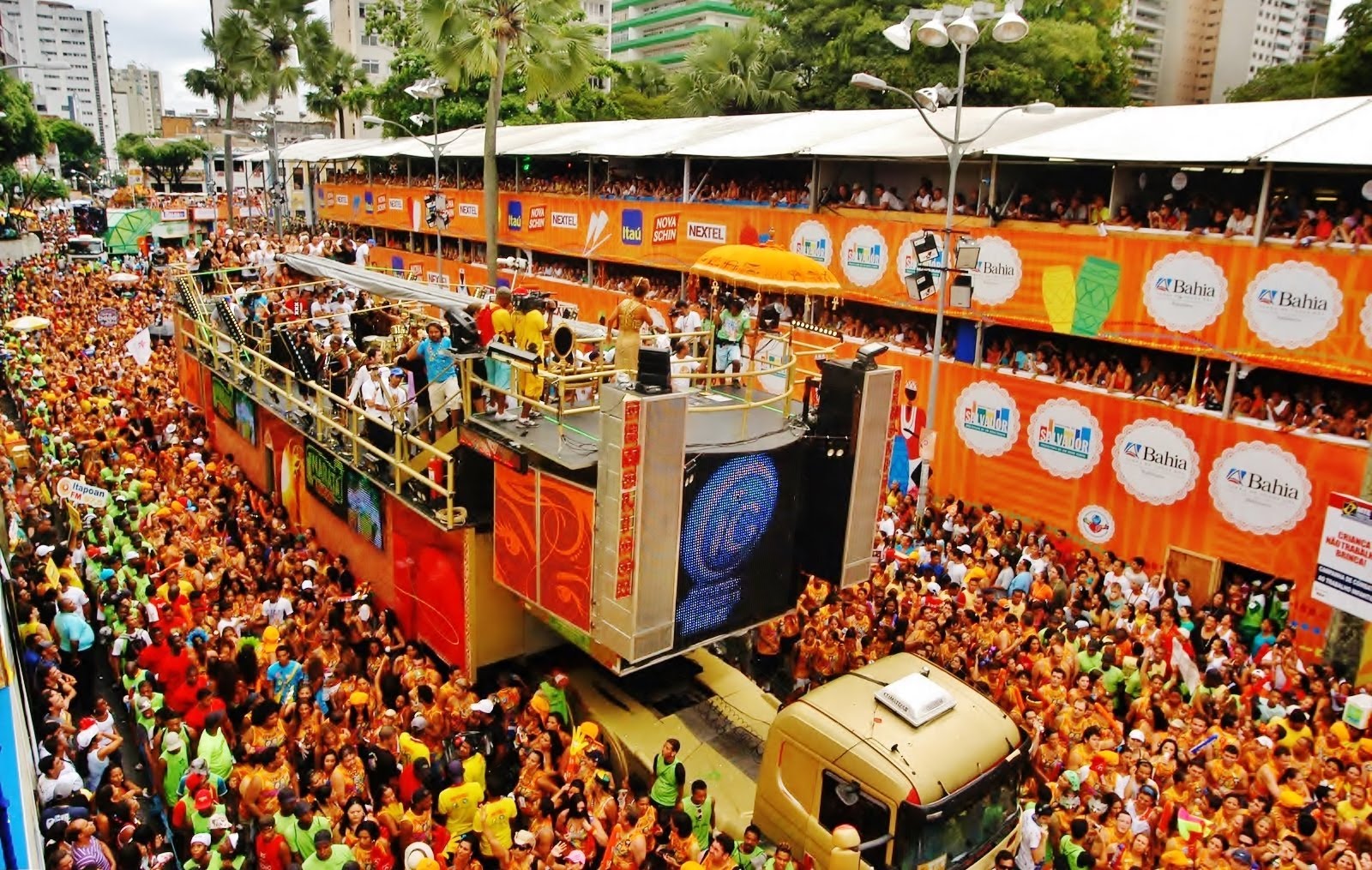
The pipoca — the free zone outside the rope barrier where millions of Bahians and visitors dance through the streets behind the trios elétricos.
The Three Circuits
Tickets — Abadá, Camarote, or Pipoca?
Following the trios in the pipoca (free zone outside the rope barrier) is how most Brazilians experience Salvador Carnival. No ticket required — you simply join the crowd in the street. The experience is intense: hot, crowded, loud, and genuinely extraordinary. The main risk is pickpocketing and phone theft in the dense crowd. Carry minimal valuables — some veterans go with only a small amount of cash in a money belt and nothing else.
An abadá is a branded t-shirt that gets you inside the rope barrier of a specific bloco, walking directly behind its trio elétrico. You’re surrounded by security personnel, have access to drinks service within the bloco structure, and are protected from the densest crowd pressure. For first-time visitors, an abadá with a well-known bloco on at least one or two days is the recommended way to experience Salvador Carnival — the combination of security, drinks service, and proximity to the music is significantly better than the pipoca at this price point. Blocos with international tourists include Chiclete com Banana, Bell Marques, and Ivete Sangalo’s bloco.
Camarotes are elevated private areas alongside the parade routes with shade, seating, open bar, food service, and private bathrooms. You watch the trios pass from a fixed position rather than following them through the streets. The comfort difference versus the pipoca is enormous — air conditioning or fans, no crowd pressure, clean facilities. The trade-off is that you’re watching rather than participating. Camarotes are popular with visitors who want to experience Salvador Carnival but prioritize comfort over immersion. The most popular options sell out months in advance.
Not sure whether to choose Rio or Salvador for Carnival? Our comparison guide gives you an honest breakdown of both experiences.
Rio vs Salvador Carnival →Where to Stay
The location of your accommodation during Salvador Carnival has a significant impact on your experience. The Barra–Ondina circuit runs along the seafront — staying in Barra or Ondina means walking distance to the main circuit. The Campo Grande circuit is in the historic center area.
Barra is the top recommendation for most international visitors. Close to the Barra–Ondina circuit, good restaurant and bar infrastructure, and safer for tourists than some central neighborhoods. The Barra lighthouse area is one of the most lively spots in Salvador during Carnival week.
Ondina is quieter than Barra with some good hotel options along the seafront. Still close to the main circuit and a comfortable base for Carnival week.
Pelourinho / Centro is more atmospheric but requires more security awareness. Close to the Batatinha circuit and the historic center, but the neighborhood demands more vigilance than Barra.
Rio Vermelho — Salvador’s bohemian neighborhood — is further from the main circuits but has the best restaurants and bars in the city. Worth considering if you want a base outside the Carnival chaos for evenings.
How Much Does Salvador Carnival 2027 Cost?
| Category | Budget (pipoca) | Mid-range (abadá) | Premium (camarote) |
|---|---|---|---|
| Carnival access per day | Free | R$400–1,500 | R$800–3,000+ |
| Hotel per night | $40–70 (hostel) | $150–300 | $400–800+ |
| Food per day | $20–30 | $40–70 | Included in camarote |
| Transport per day | $5–15 | $15–30 | $30–60 |
| Total 7 nights (excl. flights) | $500–900 | $1,800–3,500 | $5,000–12,000+ |
Safety During Salvador Carnival
Salvador requires more safety awareness than Rio during Carnival. The city is less internationally experienced with tourist management and pickpocketing in the pipoca is extremely common. This is not a reason to avoid Salvador Carnival — millions of people attend safely every year — but it requires preparation.
- Carry nothing valuable in the pipoca — no phone, no wallet, no jewelry. Use a money belt under your clothing with only the cash you need for the day.
- Abadá provides significantly more security — the rope barrier and security personnel inside the bloco dramatically reduce theft risk compared to the open pipoca.
- Use Uber to get to and from circuits — don’t walk between circuits at night, particularly in unfamiliar areas.
- Stay with your group — the crowds are enormous and disorienting. Agree on a meeting point before entering any circuit.
- Hydration is critical — 35°C+ with high humidity, hours of dancing. Dehydration and heat exhaustion are common. Drink water regularly, not just beer.
- Watch your drinks — drug-facilitated theft has been reported at Salvador Carnival. Don’t accept drinks from strangers and keep an eye on your cup.
Essential Tips for Salvador Carnival 2027
- Arrive on the Wednesday or Thursday before Carnival starts. The city energy builds from the moment you arrive and you need a day to orient yourself before the main circuits begin.
- Wear comfortable shoes you don’t mind destroying. You will walk and dance for hours on streets covered in beer, sweat, and worse. Do not wear anything you value on your feet.
- Learn a few axé songs before you go. The experience of knowing the songs everyone is singing around you is completely different from not knowing them. Listen to Ivete Sangalo, Bell Marques, and Chiclete com Banana before your trip.
- The Batatinha circuit in Pelourinho is worth at least one afternoon. Smaller, more cultural, and genuinely different from the main circuits — traditional music, giant puppets, and the colonial streets of the UNESCO historic center as a backdrop.
- Rest days are important. Six days of Salvador Carnival at full intensity without rest days is genuinely exhausting. Plan at least one recovery morning in the schedule.
- Book abadás as soon as the schedule is announced — usually October or November 2026. The most popular blocos sell out within days of going on sale.