
Carnival Brazil 2027 — First-Time Visitor Guide
Attending Carnival in Brazil for the first time involves decisions that seem obvious in hindsight and confusing in advance. Which city? Which dates? What do you actually need to book now? What will you regret not doing? This guide answers all of it — practically and honestly.

Rio Carnival 2027 — the most internationally recognized Carnival in the world and the recommended starting point for first-time visitors to Brazilian Carnival.
Your First Decision — Which City?
The single most important decision for a first-time Carnival visitor is which city to go to. Each one offers a fundamentally different experience — not just a different version of the same thing.
Dates & How Long to Stay
Official Carnival 2027 dates: February 5–10, 2027. Carnival Tuesday falls on February 9. Ash Wednesday (February 10) marks the official end.
In practice, Carnival in Brazil starts before the official dates and the best blocos in Rio and São Paulo begin weeks earlier. If you can only travel for the official week, arrive by Thursday February 4 to settle in before the main action begins on Friday February 5.
Minimum recommended stay: 5 nights. Less than five nights means either missing key events or spending most of your time exhausted and disoriented. Carnival is physically and logistically demanding. You need rest days built in.
Ideal stay: 7 nights. Arrive Wednesday or Thursday before Carnival, leave the following Monday or Tuesday. This gives you the full week without missing anything important.
What to Book Now
Book immediately — July 2026
- Hotel or accommodation in your chosen city — Carnival week hotels sell out months in advance
- International flights — prices rising steadily toward February
- VIP Camarote packages if applicable — already on sale and selling fast
Book when available — August–October 2026
- Sambadrome tickets (Rio) — grandstand tickets release August 2026
- Sambadrome tickets (São Paulo) — similar timeline
- Salvador abadás — bloco schedule released October/November 2026, buy immediately
- Recife blocos — most are free, no advance booking needed
Prepare before you leave
- Notify your bank of travel to Brazil
- Download Uber app with payment set up
- Check visa requirements for your passport
- Get travel insurance covering Brazil
- Pack a compact rain poncho — February is rainy season in all Carnival cities
What to Expect
Brazilian Carnival is unlike any other event you’ve experienced. The scale, the heat, the noise, and the energy are all significantly beyond what most first-time visitors anticipate — even those who think they’ve prepared for it.
It is physically demanding. You will walk more than you expect, stand for longer than feels comfortable, sweat continuously in 35°C+ heat, and potentially stay awake until dawn at the Sambadrome. Plan rest days between high-intensity events.
It is loud. The bateria (percussion section) of a samba school at close range is louder than most rock concerts. Ear protection is optional but worth considering for people sensitive to volume.
It runs on Brazilian time. Sambadrome parades that are listed as starting at 9pm begin around 10:30–11pm. Blocos with listed start times of noon actually get going around 1–2pm. Add 1–2 hours to any official Carnival schedule.
It is hot. February in Rio, Salvador, and Recife is peak summer — temperatures of 35–40°C with high humidity. Hydration is not optional. Drinking water consistently, not just when you feel thirsty, is essential for avoiding heat exhaustion.
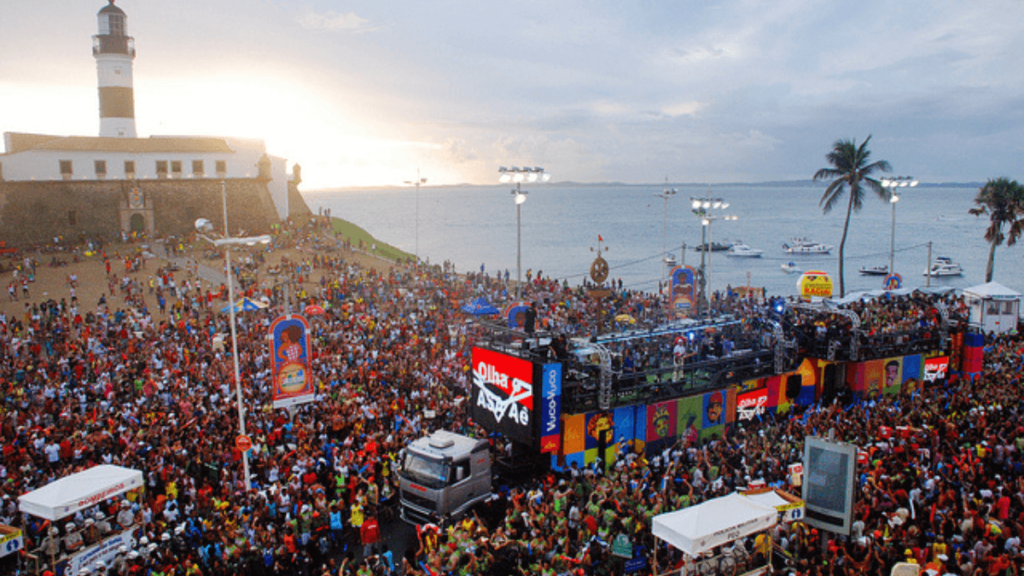
Salvador Carnival — the most immersive Carnival experience in Brazil and the one most likely to exceed first-time visitors’ expectations for intensity and scale.
What to Bring
- Compact rain poncho — fits in any bag, essential for uncovered events in February. Buy before you travel — they’re cheaper at home than at the events.
- Money belt — worn under your clothing for cash at blocos and street events. Pickpocketing in dense crowds is the main risk at Brazilian Carnival.
- Comfortable shoes you don’t mind destroying — you will walk for hours on streets covered in everything. Don’t wear shoes you value.
- Light, breathable clothing — synthetic fabrics that dry quickly are better than cotton in 35°C+ humidity. Pack more changes of clothes than you think you need.
- Sunscreen — for daytime blocos. Strong sunscreen, reapplied regularly.
- Reusable water bottle — staying hydrated in Brazilian summer heat is non-negotiable. Most Carnival areas have water refill points.
- A costume or fun outfit — not mandatory but arriving in regular clothes at blocos feels noticeably out of place. Even a simple themed outfit or your team’s colors changes the experience.
- Ear protection — optional but recommended for full Sambadrome nights or close proximity to speaker systems.
Safety
Brazilian Carnival cities require more security awareness than everyday travel in Western Europe or North America. The main risks are opportunist theft — pickpocketing and phone snatching — in dense crowds. Violent crime against tourists at Carnival events is rare but not unheard of, particularly in peripheral areas late at night.
- Carry nothing valuable to blocos and street events. A money belt with only the cash you need for the day — no phone, no wallet, no jewelry.
- Use your phone only when necessary in crowds. Phone theft in dense bloco environments is the most common crime against tourists at Brazilian Carnival.
- Use Uber rather than street taxis. Particularly late at night when returning from the Sambadrome or blocos.
- Stay with your group. Agree on meeting points before entering any large event in case of separation.
- Watch your drinks. Don’t accept drinks from strangers and keep an eye on your cup.
- Return to your hotel by rideshare after dark. Don’t walk through unfamiliar areas of any Brazilian city at night during Carnival.
Not sure whether Rio or Salvador is right for your first Carnival? Our comparison guide gives you an honest breakdown of both experiences.
Rio vs Salvador Carnival →Realistic Costs
| Category | Rio (7 nights) | Salvador (7 nights) | Recife (7 nights) |
|---|---|---|---|
| Accommodation | $1,400–2,800 | $700–1,400 | $500–1,200 |
| Carnival tickets/abadás | $150–600 | $0–800 | $0–100 |
| Food & drink | $350–600 | $250–500 | $200–400 |
| Transport | $100–200 | $100–200 | $80–150 |
| Total (excl. flights) | $2,000–4,200 | $1,050–2,900 | $780–1,850 |