
Rio Carnival 2027 — Complete Guide to Dates, Tickets & What to Expect
Rio Carnival is the most watched and most photographed celebration on Earth — but knowing what to expect before you arrive is what separates the people who have the time of their lives from those who spend Carnival week confused, overcharged, and exhausted. This guide covers everything you need to plan the trip properly.

The Sambadrome at full capacity during the Special Group parades — 70,000 spectators watching samba schools that have spent an entire year preparing for this moment.
Dates & Schedule
The Sambadrome — What It Is and How It Works
The Sambadrome (officially the Sambódromo da Marquês de Sapucaí) is a purpose-built parade avenue in the Centro neighborhood of Rio, designed by Oscar Niemeyer and inaugurated in 1984. It holds approximately 70,000 spectators in grandstands and allocated seats along a 700-meter runway where the samba schools parade.
Each samba school — some with thousands of participants — spends an entire year preparing their performance. Every school parades to an original samba enredo (theme song written specifically for that year), wearing costumes and presenting floats built around a central theme. Judges score every aspect: rhythm, choreography, costumes, floats, the school’s percussion section (bateria), and overall harmony. The competition is intense — relegation to the Access Group for a school that finishes last in the Special Group is a citywide catastrophe.
Each school’s parade lasts approximately 65–80 minutes. On Special Group nights, six or seven schools parade back to back from around 9pm until dawn. Staying for the full night is part of the experience. Leaving early means missing the schools that parade after midnight — often the most spectacular.
Sambadrome Sectors — Which to Choose
| Sector | Type | View | Price range | Verdict |
|---|---|---|---|---|
| 9 | Grandstand — allocated | Middle of avenue | R$400–700 | Best for tourists |
| 11 | Grandstand — allocated | Middle of avenue | R$400–700 | Best for tourists |
| 13 | Grandstand — allocated | End of avenue | R$200–400 | Budget option |
| 4, 6, 8 | Bleachers — standing | Various | R$150–250 | Cheapest grandstand |
| Camarote 5, 7 | VIP box — standing/seated | Central, elevated | R$1,500–4,000+ | Premium experience |
Sectors 9 and 11 are the standard recommendation for international first-time visitors. Allocated seating in the middle section of the avenue means you see the schools both approaching and passing in front of you at full parade momentum. The view of floats, costumes, and the bateria is comprehensive from this position.
Sectors 4, 6, and 8 are the cheapest standing sections — more chaotic, no allocated seats, but excellent atmosphere and often where Brazilian fans congregate. Good for people who want to be part of the crowd rather than watch from a distance.
Camarotes (VIP boxes in Sectors 5 and 7) are private elevated areas with open bar, food service, and the best central views of the avenue. Significantly more expensive but include everything — drinks, food, air conditioning, and private bathrooms. Worth it for visitors who want maximum comfort alongside the spectacle.
How to Buy Tickets
Official Rio Carnival Sambadrome tickets are sold through Ticketmaster Brasil and accessed digitally via the Quentro app. International visitors can buy directly from abroad using an international credit card — no Brazilian CPF or local payment method required.
Tickets are released in phases. As of July 2026, VIP camarote packages are available. Grandstand tickets for Special Group nights are confirmed for release in August 2026. The most popular sectors (9 and 11 for Special Group nights) sell out quickly after each release phase.
Street Blocos — The Other Carnival
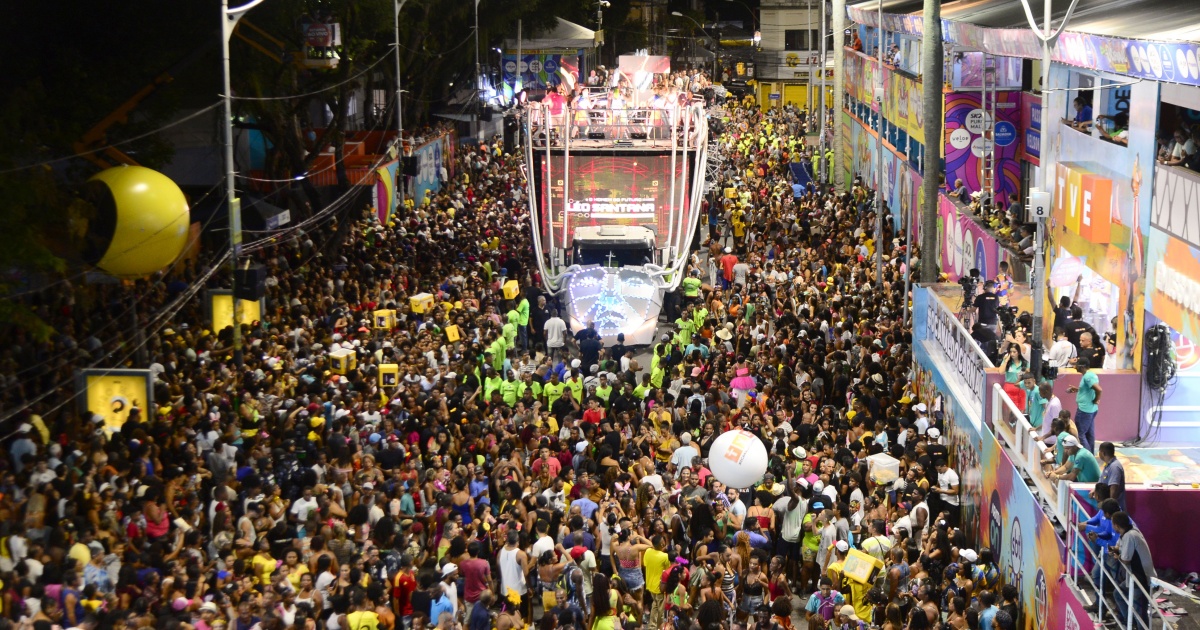
Street blocos — the free, participatory side of Rio Carnival that many regulars prefer to the Sambadrome. Some attract hundreds of thousands of people.
The Sambadrome is the iconic image of Rio Carnival but the street blocos are where most Cariocas (Rio residents) actually spend Carnival week. Blocos are street parties organized by neighborhood groups, each with a costume theme, a sound truck or live band, and a designated route through the city. They’re free, open to everyone, and run from the weekend before Carnival through the week itself.
There are over 500 registered blocos in Rio during Carnival 2027. Some are intimate neighborhood parties of a few hundred people. Others draw crowds of half a million or more. The experience is chaotic, joyful, and genuinely unlike anything else.
Cordão do Bola Preta
One of the oldest and largest blocos in Rio. Half a million people in black and white polka dots through downtown Rio. The opening bloco of Carnival season for many.
Monobloco
The closing bloco of the season, often drawing over a million participants. One of the biggest street parties in the world. Arrive very early.
Simpatia é Quase Amor
Ipanema’s most famous bloco — upbeat, tourist-friendly, and well-organized. A good first bloco for visitors new to the format.
Banda de Ipanema
One of Rio’s most famous blocos, known for cross-dressing and irreverence. Decades of tradition and a central part of Ipanema’s Carnival identity.
Deciding between Rio and Salvador Carnival? Our comparison guide breaks down the differences honestly — spectator vs participant, structure vs chaos.
Rio vs Salvador Carnival →Where to Stay
Copacabana / Ipanema
The most convenient base for Carnival — walking distance to major blocos, beach access, and metro connections to the Sambadrome. Hotels run 3–5x their normal rates during Carnival week and require 5–7 night minimum stays. Book immediately if you haven’t already — the best options are selling out.
Botafogo / Flamengo
A quieter and cheaper alternative to Copacabana and Ipanema. Good metro access, solid restaurant scene, and about 20 minutes by taxi or rideshare to major South Zone blocos. The price difference compared to beachfront hotels is significant.
Santa Teresa
Charming and atmospheric but requires Uber for almost everything — the hills make walking impractical for trips to blocos or the Sambadrome. Better for visitors who want to experience a local Rio neighborhood and don’t mind the logistics.
How Much Does Rio Carnival 2027 Cost?
| Category | Budget | Mid-range | Premium |
|---|---|---|---|
| Sambadrome ticket (per night) | R$150–250 | R$400–700 | R$1,500–4,000+ |
| Hotel (per night) | $50–80 (hostel) | $200–400 | $500–1,000+ |
| Food per day | $20–30 | $50–80 | $100–200+ |
| Transport per day | $5–10 (metro) | $20–40 (Uber) | $50–100+ |
| Total 7 nights (excl. flights) | $800–1,200 | $2,000–3,500 | $5,000–10,000+ |
Safety During Carnival
Rio Carnival concentrates large crowds in conditions that require extra awareness. The city deploys significant police presence during Carnival week, particularly in tourist areas and at the Sambadrome. The main risks are pickpocketing and phone theft in crowded bloco environments, not violent crime.
- Use a money belt or hidden pouch — don’t carry a wallet in your back pocket at blocos. Pickpocketing in dense crowds is common.
- Leave your good phone at the hotel — or use it only when necessary. Phone theft in bloco crowds is the most common crime against tourists during Carnival.
- Stay with your group — Carnival crowds are enormous and disorienting. Agree on a meeting point before entering a bloco in case you get separated.
- Use Uber rather than street taxis — particularly late at night when returning from the Sambadrome or blocos.
- The Sambadrome is safe — security at the Sambadrome is strict and the environment is controlled. The main risks are outside, in the surrounding streets after the parade ends after dawn.
- Stay hydrated — February in Rio is peak summer with temperatures of 35–40°C and high humidity. Heat exhaustion at blocos is a real risk, especially if drinking.
Essential Tips for Rio Carnival 2027
- Book accommodation now. This cannot be overstated. Hotels in Copacabana and Ipanema for Carnival 2027 are already selling out. Every month you wait means fewer options and higher prices.
- Attend at least one bloco before the Sambadrome. The street party energy of a major bloco is part of what makes Rio Carnival Rio Carnival — not just the Sambadrome. Don’t fly in the night of the parade and fly out the next day.
- Wear a costume. You don’t need an elaborate fantasia (costume) — a fun outfit with your team’s colors or a simple theme works. Arriving in regular clothes at a bloco feels noticeably out of place.
- The Sambadrome parades start late and run until dawn. The first school parades around 9pm, the last finishes after 5am. Plan for this — don’t book a 7am flight the morning after a parade night.
- February in Rio is extremely hot and humid. Stay hydrated, use sunscreen for daytime blocos, and dress for the heat.
- The metro runs extended hours during Carnival — often until 4am. Use it to get to and from the Sambadrome rather than relying on Uber, which surges heavily during Carnival exits.