
Carnival Brazil 2027 — Complete Guide to Rio, Salvador, Recife & São Paulo
Brazilian Carnival is not one event — it’s four completely different celebrations happening simultaneously across the country, each with its own music, format, culture, and atmosphere. This guide covers everything you need to choose the right city, plan your trip, and arrive prepared for one of the most extraordinary experiences in the world.

Rio Carnival 2027 — the most internationally recognized Carnival in the world, with Special Group samba school parades across three nights at the Sambadrome in February.
Dates & Key Schedule
The Four Carnival Cities
The most important decision for anyone planning a Carnival trip to Brazil is which city to attend. Each offers a fundamentally different experience — not competing versions of the same celebration.

Rio de Janeiro — The Iconic Carnival
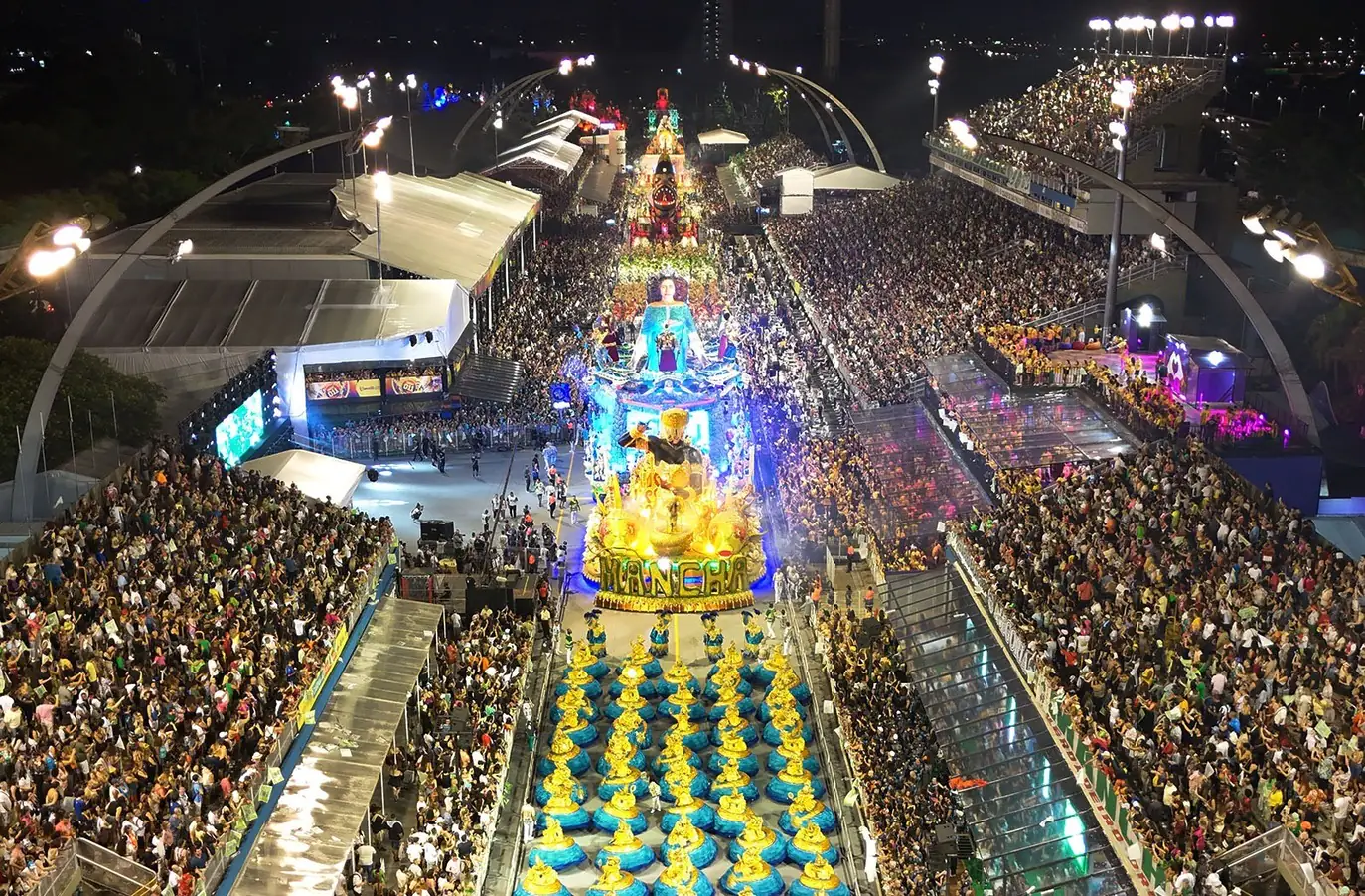
Rio Carnival is what most people picture when they think of Brazilian Carnival — the Sambadrome, the samba schools, the elaborate floats and feathered costumes. The Special Group parade nights (February 7, 8, and 9) are the centerpiece: 12 samba schools competing across three nights in a 70,000-capacity venue, each performance lasting 65–80 minutes.
Beyond the Sambadrome, Rio has hundreds of street blocos — some drawing half a million people — that fill the neighborhoods of Copacabana, Ipanema, and the city center for weeks before and during Carnival week. The combination of the formal Sambadrome spectacle and the informal street parties makes Rio the most complete Carnival experience for first-time visitors.
Salvador — The World’s Largest Street Party
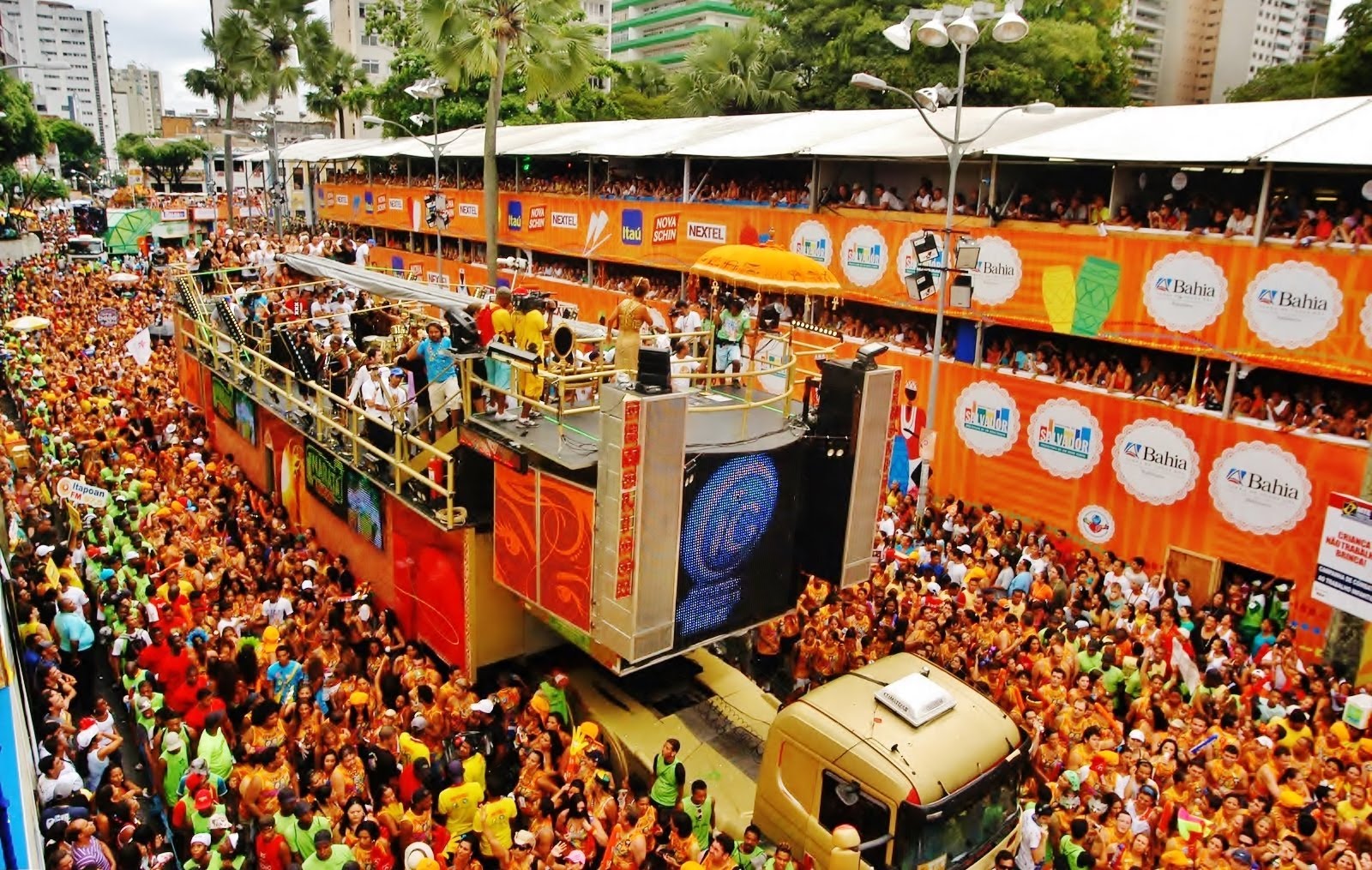
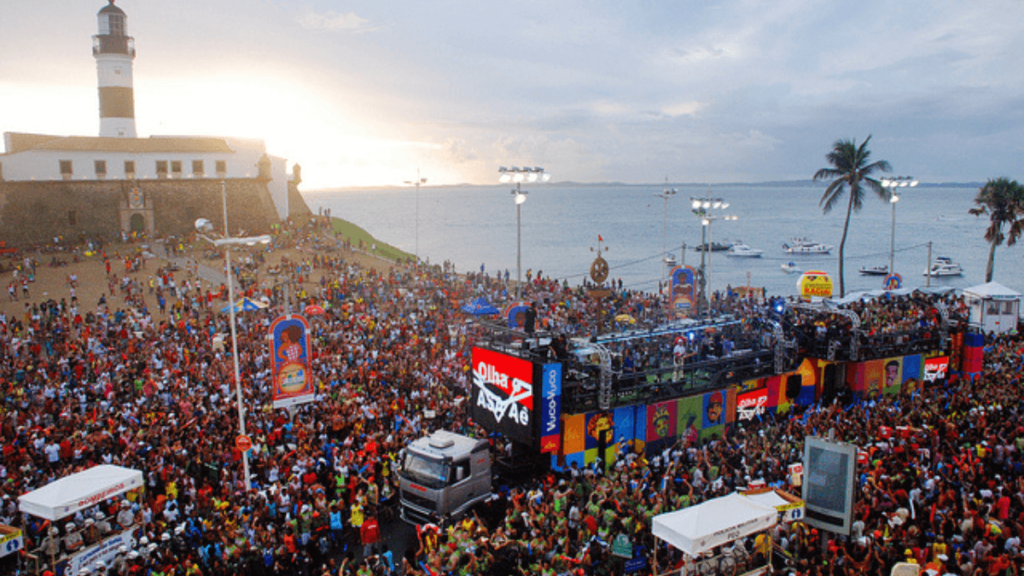
Salvador Carnival — 2 million people per day for six consecutive days dancing through three circuits behind trios elétricos.
Salvador Carnival has no Sambadrome and no spectators. Sound trucks called trios elétricos — vehicles loaded with live bands and enormous speaker systems — move through three circuits of the city followed by millions of people dancing in their wake. The music is axé, created in Salvador and inseparable from its identity. It is the world’s largest participatory street party by any measure.
There are three ways to participate: the free pipoca (street zone outside the roped areas), an abadá (branded t-shirt giving access inside a specific bloco), or a camarote (VIP elevated area with food and open bar). First-time visitors typically combine 2–3 days with an abadá and the remaining days in the free pipoca.
Recife & Olinda — The Northeast’s Carnival
Recife and Olinda offer the most affordable and culturally distinct Carnival in Brazil. The Galo da Madrugada — officially the world’s largest Carnival bloco — draws over 2 million people to downtown Recife on the Saturday before Carnival week begins. In Olinda, giant papier-mâché puppets (bonecos gigantes) parade through UNESCO-listed colonial cobblestone streets to the sound of frevo bands. Most events are completely free.
The music — frevo and maracatu — is found nowhere else in Brazil the same way. UNESCO declared frevo an Intangible Cultural Heritage of Humanity in 2012. For visitors interested in the cultural roots of Brazilian Carnival rather than its international spectacle, Recife and Olinda is the answer.
São Paulo — The Growing Alternative
São Paulo Carnival has grown rapidly and now offers over 700 registered street blocos across the city plus the Anhembi Sambadrome competition (February 6 and 7). Tickets and accommodation are significantly cheaper than Rio, flight connections are better than Salvador, and the street bloco scene in neighborhoods like Pinheiros and Vila Madalena is excellent. For visitors already based in São Paulo or looking for a more affordable Carnival experience without sacrificing quality, it’s a legitimate choice.
Not sure which city is right for you? Our comparison guide gives you an honest breakdown of Rio vs Salvador — the two most popular choices for international visitors.
Rio vs Salvador Carnival →All Carnival Brazil 2027 Guides
Rio Carnival 2027 — Complete Guide
Dates, Sambadrome, blocos, where to stay, costs, and safety for Rio Carnival.
Read guide →Salvador Carnival 2027 — Complete Guide
Trios elétricos, abadás, camarotes, circuits, costs, and honest advice.
Read guide →Recife & Olinda Carnival 2027
Galo da Madrugada, bonecos gigantes, frevo, maracatu, and costs.
Read guide →São Paulo Carnival 2027
Blocos, Anhembi Sambadrome, where to stay, and what to expect.
Read guide →How to Buy Rio Sambadrome Tickets
Sectors, prices, where to buy safely, and what each night offers.
Read guide →Where to Stay for Rio Carnival
Best neighborhoods and hotels for Carnival week at every budget.
Read guide →Rio vs Salvador Carnival
Honest comparison of both experiences — which is right for you?
Read guide →First-Time Visitor Guide
Everything you need to know before attending Carnival in Brazil for the first time.
Read guide →What to Book Now
As of July 2026, here is what requires immediate action and what can wait:
Book immediately: Hotel accommodation in your chosen city. This is the most time-sensitive item — Rio, Salvador, and São Paulo hotels for Carnival 2027 are already selling fast, with prices rising monthly.
Book in August 2026: Rio Sambadrome grandstand tickets go on sale in August. São Paulo Sambadrome tickets follow a similar schedule. Set up your Ticketmaster Brasil account before the sale date.
Book in October/November 2026: Salvador abadá schedules are released in October or November — buy immediately when they go on sale, particularly for the most popular blocos.
Book anytime before December 2026: International flights. Prices from North America and Europe rise significantly for February departures — the earlier the better, but there’s less urgency than accommodation.