
Best Beaches in Natal — Complete Guide to the Rio Grande do Norte Coast
The beaches around Natal range from the iconic dune-backed Ponta Negra to the remote coral-reef pools of Maracajaú, the wild cliffs of Pipa, and the calm lagoon shores of Genipabu. The Rio Grande do Norte coastline is one of the most varied in the Northeast — this guide covers every beach worth visiting, from the city waterfront to the day trips that define the region.
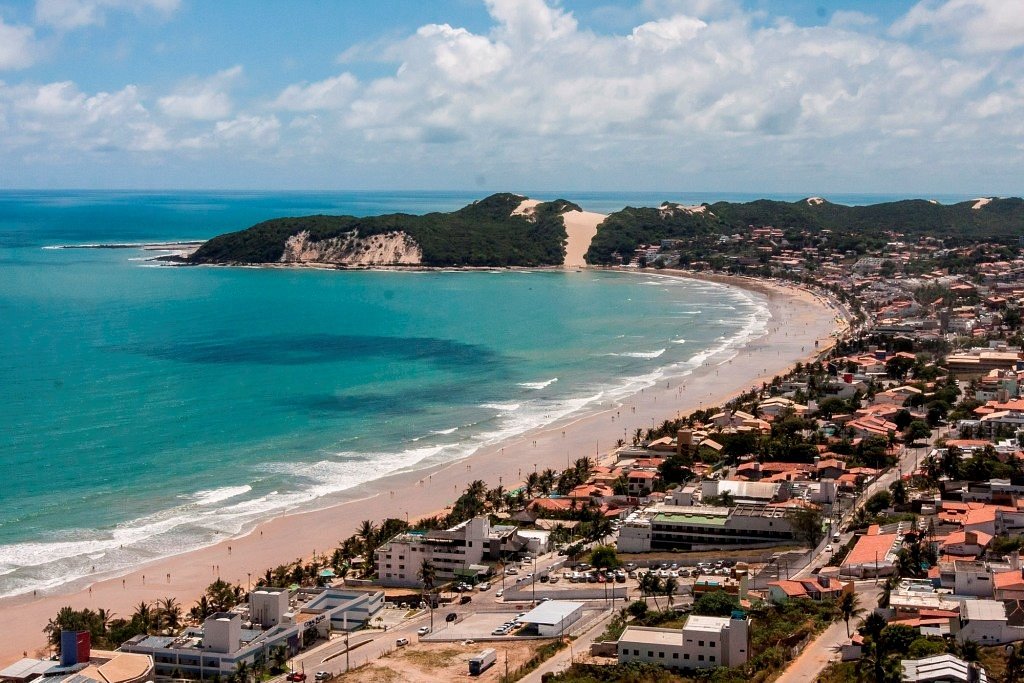
Ponta Negra beach with Morro do Careca in the background — the most iconic beach scene in Natal, with the 120-meter dune rising directly from the sea at the southern end.
Ponta Negra Beach
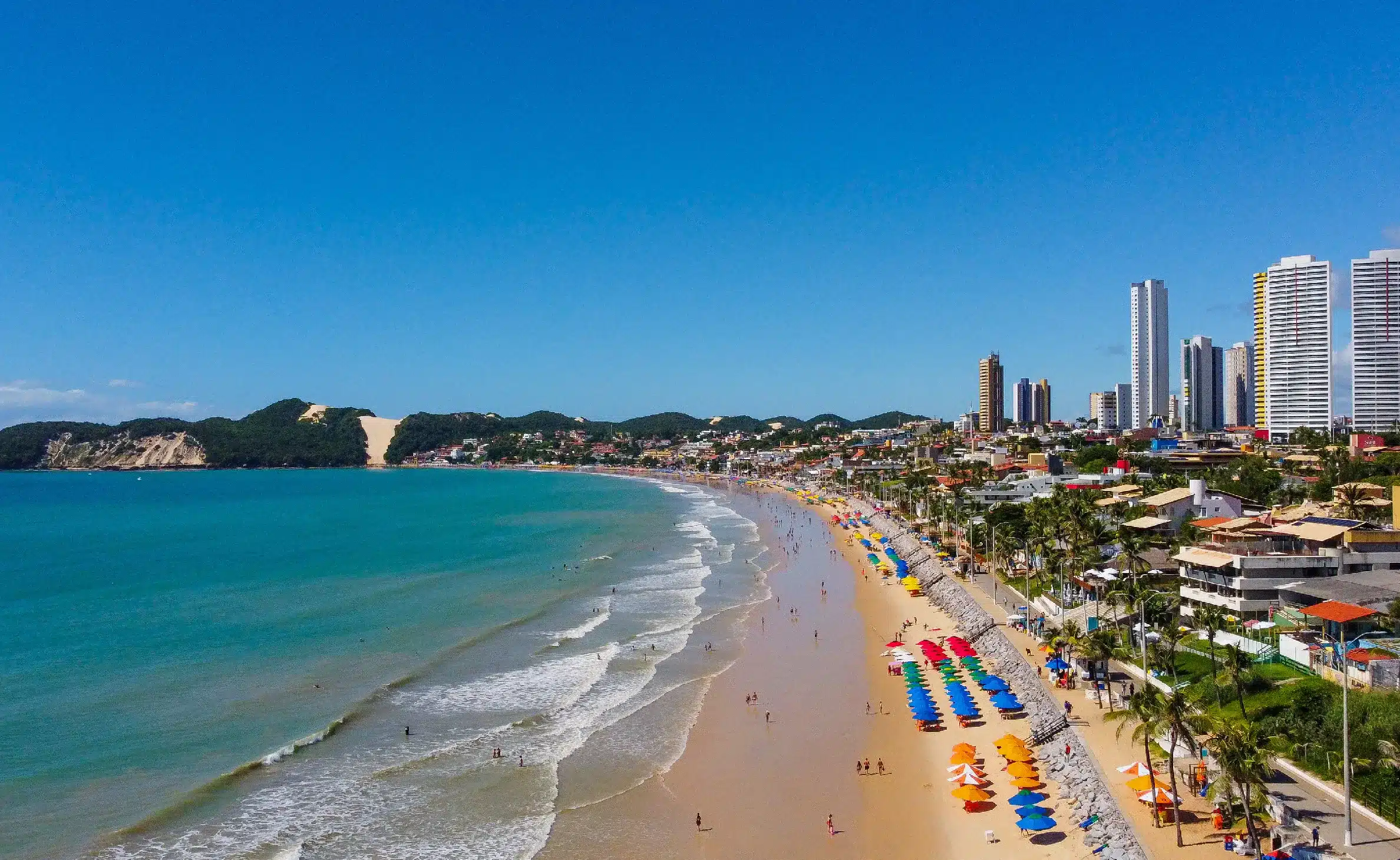
Ponta Negra — the central section of the beach is calm enough for swimming, SUP, and water sports, while the southern end near the dune has stronger surf.
Ponta Negra is Natal’s main beach and the one that defines the city’s image internationally. The Morro do Careca dune rises 120 meters at the southern end, creating a backdrop that makes the beach immediately recognizable. The 4km stretch runs from the dune north toward Via Costeira, with the best swimming in the central section and stronger surf near the dune.
The beachfront promenade is lined with restaurants, kiosks serving fresh coconut water and grilled shrimp, and vendors renting chairs and umbrellas. Sunrise and sunset at Ponta Negra are both worth setting an alarm for — the light on the Morro do Careca at golden hour is the best free spectacle in Natal.
Genipabu Beach

Genipabu — where enormous sand dunes meet a freshwater lagoon, with the beach beyond the dune ridge facing the open Atlantic.
Genipabu is 30km north of Natal and combines two very different water experiences in one visit — the calm Lagoa de Genipabu (a freshwater lagoon sheltered by dunes) and the open ocean beach beyond the dune ridge. The lagoon is ideal for calm swimming, paddleboarding, and the famous cashew wine tastings at the floating bars anchored in the water.
The main attraction at Genipabu is the dune complex rather than the beach itself — the buggy tours that traverse the massive sand formations are the experience most visitors come for. But staying for time on the beach and in the lagoon after the buggy tour makes the half-day visit complete.
Pirangi do Norte & Pirangi do Sul
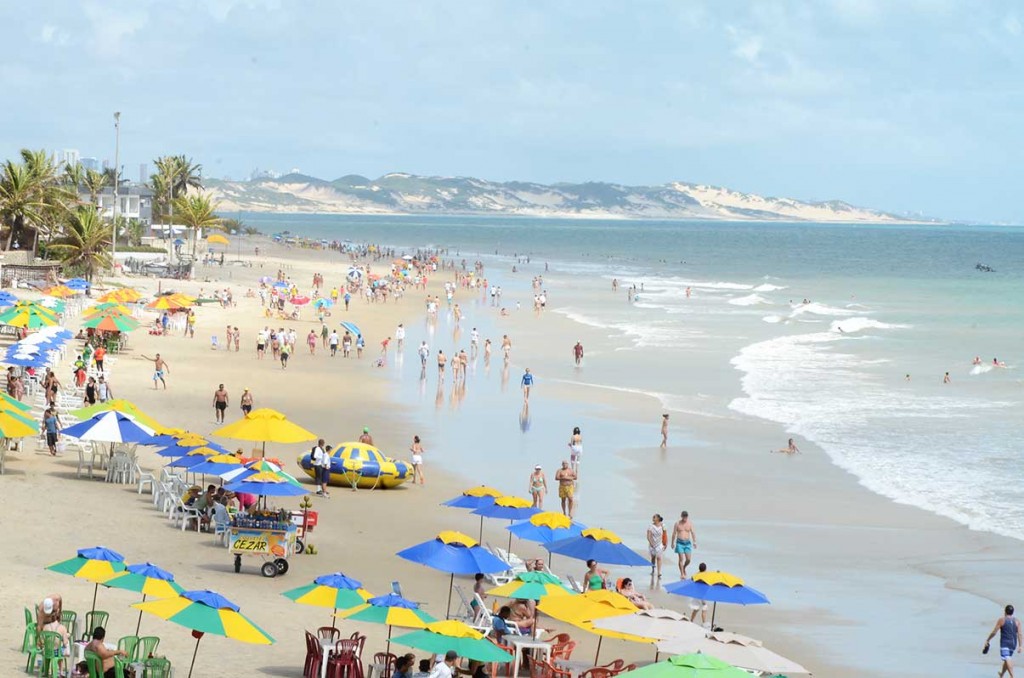
Pirangi do Norte — calm reef-protected water, the world’s largest cashew tree nearby, and a relaxed local atmosphere far from the tourist crowds of Ponta Negra.
Pirangi do Norte and Pirangi do Sul are twin beach villages 25km south of Natal, separated by the Lagoa de Pirangi. The beaches here are protected by offshore reefs that create calm, clear swimming conditions — significantly more protected than Ponta Negra’s open surf. The area is popular with local families and much quieter than the main tourist beaches.
Pirangi do Norte is home to the Cajueiro de Pirangi — the world’s largest cashew tree, covering 8,500 square meters. A visit to the tree combined with an afternoon on Pirangi beach makes for an excellent half-day south coast excursion from Natal. Fresh seafood restaurants along the waterfront serve the catch of the day at prices well below Ponta Negra.
Maracajaú
Maracajaú — offshore coral reefs 50km north of Natal, with natural pools accessible by boat at low tide and abundant marine life including sea turtles and rays.
Maracajaú is not a conventional beach — it’s a reef destination 50km north of Natal where offshore coral formations create natural swimming pools at low tide. The reefs are part of an environmental protection area and are reached by boat from the village waterfront. The marine life — sea turtles, rays, parrotfish, sea anemones — is visible in 1–3 meters of clear water without needing to dive.
The village beach itself is quiet and pleasant, but the reef is the reason to go. Visit only at low tide — at high tide the pools are submerged. Most visitors come on organized half-day tours from Natal or Ponta Negra that time the boat departure around the tide window.
Planning your Natal itinerary? Our day-by-day guide covers how to combine Ponta Negra, Genipabu, Maracajaú, and a Pipa day trip in 3, 5, or 7 days.
Natal Itinerary →Pipa Beach

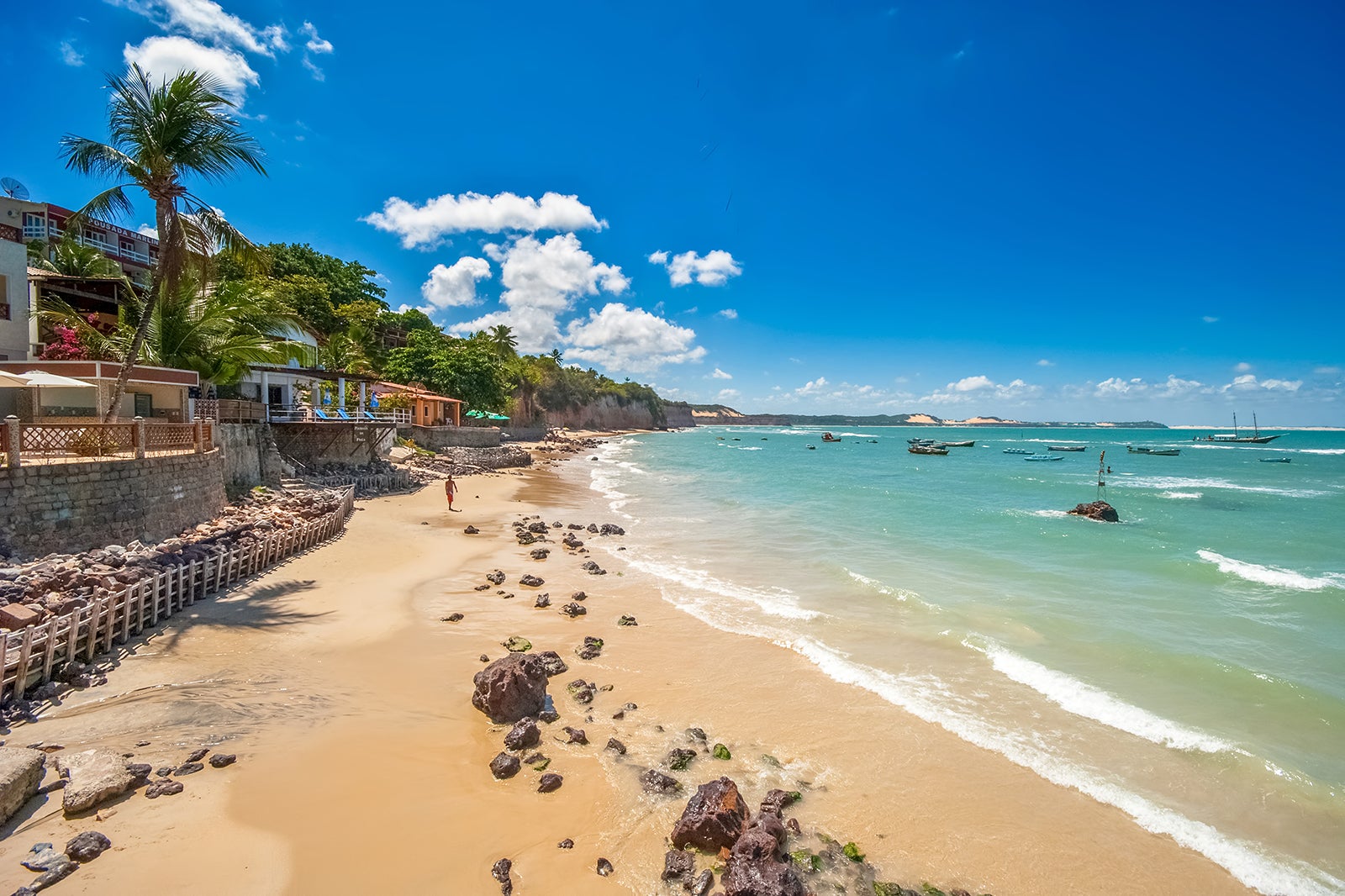
Pipa — dramatic red cliffs above Praia do Amor and Baia dos Golfinhos, with spinner dolphins appearing most mornings in the protected bay below.
Pipa is 85km south of Natal and is one of the most well-regarded beach destinations in the Northeast — a combination of dramatic cliffs, multiple beach environments, spinner dolphins, and a village with genuinely good restaurants and nightlife. It’s a legitimate day trip from Natal but rewards staying overnight or for 2–3 days when the day-trippers have left and the village settles into its own rhythm.
Baia dos Golfinhos (Dolphin Bay) is the highlight — spinner dolphins appear most mornings in the bay below the cliffs, visible from the viewpoint above or from the water on a guided kayak or snorkeling tour. Praia do Amor, with its red cliffs, is the most photographed beach. The main village beach (Praia do Centro) has the best infrastructure for swimming and watersports.
Baía Formosa
Baía Formosa — a quiet cove 90km south of Natal, with clear protected water and almost no tourist development.
Baía Formosa is a small, quiet cove about 90km south of Natal — largely off the tourist radar and worth visiting for exactly that reason. The beach sits in a protected bay with calm, clear water, surrounded by Atlantic Forest fragments and cliffs. Almost no commercial development and very few visitors compared to Pipa or Ponta Negra. Best reached by car and worth combining with a Pipa visit on a south coast day.
Beach Tips for Natal
- Check tide tables for Genipabu and Maracajaú. Both experiences depend entirely on tide conditions. Your hotel or tour operator can advise on the best window each day.
- The best swimming at Ponta Negra is in the central section. The dune end has stronger currents. Follow the lifeguard flags.
- Pipa rewards an overnight. 85km each way makes a day trip rushed. If you have 5+ days in Natal, plan 1–2 nights in Pipa.
- Don’t leave valuables unattended on the beach. Petty theft at Ponta Negra is the main tourist risk in Natal. Keep phones and wallets at your hotel or in a bag you keep on your person.
- Sunscreen is essential year-round. The Northeast sun is intense. Use SPF 50+ and reapply every 90 minutes for full beach days.
- The north coast (Genipabu, Maracajaú) is better for calm water. The south coast (Pirangi, Pipa, Baía Formosa) has more varied conditions including some surf beaches.