
Things to Do in Natal — Best Activities & Attractions
Natal is Brazil’s dune capital — a city where the sand doesn’t stay on the beach but rises into towering formations that define the landscape north and south of the city. Beyond Morro do Careca and the Genipabu dunes, Natal offers offshore reef snorkeling, a Portuguese fortress on the sea, the world’s largest cashew tree, and easy access to Pipa — one of the best beach towns in the Northeast. This guide covers everything worth doing.

Morro do Careca — the iconic sand dune at the southern end of Ponta Negra beach, rising 120 meters above the sea. One of the most recognizable natural landmarks in the Brazilian Northeast.
1. Morro do Careca & Ponta Negra Beach
Morro do Careca is Natal’s most iconic image — a 120-meter sand dune at the southern end of Ponta Negra beach, rising dramatically from the sea with a sheer face on the ocean side and a gentler slope inland. The dune is protected and climbing is prohibited, but the view from Ponta Negra beach looking south at the Morro is one of the best free things to do in the city. At sunset, the light on the dune turns it a deep orange that makes every photograph look like it was processed.
Ponta Negra is Natal’s main tourist beach and the center of the city’s visitor infrastructure — hotels, restaurants, nightlife, and tour operators are all concentrated here. The beach is wide, well maintained, and good for swimming in the central section. Vendors along the sand sell fresh coconut water, grilled shrimp, and the regional specialty of carne de sol with butter.
2. Genipabu Dunes & Buggy Tours
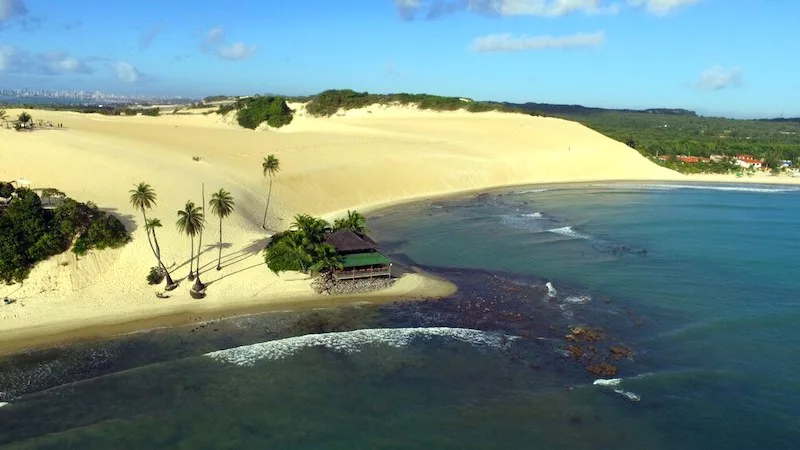
The Genipabu dunes — a protected park of massive sand formations 30km north of Natal, best explored by dune buggy or on foot at sunset.
The Genipabu dunes are 30km north of Natal — a protected ecological park of enormous sand formations, freshwater lagoons, and cashew trees that has been the backdrop for dune buggy tours for decades. The dunes here are significantly larger and more dramatic than the natural dunes around Ponta Negra, rising to heights that make the buggy descents genuinely thrilling.
The standard Genipabu tour runs half a day and covers the main dune complex, the Lagoa de Genipabu (a freshwater lagoon surrounded by dunes), and the village waterfront on the Lagoa do Pirangi. Buggies carry 4 passengers and drivers offer two modes: com emoção (with excitement — steep descents, sharp turns) and sem emoção (calmer). First-timers almost always choose com emoção and don’t regret it.
Tours to Genipabu can be booked through operators in Ponta Negra — expect to pay R$150–250 per person for a half-day shared buggy tour including pick-up from your hotel.
Canoa Quebrada Buggy Tour from Fortaleza — similar experience further north
- ✔ Dune buggy through the Northeast coast
- ✔ Beach stops and local seafood
- ✔ Professional driver included
- ✔ Free cancellation
3. Forte dos Reis Magos
/i.s3.glbimg.com/v1/AUTH_59edd422c0c84a879bd37670ae4f538a/internal_photos/bs/2021/u/V/oeTP7SQUABWJANZd1AZQ/caninde.jpg)
Forte dos Reis Magos — a Portuguese star-shaped fortress built in 1598 at the mouth of the Potengi River, now one of the best-preserved colonial military structures in the Northeast.
The Forte dos Reis Magos (Fort of the Three Wise Men) sits at the point where the Potengi River meets the Atlantic Ocean, about 5km from Ponta Negra. Built by the Portuguese in 1598, it’s one of the oldest and best-preserved colonial military fortresses in Brazil — a star-shaped structure of coral limestone walls built on a reef that becomes partially submerged at high tide.
Inside the fort, small museums cover the history of the Portuguese colonization of Rio Grande do Norte and the military history of the structure. The views from the walls — ocean on one side, river on the other, the city skyline in the distance — are the main reason to visit. Entry costs around R$15–20 and the visit takes about 45 minutes.
4. Maracajaú Reef Snorkeling
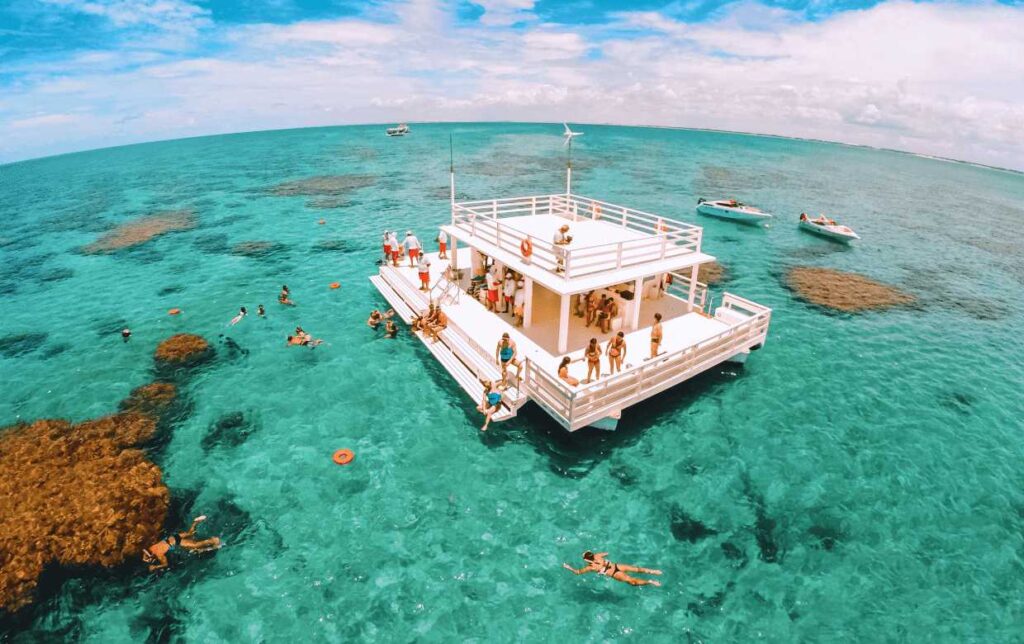
Maracajaú — offshore coral reefs 50km north of Natal, with natural pools and abundant marine life accessible by boat at low tide.
Maracajaú is a small coastal village 50km north of Natal where a system of offshore coral reefs creates natural swimming pools at low tide. The reefs here are home to sea turtles, rays, colorful fish, and sea anemones in shallow, clear water — excellent for snorkeling and accessible to non-swimmers as most sections are waist to chest depth at low tide.
The visit is done by catamaran or jangada from the Maracajaú waterfront — a 15-minute boat ride to the reef platform, where you spend 1–2 hours in the water before returning. The reef is part of an environmental protection area and access is managed to limit damage. Visit only at low tide — at high tide the pools are submerged.
Most tours to Maracajaú are organized from Natal or Ponta Negra and include round-trip transport, the boat to the reef, and snorkeling equipment. Expect R$120–180 per person for a half-day organized tour.
5. Pirangi do Norte & the World’s Largest Cashew Tree
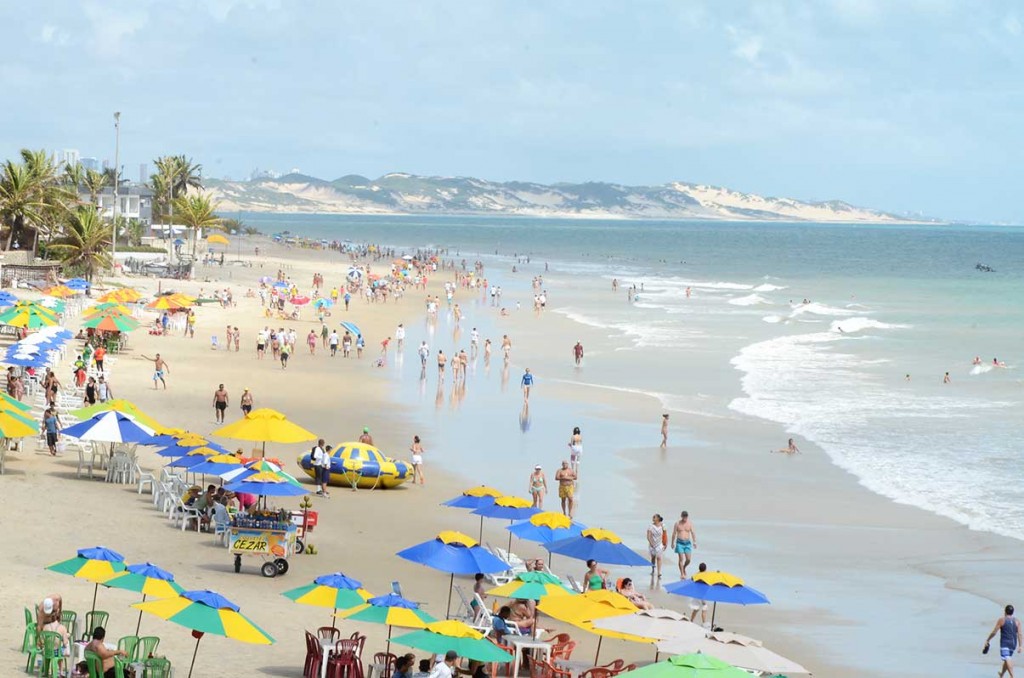
Pirangi do Norte — a relaxed coastal village 25km south of Natal, home to the world’s largest cashew tree and a calm beach protected by offshore reefs.
Pirangi do Norte is a small beach village 25km south of Natal that would be worth visiting for its calm reef-protected beach alone — but it’s famous for something else entirely. The Cajueiro de Pirangi (Pirangi cashew tree) holds the Guinness World Record as the world’s largest cashew tree, covering an area of 8,500 square meters with a single trunk that has spread horizontally through a branching process unique to this individual tree. Walking under the canopy — effectively a forest created by one tree — is genuinely strange and memorable.
The beach at Pirangi is worth an afternoon after seeing the tree. Calm water, reef pools at low tide, and far fewer tourists than Ponta Negra. A handful of good seafood restaurants along the waterfront serve fresh fish and shrimp.
Planning where to stay in Natal? Our neighborhood guide covers Ponta Negra and Via Costeira with honest advice for every budget.
Where to Stay in Natal →6. Day Trip to Pipa

Pipa — 85km south of Natal, with dramatic cliffs, spinner dolphin bays, and one of the best beach atmospheres in the Northeast.
Pipa is 85km south of Natal and is consistently ranked among the best beach destinations in Brazil. The cliffs above Praia do Amor and Baia dos Golfinhos, the dolphin bay where spinner dolphins appear most mornings, the main beach village with its good restaurants and nightlife, and the sea turtle protection program make Pipa a destination that rewards staying at least one night — but it’s also a legitimate day trip from Natal for visitors with limited time.
The drive from Natal to Pipa takes about 90 minutes by car. Organized day trips are available from Ponta Negra and include transport and a guide. If you have 5+ days in Natal, consider spending 2 nights in Pipa rather than doing it as a day trip — the village is at its best in the early morning and evening when the day-trippers have left.
Food — What to Eat in Natal
Rio Grande do Norte has some of the best seafood in the Northeast and Natal’s restaurants make good use of it. The local specialties worth trying:
- Camarão regional — regional shrimp, grilled or in a butter sauce. The shrimp from the Rio Grande do Norte coast are among the best in Brazil — larger and sweeter than most. Order them wherever you see them fresh.
- Carne de sol — sun-dried beef, typically served with butter, manteiga de garrafa (liquid butter), and macaxeira (cassava). The Northeast’s most distinctive meat dish and found in every local restaurant.
- Lagosta — lobster from the Northeast coast, significantly cheaper than in Europe or the US. Ponta Negra has several good seafood restaurants serving fresh lobster at R$80–150 per person.
- Tapioca — cassava flour crepes, sold at street stalls along the Ponta Negra beach front. Good for breakfast or a mid-morning snack.
- Cajú — cashew fruit juice, unique to the Northeast. Not the nut — the bright red or yellow fruit the nut grows from. Sweet, slightly astringent, and found nowhere outside Brazil in the same form.
Practical Tips for Natal
- Stay in Ponta Negra. It’s the only neighborhood that makes sense as a base — everything worth doing departs from here and the hotel and restaurant infrastructure is excellent.
- Book buggy tours and Maracajaú in advance in high season. December–February is busy and the best operators fill up. Book 2–3 days ahead minimum.
- Visit Genipabu and Maracajaú at low tide. Both experiences are completely dependent on tide conditions. Check the tide table and plan your visit around the low tide window.
- Use Uber after dark. The tourist zone of Ponta Negra is safe during the day. After 10pm, use Uber for all movement.
- Pipa is worth an overnight. The 85km drive and 90-minute journey means a day trip is rushed. If you have the time, spend one or two nights in Pipa rather than returning to Natal the same day.
- September to February is the best window. Dry season, lower wind, better sea conditions for snorkeling at Maracajaú.