
Things to Do in Recife, Brazil
Recife is one of the most underrated cities in Brazil. It has serious history, a genuine cultural scene, excellent food, and easy access to some of the best beaches in the Northeast. Most international travelers skip it entirely — which means the ones who do show up tend to have a far more authentic experience than they’d find in more obvious destinations.

Recife sits at the mouth of two rivers meeting the Atlantic — a city shaped by water, with Boa Viagem’s long beach stretching south from the urban center.
1. Explore Recife Antigo

Recife Antigo — the historic island where the city began, with Dutch colonial buildings along the old port waterfront.
Recife Antigo is the island district where the city started — and where you get the clearest sense of its history. Dutch colonial buildings line the waterfront, the streets are narrow and flat, and the Marco Zero square marks the official center of the city.
During the week it’s quiet enough to walk around and actually look at things. On Friday nights and weekends, Marco Zero fills up with food stalls, live music, and people — it becomes one of the best free evenings in the Northeast.
While you’re here: the Kahal Zur Israel Synagogue is worth a stop. Built in 1636, it’s the oldest synagogue in the Americas and still standing in the original location. Entry is free and the museum inside explains the history of the Sephardic Jewish community that settled here under Dutch rule.
2. Walk the Hills of Olinda

Olinda’s historic center — a UNESCO World Heritage Site with colonial churches, colorful houses, and views over Recife from the hilltops.
Olinda is a separate city but sits right next to Recife — about 20 minutes north by rideshare or bus. It’s a UNESCO World Heritage Site with a well-preserved colonial center: cobblestone streets, 17th-century churches, and brightly painted houses stacked up on hillsides above the sea.
The hilltop viewpoints give you a clear look over the Atlantic and back toward Recife’s skyline. The Alto da Sé is the main one, and it usually has a few artists, craft sellers, and a bar or two with a cold beer and the view included.
Olinda also has one of the best Carnaval celebrations in Brazil — smaller and more traditional than Salvador or Rio, with giant puppets (bonecos) parading through the narrow streets. If you’re in the Northeast in February, this is worth rearranging your schedule for.
To get the most out of Olinda’s history and colonial architecture, a guided tour on GetYourGuide covers the key sites with local context — ideal if it’s your first time in the Northeast.
Olinda Walking Tour with Local Guide
- ✔ UNESCO historic center covered
- ✔ Local guide with historical context
- ✔ Churches, viewpoints, and colonial streets
- ✔ Free cancellation
3. Visit the Instituto Ricardo Brennand

The Instituto Ricardo Brennand — a private museum built around a mock medieval castle, with one of the most important art collections in Brazil.
This is one of the most unexpected things you’ll find in Recife. The Instituto Ricardo Brennand is a private museum built on the grounds of a sugar plantation, centered on a mock medieval castle that houses an enormous collection of weapons, armor, maps, and European paintings — much of it related to the Dutch period in Brazil.
The grounds are well kept and include a separate gallery, the Pinacoteca, with one of the largest collections of Dutch and Flemish paintings in Latin America. The whole complex takes two to three hours to see properly.
Entry costs around R$30–40 (roughly $6–8 USD). It’s closed on Mondays. Located in the Várzea neighborhood — about 30 minutes from the center by rideshare.
4. Browse Mercado de São José

Mercado de São José — built in 1875, it’s the oldest iron market in Brazil and still very much in daily use by locals.
Built in 1875, Mercado de São José is the oldest iron market in Brazil. The structure itself was prefabricated in Portugal and shipped over — a large cast-iron hall that’s still in daily use more than 150 years later.
Inside you’ll find spices, regional herbs, leather goods, religious items, and food stalls serving cheap, filling lunches. It’s not a tourist market — it’s where people from the surrounding neighborhoods actually shop. That’s what makes it worth an hour of your time.
The market is in the São José neighborhood, adjacent to Recife Antigo. Worth combining with a walk through the historic center on the same morning.
5. Spend a Day at Boa Viagem Beach
Boa Viagem is Recife’s main urban beach — a long stretch of sand running south of the center, backed by a busy avenue and the city’s main hotel strip. The water is calm and shallow at low tide, with natural reefs about 1 km offshore that reduce wave intensity close to the sand.
It’s a good beach for a morning walk or a casual afternoon. Beach vendors are active all day selling coconut water, fresh fruit, and tapioca. The seafood restaurants on the parallel streets — particularly along Rua Aviador Severo — are reliable and affordable.
6. Day Trip to Porto de Galinhas
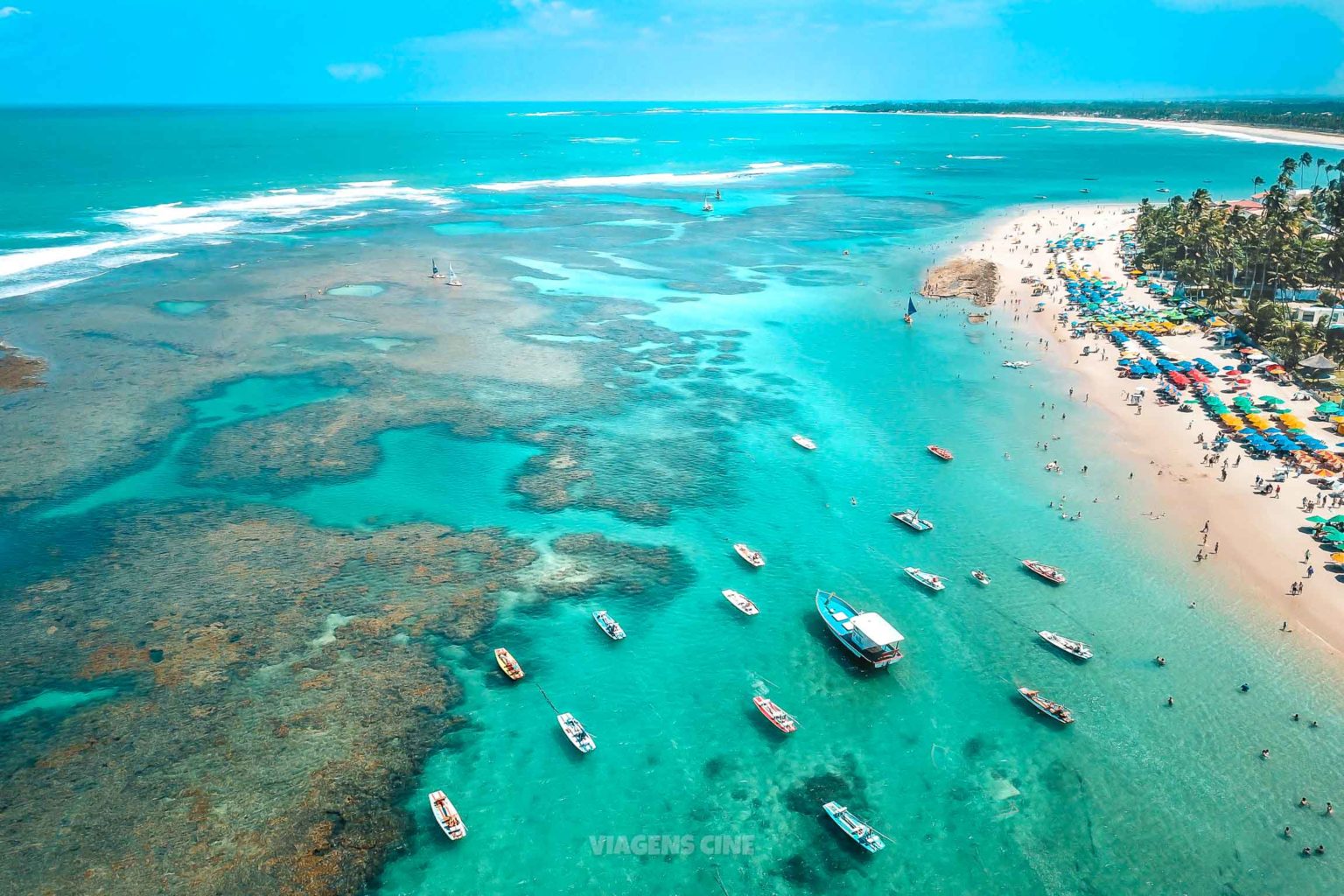
Porto de Galinhas — natural pools formed by offshore reefs, consistently voted among the best beaches in Brazil.
Porto de Galinhas is about 70 km south of Recife — roughly 90 minutes by car or bus. It’s consistently ranked among the best beaches in Brazil, and for good reason: natural pools formed by offshore reefs fill with clear, warm water at low tide, creating calm swimming areas with surprisingly good visibility.
Jangada rides (traditional wooden rafts) take you out to the reef pools for around R$30–50 per person. It’s the main activity and worth doing at least once. Go in the morning when the light is best and the pools are less crowded.
The easiest way to visit is a guided day trip on GetYourGuide from Recife — transport included, jangada ride to the reef pools, and a guide who times the visit around low tide for the best experience.
Porto de Galinhas Day Trip from Recife
- ✔ Hotel pickup included
- ✔ Jangada ride to the natural reef pools
- ✔ Local guide included
- ✔ Free cancellation
Practical Notes
- Recife Antigo and Mercado de São José are best visited in the morning — the area gets hotter and busier by the afternoon.
- Olinda is easy to combine with Recife Antigo on the same day if you start early and take a rideshare between them.
- Porto de Galinhas is best on a weekday — weekend crowds significantly reduce the reef pool experience.
- The Instituto Ricardo Brennand is closed on Mondays. Check the website before going as opening hours can vary.
- Most attractions in Recife Antigo and Olinda are walkable once you arrive. The Brennand and Porto de Galinhas require transport.