
Iguazu Falls Guide: Everything You Need to Know
Iguazu Falls is the largest waterfall system on Earth — 275 individual cascades stretching nearly 3 kilometers along the Brazil-Argentina border. This guide covers everything you need to visit from the Brazilian side, including tickets, trails, viewpoints, and the boat tour.

Iguazu Falls from above — 275 cascades across nearly 3 kilometers, spanning the border between Brazil and Argentina.
Quick Facts
Brazil Side vs Argentina Side
Iguazu Falls can be visited from both countries, and the experience on each side is genuinely different. Most travelers who have the time do both — if you only have one day, do the Brazilian side first.
Visiting the Brazilian Side

The walkway on the Brazilian side — a 1.2km trail that follows the canyon edge and ends directly at the Devil’s Throat.
The Brazilian side is organized around a single trail — the Trilha das Cataratas — a 1.2km walkway that runs along the top of the canyon. You take a park bus from the entrance to the trailhead, then walk toward the falls as the canyon opens up around you.
The trail ends at a viewing platform directly over the Devil’s Throat, where the largest single cascade drops 82 meters. At this point you’ll be thoroughly wet from the spray — bring a rain jacket or accept it. It’s not avoidable and honestly it’s part of the experience.
The whole trail takes 2–3 hours at a relaxed pace, including the views. There are rest stops and a restaurant along the way.

The Devil’s Throat — the largest single cascade at Iguazu, where the spray is heavy enough to soak you completely from the viewing platform.
The Macuco Safari Boat Tour

The Macuco Safari boat tour takes you directly under the falls — you will get completely soaked, which is part of the deal.
The Macuco Safari is a boat tour that runs from within the national park on the Brazilian side. It involves a trail hike to the river, followed by a zodiac boat ride that takes you directly under the falls. You will get completely soaked — not damp, soaked. Plan your visit accordingly.
The experience is worth doing if you want something more visceral than the walkway. The scale of the falls from water level is completely different from the view from above — the noise alone is something else.
Cost: around R$299 (~$58 USD) per person. Book in advance during high season — it fills up.
The easiest way to book the full Iguazu experience — including the falls, the boat tour, and park entry — is through a guided tour on GetYourGuide with transport from Foz do Iguaçu included.
Iguazu Falls — Brazilian Side with Macuco Safari
- ✔ Park entry included
- ✔ Macuco Safari boat tour
- ✔ Hotel pickup in Foz do Iguaçu
- ✔ Free cancellation
Parque das Aves — Bird Park
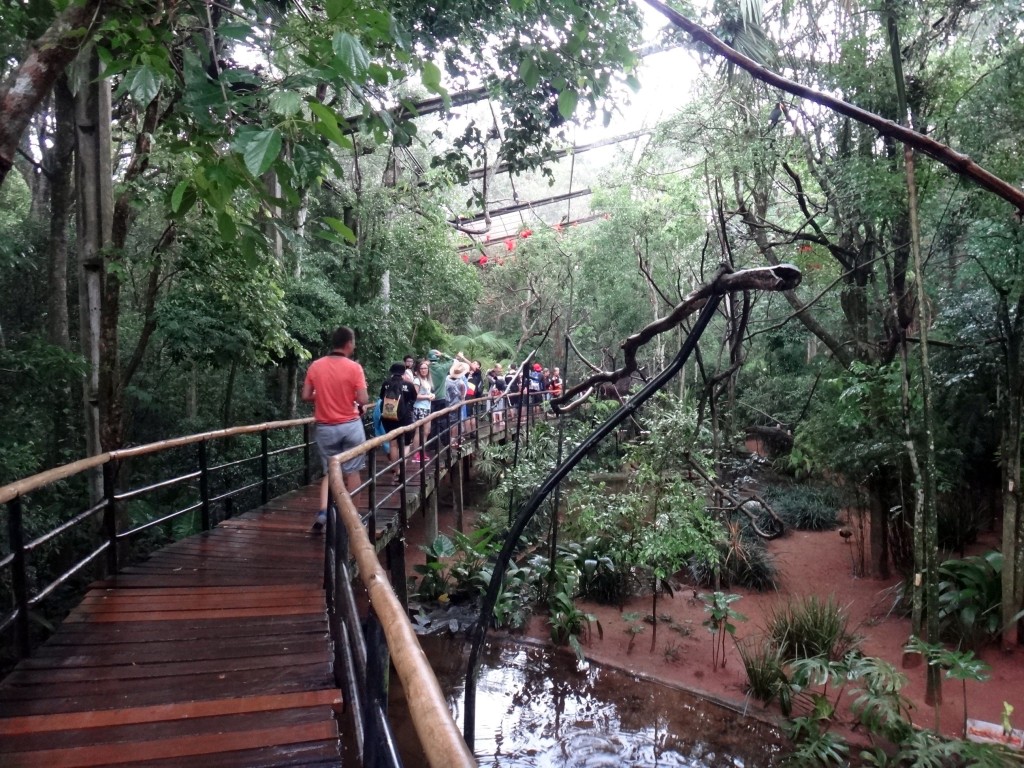
Parque das Aves — walk-through aviaries where toucans, macaws, and parrots fly freely around you.
Parque das Aves is a bird sanctuary located at the entrance of the national park, right next to the falls. It’s consistently one of the highest-rated attractions in the region — and genuinely worth the extra stop.
The park has over 1,500 birds across more than 150 species, including toucans, hyacinth macaws, flamingos, and parrots. The setup is walk-through aviaries where the birds fly freely around you rather than sitting in cages. Some will land on you if you have food.
Entry costs around R$70 (~$14 USD) and takes 1.5–2 hours. Combine it with the falls on the same day — the park is at the entrance, so you can visit on the way in or on the way out.
Planning your full Foz do Iguaçu trip? See everything else there is to do beyond the falls — Itaipu Dam, the Three Borders, and day trips to Argentina and Paraguay.
Things to Do in Foz do Iguaçu →Argentina Side — Is It Worth It?
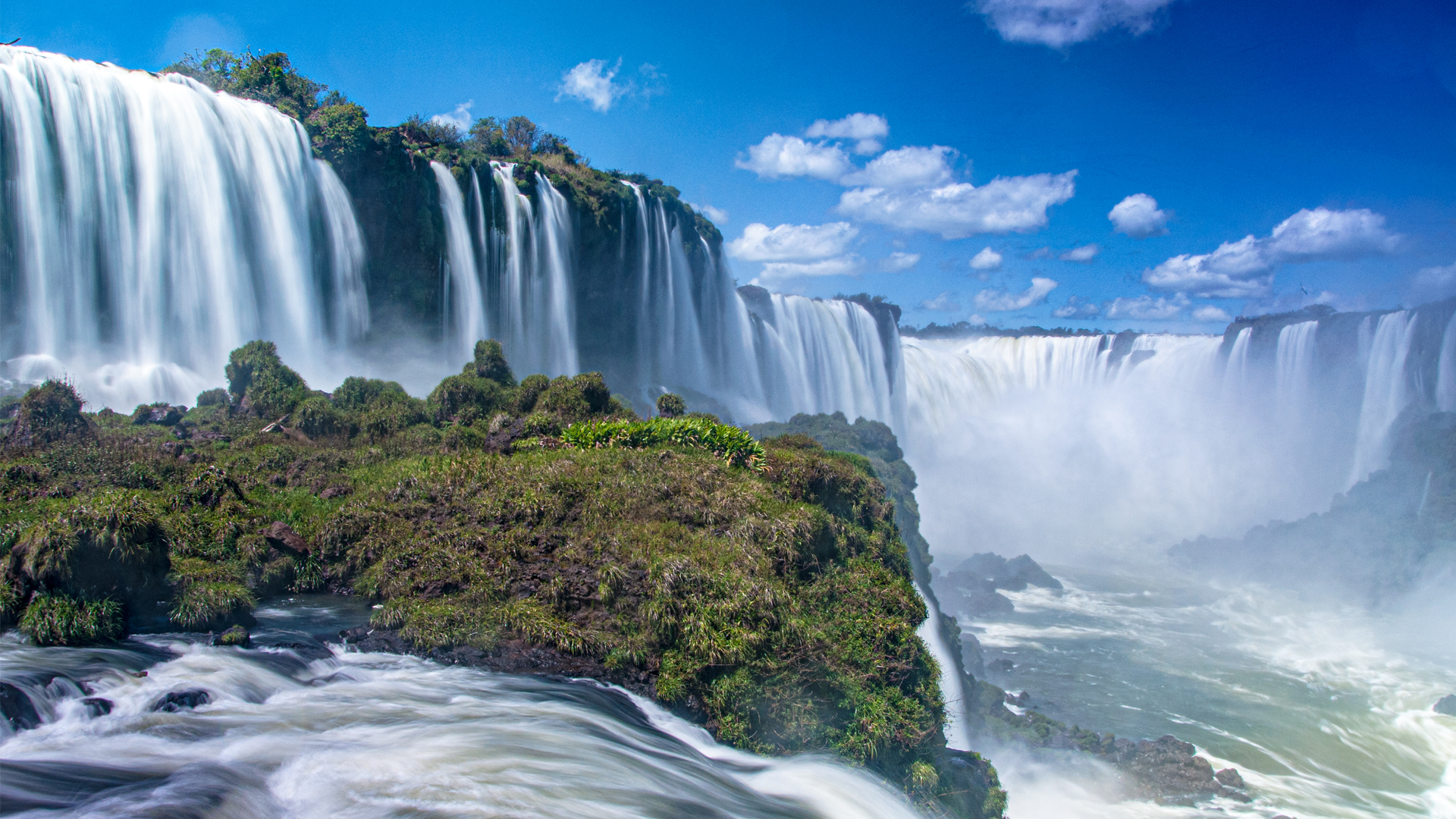
The Argentine side — narrow walkways take you into the falls rather than across from them, for a completely different perspective.
The Argentine side (Iguazú Falls, Puerto Iguazú) takes a full day and requires crossing the border. From Foz do Iguaçu, the crossing is straightforward — organized tours handle everything, or you can take the public bus which crosses the border at Ponte Tancredo Neves.
The Argentine side has three circuits: the Upper Circuit (Circuito Superior), the Lower Circuit (Circuito Inferior), and the walkway to the Devil’s Throat from above. Combined, they take 4–6 hours. The Devil’s Throat from the Argentine side is a completely different experience from the Brazilian side — you’re standing directly over the main cascade looking straight down into it.
Argentine entry: approximately AR$23,000 (~$23 USD) for foreigners in 2026. Check current prices before you go — Argentine prices fluctuate.
Tickets and Costs
- Brazilian national park entry (foreigners): R$83 (~$16 USD)
- Macuco Safari boat tour: R$299 (~$58 USD)
- Parque das Aves: R$70 (~$14 USD)
- Argentine side entry (foreigners): ~$23 USD
- Itaipu Dam tour: R$35–120 (~$7–23 USD) depending on tour type
Practical Tips
- Wear clothes you don’t mind getting completely soaked — especially if you’re doing the Macuco Safari or getting close to the Devil’s Throat
- Bring a rain jacket and a dry bag for your phone and camera
- Wear comfortable walking shoes with grip — the trails can be slippery from spray
- Go early — park opens at 9am and the first 90 minutes are noticeably less crowded
- Sunscreen is essential — the walkways are exposed and the sun is strong
- The park restaurant is convenient but overpriced — eat breakfast before you go
- Bus 120 from the Foz do Iguaçu urban bus terminal goes directly to the park entrance — ~30 minutes, very cheap
- If you’re visiting both sides, do Brazil first — the panoramic view gives you context for understanding the scale before you go inside on the Argentine side