
Things to Do in Maceió — Best Activities & Attractions
Maceió is the capital of Alagoas and one of the most underrated beach destinations in Brazil. The water here is a shade of green-blue that looks almost unreal at noon — and unlike Recife or Fortaleza, you won’t be competing with crowds of international tourists for space on the beach. This guide covers the best things to do in Maceió, from the natural pools of Pajuçara to the day trips along the Alagoas coast.

The natural pools of Pajuçara — formed by offshore coral reefs about 2km from the coast, accessible by traditional jangada rafts at low tide.
1. Piscinas Naturais de Pajuçara
The natural pools of Pajuçara are the main reason most visitors come to Maceió and they deliver completely on the expectation. The pools form about 2km offshore from Pajuçara beach, where coral reefs create a shallow, calm, crystal-clear swimming area at low tide. The water is warm, the visibility is excellent, and the colors — ranging from emerald to turquoise depending on the light — look unrealistic in photographs and even more impressive in person.
You get there by jangada — the traditional wooden sailboat of the Northeast Brazilian coast. Boats depart from the Pajuçara beach waterfront throughout the day, with low tide being the optimal window for the pools. Check the tide schedule before going — when the tide is high, the pools are submerged and there’s nothing to see. The boat trip itself takes about 20 minutes each way.
Jangadas anchored at the natural pools — the boats double as floating bars and snack stations while you swim in the reef pools.
2. Walk the Orla — Pajuçara to Jatiúca

The orla of Maceió — a continuous seafront promenade linking Pajuçara, Ponta Verde, and Jatiúca through palm trees, bike lanes, and beach kiosks.
The orla is Maceió’s waterfront promenade — a continuous path of palm trees, bike lanes, beach bars, and pavement that connects the three main beach neighborhoods. Walking from Pajuçara through Ponta Verde to Jatiúca takes about 45 minutes at a relaxed pace and gives you a complete picture of the city’s coastal character.
In Ponta Verde, look for the famous “Eu ❤️ Maceió” sign and the Cadeira Gigante — a giant beach chair that points out toward the turquoise sea and is the most photographed spot in the city. The kiosks along the orla serve cold coconut water, grilled queijo coalho, and sururu — a local shellfish stew that’s unique to Alagoas. Stop at whichever one looks busiest with locals.
Rent a bike from one of the stations along the orla if you want to cover more ground. The cycling infrastructure is well maintained and the flat seafront makes it easy for any fitness level.
3. Day Trip to Maragogi
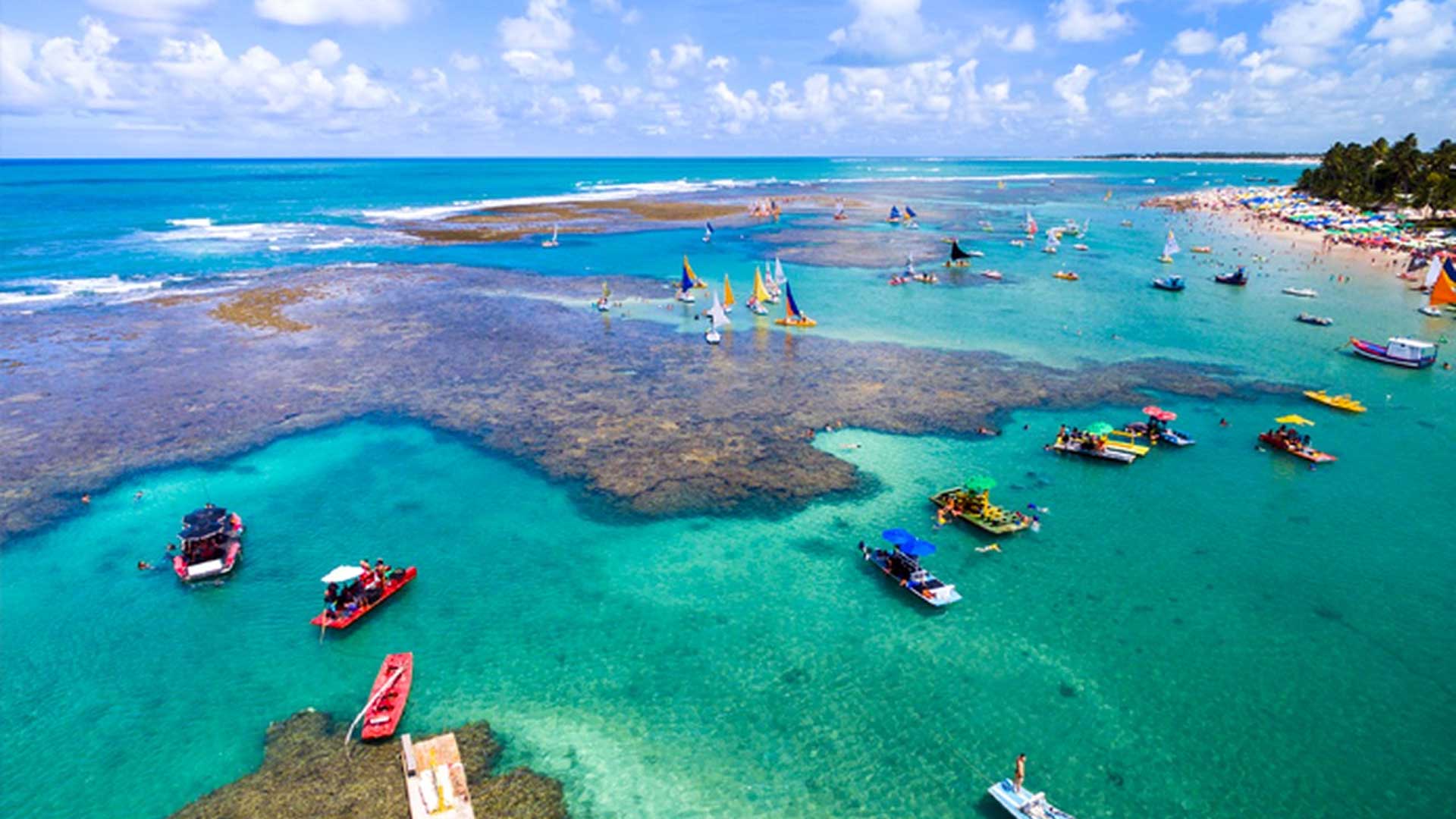
Maragogi — 130km north of Maceió, considered one of the most beautiful stretches of coastline in Brazil, with natural pools that rival the Maldives in clarity.
Maragogi is 130km north of Maceió along the Alagoas coast and is considered one of the most beautiful coastal destinations in Brazil. The natural pools here — known as the galés — are larger and clearer than Pajuçara’s, with abundant marine life including sea turtles, rays, and colorful fish visible in the shallow water. The surrounding beaches are lined with coconut palms and the water graduates from turquoise to deep blue within meters.
The standard day trip from Maceió includes round-trip transport and a catamaran ride to the galés — the most efficient way to visit since parking and logistics in Maragogi can be complicated without local knowledge. Tours depart early morning and return by late afternoon, giving you a full day on the water.
A guided day trip to Maragogi on GetYourGuide includes transport from Maceió, catamaran access to the natural pools, and a guide who times the visit around low tide for the best conditions.
Maragogi Day Trip — Catamaran & Natural Pools from Maceió
- ✔ Round-trip transport from Maceió included
- ✔ Catamaran ride to the galés natural pools
- ✔ Snorkeling equipment included
- ✔ Free cancellation
4. Gunga Beach

Praia do Gunga — where the lagoon meets the sea at the southern end of Alagoas, with coconut palms, calm water, and almost no development.
Gunga Beach sits at the southern edge of a long peninsula about 40km south of Maceió, where a freshwater lagoon (Lagoa do Roteiro) meets the Atlantic Ocean. The beach itself is narrow, lined with coconut palms, and has calm, shallow water on the lagoon side and stronger waves on the ocean side — you can choose which to swim in depending on the day.
The setting is genuinely beautiful and relatively undeveloped — no high-rise hotels, no large beach infrastructure. A handful of barraquinhas (beach bars) serve fresh seafood and cold drinks. The lagoon crossing to reach the beach is done by small wooden boat — part of the experience.
Gunga is best reached as part of an organized day trip from Maceió that includes transport, the lagoon crossing, and time on both the beach and the lagoon. Some tours combine Gunga with São Miguel dos Milagres for a full south coast day.
Planning where to base yourself in Maceió? Our neighborhood guide covers Pajuçara, Ponta Verde, and Jatiúca with honest advice for every budget.
Where to Stay in Maceió →5. São Miguel dos Milagres
São Miguel dos Milagres is a small village about 100km north of Maceió, set along one of the most beautiful and least-developed stretches of the Alagoas coast. The beaches here — Tatuamunha, Lages, Porto da Rua — have warm, shallow water protected by offshore reefs, enormous coconut palm groves, and almost no tourist infrastructure beyond a handful of pousadas and small restaurants.
The Tatuamunha River nearby is home to manatees — a boat tour up the river to see them in their natural habitat is one of the most memorable wildlife experiences on the Northeast coast. São Miguel dos Milagres sees far fewer visitors than Maragogi and feels genuinely off the beaten path despite being only a day trip from Maceió.
6. Pajuçara Handicraft Fair
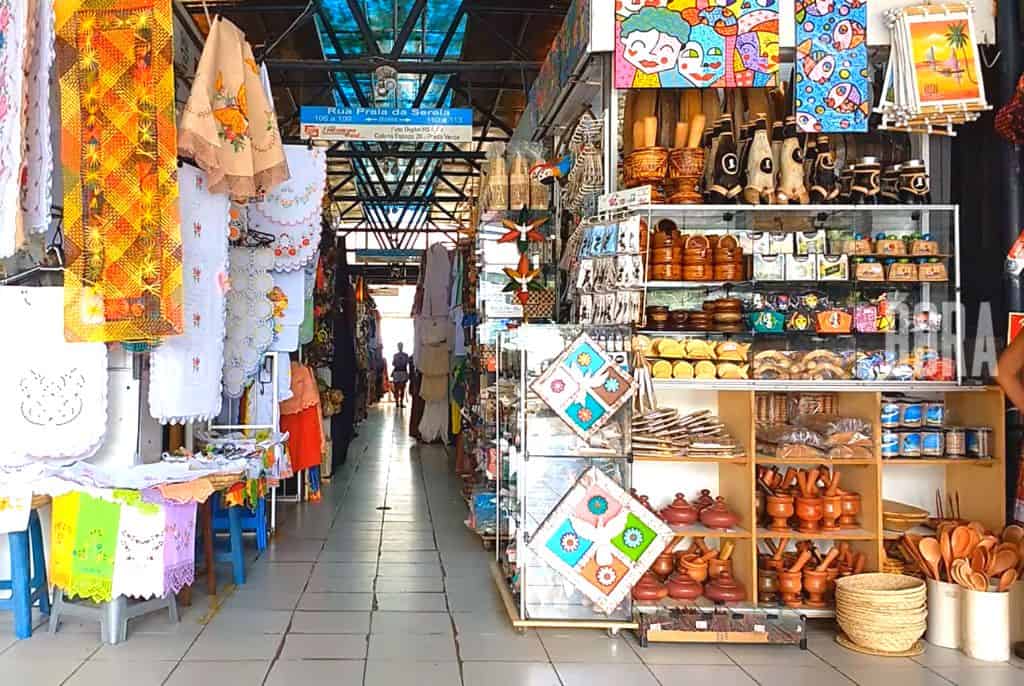
The Pajuçara Handicraft Fair — one of the best craft markets in the Northeast, with lacework, ceramics, carved wood, and regional produce from across Alagoas.
The Pajuçara Handicraft Fair (Feira de Artesanato de Pajuçara) is one of the best craft markets in the Northeast and worth an hour of your time regardless of whether you plan to buy anything. The pavilion and surrounding stalls sell lacework, hammocks, ceramics, carved wood, bottles of colored sand, and regional produce including rapadura and tapioca.
Alagoas is particularly known for its rendeiras (lacemakers) — women who produce intricate lacework using techniques brought from Portugal centuries ago. The quality varies between stalls but the best pieces are genuinely well made and reasonably priced compared to tourist markets in Salvador or Recife.
7. Lagoa Mundaú
Lagoa Mundaú is a large tidal lagoon behind Maceió connected to the sea through a series of channels. The lagoon is the source of sururu — the small clam unique to Alagoas that appears in Maceió’s most traditional dishes — and is lined with stilt houses, small fishing communities, and mangroves. Sunset from the lagoon, with the city skyline behind you and the light changing over the water, is one of the best free experiences in Maceió.
Boat tours of the lagoon depart from the waterfront near Pajuçara and take you through the channels and islands for 1–2 hours. Some tours include stops at lagoon-side restaurants serving fresh sururu and shrimp directly from the water.
Food — What to Eat in Maceió
Alagoano food is one of the most distinct regional cuisines in Brazil and eating well in Maceió requires no effort — the ingredients are exceptional and the seafood comes out of the water the same day it’s served.
- Sururu — small clams from Lagoa Mundaú, served in a broth with coconut milk and dendê oil. The most distinctly Alagoano dish and found nowhere else quite the same way.
- Moqueca alagoana — fish or seafood stew with coconut milk and local spices, lighter than the Bahian version and generally excellent.
- Queijo coalho grelhado — grilled halloumi-style cheese on a stick, sold by vendors along every beach and beach bar. R$5–8 and genuinely good.
- Tapioca — crepes made from cassava flour, filled with shrimp, cheese, coconut, or meat. A Northeast staple and a good breakfast option along the orla.
- Água de coco — fresh coconut water, served cold from the shell. Ubiquitous on every beach and the best hydration option in the Northeast heat.
Practical Tips for Maceió
- Stay in Pajuçara, Ponta Verde, or Jatiúca. These three connected beach neighborhoods are where everything worth doing is located. Staying elsewhere adds transport time and security complications.
- Visit the piscinas naturais at low tide only. Check the tide table before going — high tide makes the trip pointless. Your hotel can tell you the best window for the day.
- Book day trips in advance in high season. December–March is peak season and the most popular tours to Maragogi fill up. Book at least a few days ahead.
- Use Uber after dark. The tourist neighborhoods are safe during the day. After 10pm, walking between neighborhoods is not recommended — use Uber for all movement.
- September to November is the best time to visit. Dry season, less crowded than summer, good prices. December–February is busy and expensive; April–July has the most rain.