
F1 Brazil 2026 — First-Time Visitor Guide to the São Paulo Grand Prix
Attending an F1 race for the first time — or attending Interlagos for the first time — involves a lot of decisions that are obvious in hindsight and confusing in advance. This guide covers what to expect at each stage of the weekend, what to bring, and the mistakes that first-timers reliably make so you don’t have to.
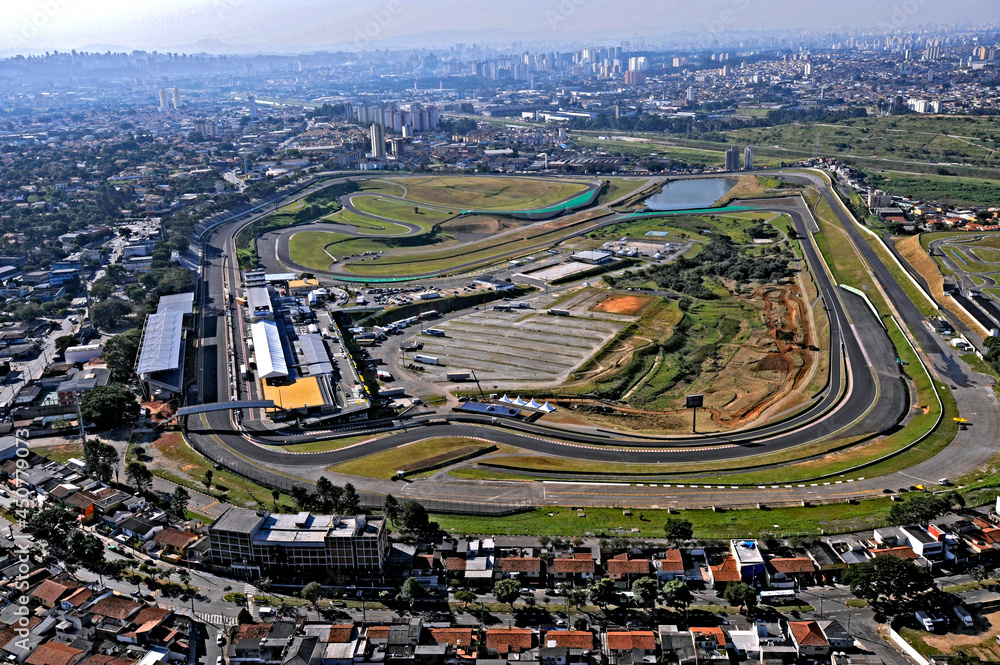
The Autódromo José Carlos Pace at Interlagos — home of the Brazilian Grand Prix since 1973, built between two reservoirs in the southern suburbs of São Paulo.
Before You Go — Checklist
Pre-trip checklist
- Book grandstand tickets — buy from official sources only (brasilf1.com or formula1.com)
- Book hotel in São Paulo city center — Paulista Avenue, Jardins, or Pinheiros
- Book international flights — prices rise significantly after August
- Check visa requirements — US, UK, EU, Canada, Australia citizens do not need a visa for Brazil
- Download Uber app and set up payment before arriving
- Download São Paulo Metro app or plan to buy a Bilhete Único card on arrival
- Pack a compact rain poncho — November is wet season at Interlagos
- Pack ear protection — optional but recommended for full sessions in grandstands
- Notify your bank of travel to Brazil to avoid card blocks
- Get travel insurance that covers Brazil
What Happens Each Day
Practice Day
- Morning Free Practice 1 — teams run setup programs and evaluate tyre compounds. Less intense than qualifying or the race but essential for understanding the circuit. Good day to arrive early, explore the circuit, and find your grandstand without race day crowds.
- Afternoon Free Practice 2 — longer run programmes. Teams often simulate race conditions. Friday sessions are significantly less crowded than Saturday and Sunday — use the space to move around and see different parts of the circuit.
- Evening Explore São Paulo. Friday night is the best night to try restaurants in Pinheiros or Vila Madalena without the Saturday race-crowd pressure.
Qualifying Day
- Morning Free Practice 3 — final setup session. Shorter and more focused than Friday. Teams finalize qualifying setups.
- Afternoon Qualifying — Q1, Q2, Q3. This is one of the most exciting sessions of any F1 weekend. Cars run at absolute maximum attack for single flying laps. The noise, speed, and tension during Q3 as the top 10 fight for pole position is extraordinary. Crowds are close to race-day levels.
- Evening The city celebrates qualifying results. Get back to your hotel early — Sunday is an early start.
Race Day
- Morning Arrive at circuit early — gates open several hours before the race. The grid walk before the race is accessible to general ticket holders in some areas. Brazilian fans begin the atmosphere building hours before lights out.
- ~14:00 Race start (confirm exact time on official F1 schedule). The opening lap at Interlagos — particularly at Turn 1 — is one of the most intense moments in any Grand Prix. The crowd noise at lights out is unlike anything in most sports.
- Post-race Wait 30–45 minutes after the checkered flag before leaving — the crowd thins significantly and the metro queue becomes manageable. Watch the podium ceremony from your grandstand.
At the Circuit — What to Expect
Interlagos is not the most modern circuit on the F1 calendar and that’s part of its character. The facilities are functional rather than polished — food stalls, merchandise stands, and basic amenities that work but don’t feel like a premium experience. The magic of Interlagos is the track, the atmosphere, and the crowd, not the infrastructure.
Entry: Expect queues at the turnstiles, especially Saturday and Sunday morning. Have your ticket ready on your phone or printed. Security bag checks are standard.
Inside the circuit: You are limited to the area around your grandstand. There is no free roaming between grandstand sections. The fan zone and merchandise areas are accessible to all ticket holders.
Food and drink: The circuit uses a pre-loaded card system — you cannot pay directly with cash or credit card at food stalls. Load the card at machines near the entrance on arrival. Any unspent balance is refundable at designated exit points.
Merchandise: Official F1 and team merchandise is available inside the circuit and significantly cheaper than buying at home. Team caps, t-shirts, and race programmes are the most popular items. Buy early in the weekend — popular sizes sell out.
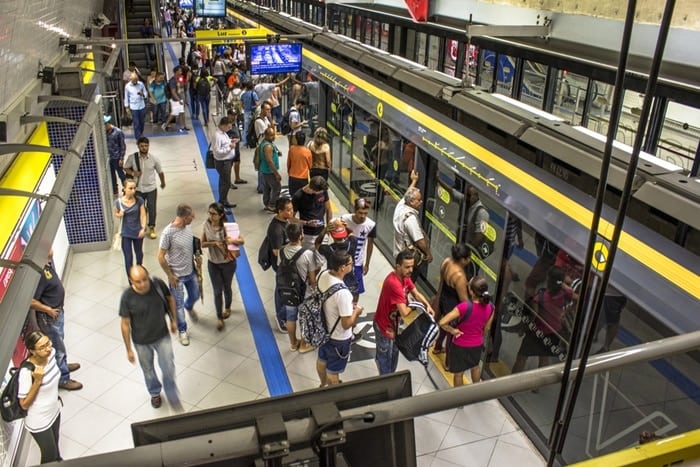
The São Paulo Metro Line 5 (Lilac) runs directly to Autódromo station — the fastest and cheapest way to reach Interlagos on any day of race weekend.
What to Bring
- Rain poncho — compact, fits in a bag. November at Interlagos is wet season and rain arrives fast. This is the single most important item for uncovered grandstands.
- Ear protection — foam earplugs or dedicated F1 earmuffs. F1 cars are significantly louder than expected, especially on the straight. Optional but recommended for full sessions.
- Small backpack or bag — check the circuit’s bag policy before packing. Large bags are typically restricted.
- Sunscreen — November in São Paulo can be hot between rain showers. Covered grandstand seats in M are an exception.
- Bilhete Único loaded and ready — don’t queue at the ticket machines on race day morning.
- Charged phone with Uber installed — essential for post-race transport options.
- Small amount of BRL cash — for anything outside the circuit. Inside the circuit uses the pre-loaded card.
- Team merchandise or colours — Brazilians are passionate about F1 and wearing your team’s colours adds to the experience. Red Ferrari flags are everywhere at Interlagos.
Haven’t chosen your grandstand yet? Our comparison guide covers every section at Interlagos with honest views, pros, cons, and price estimates.
Best Grandstands at Interlagos →Most Common First-Timer Mistakes
Making the Most of São Paulo
Most F1 visitors treat São Paulo as a backdrop to the race rather than a destination in its own right. That’s a missed opportunity — São Paulo has the best restaurant scene in Brazil, a nightlife that starts properly after midnight, and cultural attractions that can fill the gaps between sessions.
On Friday evening and Saturday evening, when you’re back in the city before curfew, the neighborhood of Pinheiros or Vila Madalena is where most visiting fans end up. Independent restaurants, bars, and a relaxed street culture that’s very different from the chaos of race weekend at the circuit.
The Museu de Arte de São Paulo (MASP) on Paulista Avenue is worth a couple of hours on Friday morning before heading to practice. The Japanese neighborhood of Liberdade is a short metro ride from the center. Ibirapuera Park — São Paulo’s equivalent of Central Park — is good for a morning run or an afternoon break between Friday sessions.
Safety in São Paulo
São Paulo requires the same awareness you’d apply in any large Latin American city — which is more than you’d need in Amsterdam but less than you might fear from dramatic headlines. The neighborhoods recommended for accommodation (Paulista, Jardins, Pinheiros, Campo Belo) are safe for international visitors and well-policed during race weekend.
- Use Uber rather than hailing street taxis — particularly around the circuit
- Don’t display expensive cameras, phones, or watches openly on the street
- Keep your phone in your pocket or bag rather than in your hand while walking
- Avoid the area around Interlagos after dark — stay in city center neighborhoods in the evenings
- Travel in groups at night, particularly after the race
- F1 teams and paddock personnel have experienced opportunist theft in São Paulo — the same precautions apply to fans