
Best Beaches in Northeast Brazil
Northeast Brazil has 3,000 kilometers of coastline and some of the best beaches in South America — clearer water, whiter sand, and more consistent sun than Rio. Most international visitors don’t know this stretch of coast exists. This guide covers the beaches worth making the trip for.

Northeast Brazil’s coastline stretches from Bahia to Maranhão — 3,000 kilometers of beaches ranging from urban seafronts to remote dune-backed bays with no roads in sight.
Why the Northeast and Not Rio
Copacabana and Ipanema are famous for good reason — they’re iconic urban beaches in a spectacular city setting. But if beaches are your primary goal, the Northeast delivers better water quality, more consistent sunshine, and far less crowd density than Rio’s urban shoreline.
The Northeast coast runs from Bahia in the south to Maranhão in the north. The further north you go, the drier and sunnier the climate — Fortaleza averages over 300 sunny days per year. The dry season here runs from July to January, which is the opposite of Rio, meaning the Northeast is at its best when Rio is in its wettest and most humid period.
The water is warm year-round (26–29°C), the trade winds keep the air temperature manageable, and the reef systems off Recife and Porto de Galinhas create natural pools that have no equivalent anywhere else in Brazil.
Pipa, Rio Grande do Norte

Praia do Amor in Pipa — one of the most photographed beaches in the Northeast, with red sandstone cliffs rising above a curved bay of clear water.
Pipa is a small village built on red sandstone cliffs above a series of beaches — Praia do Amor, Praia da Pipa, Praia do Madeiro, and Praia dos Golfinhos among them. The cliffs give the beaches a dramatic framing that distinguishes them from the flat coastline found elsewhere in the Northeast.
Spinner dolphins are resident in the bay year-round and frequently visible from the cliffs above Praia dos Golfinhos early in the morning. The Lagoa de Guaraíras — a large brackish lagoon behind the village — is used for kitesurfing and sunset boat tours. The village itself has a good concentration of restaurants and pousadas without feeling overbuilt.
Best visited outside Brazilian school holidays (July and January) when the village fills with domestic tourists and prices rise significantly.
Planning a trip to Pipa? Our complete guide covers beaches, where to stay, costs, and a full itinerary.
Pipa Travel Guide →João Pessoa, Paraíba
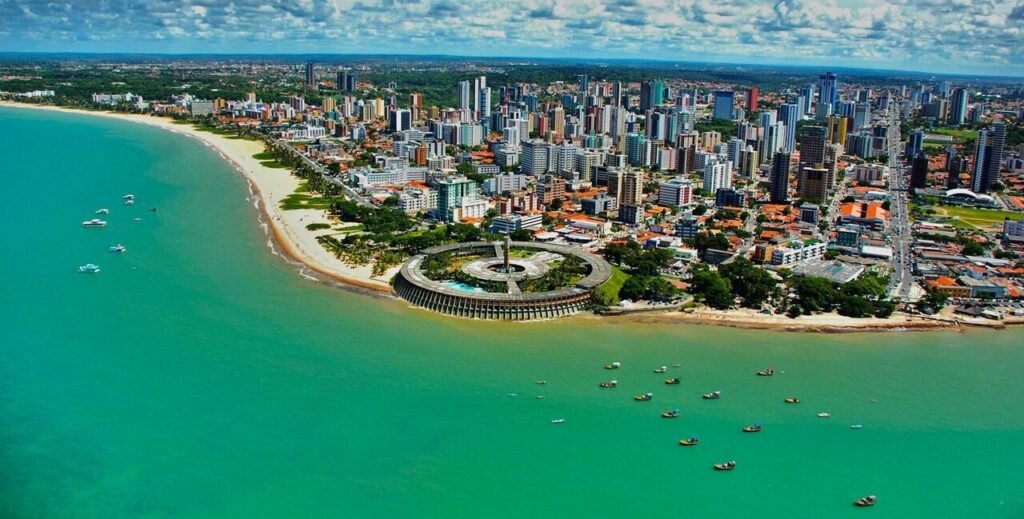
The beaches of João Pessoa — calm water, long stretches of white sand, and natural reef pools accessible by jangada at low tide, all in the least touristy state capital in the Northeast.
João Pessoa is the easternmost city in the Americas — the first place on the continent to see the sun rise. Its beaches are calm, the water is warm and clear, and the city itself is significantly less touristy than Fortaleza or Recife, which means lower prices and fewer crowds at the beaches.
Tambaú and Manaíra are the main urban beaches — long, calm, and backed by a seafront promenade with beach bars and restaurants. Picãozinho is a reef system about 700 meters offshore accessible by jangada at low tide — the natural pools it forms are among the clearest in the Northeast. Cabo Branco is the lighthouse point at the easternmost tip of the Americas, worth visiting at sunrise.
Further south, Coqueirinho and Tambaba (the latter clothing-optional) are among the best beaches in Paraíba state — reached by a short drive from the city through coconut groves and red cliff scenery.
Porto de Galinhas, Pernambuco
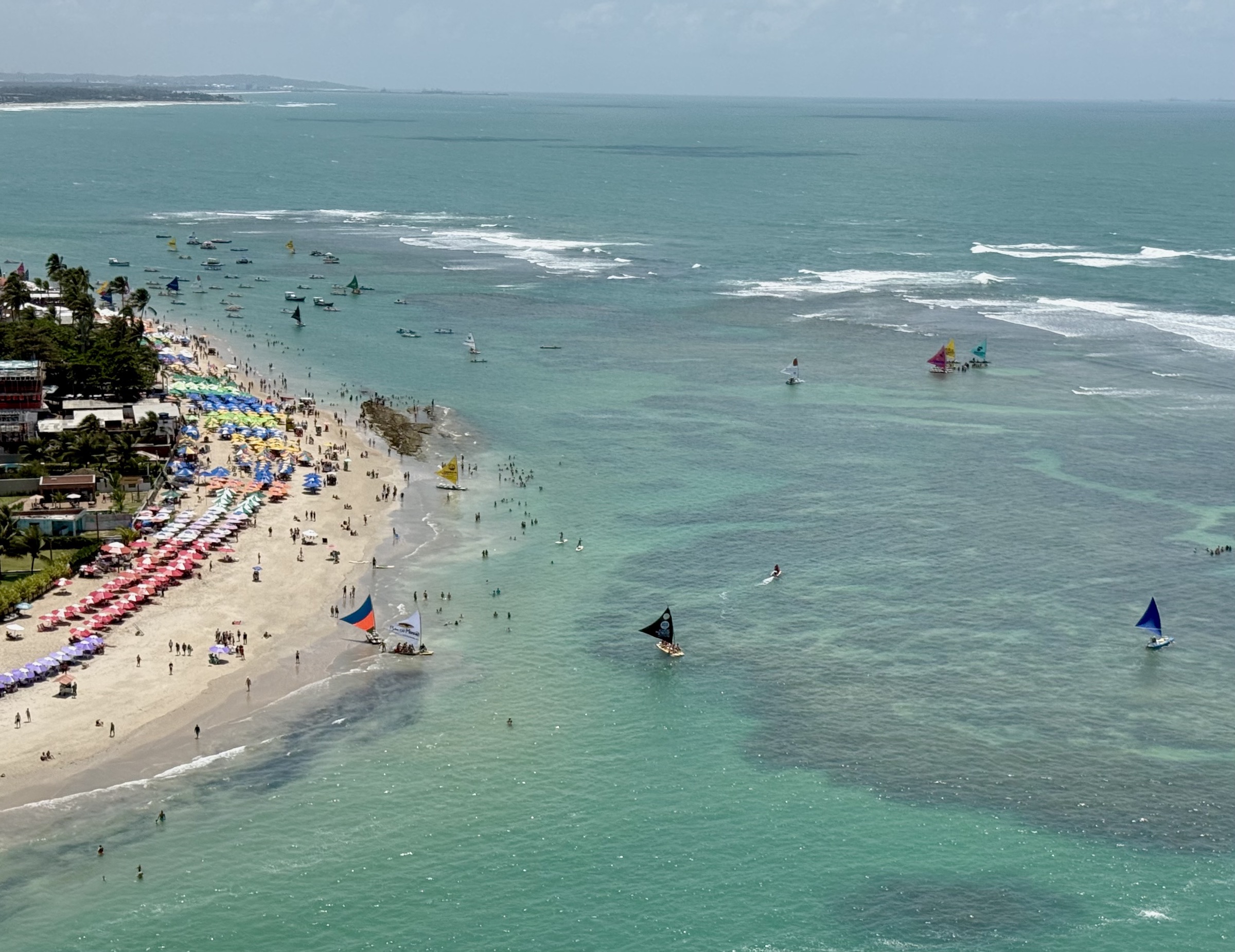
Porto de Galinhas — the reef pools are the main event, accessed by jangada at low tide and containing fish, starfish, and water so clear the bottom is visible at every depth.
Porto de Galinhas has been voted Brazil’s best beach multiple times and the reef pools are the reason. At low tide, jangadas (traditional flat-bottomed rafts) take visitors out to natural pools formed by the reef — shallow, sheltered, and so clear you can see every grain of sand and every fish below. It’s a genuinely different beach experience from anything else on this list.
The village behind the beach has grown considerably to accommodate the tourism — it’s no longer a quiet fishing village — but the beach and reef system remain excellent. Go in the morning before the tour groups arrive and check the low tide times before planning your visit — the pools only work at low tide.
Jericoacoara, Ceará

Jericoacoara — hammocks over the lagoon, sand streets, no cars, and trade winds that make it one of the best kitesurfing destinations in South America.
Jericoacoara — Jeri to everyone who’s been there — is a car-free village in the dunes of western Ceará. The streets are sand, there are no traffic lights, and the main evening activity is climbing the dune above the village to watch the sunset. It sounds contrived but it works.
What makes Jeri more than just a pretty village is the wind. The consistent trade winds that blow from July to December make it one of the best kitesurfing and windsurfing destinations in South America. Lagoa Paraíso and Lagoa Azul — freshwater lagoons a short drive from the village — are calm, warm, and good for swimming. The combination of ocean beach, dune landscape, and lagoons gives Jeri more variety than most single beach destinations.
Getting there requires a 4×4 transfer across the dunes from Jijoca — there’s no paved road into the village. This is part of the appeal and also what keeps the crowds manageable.
Maceió, Alagoas
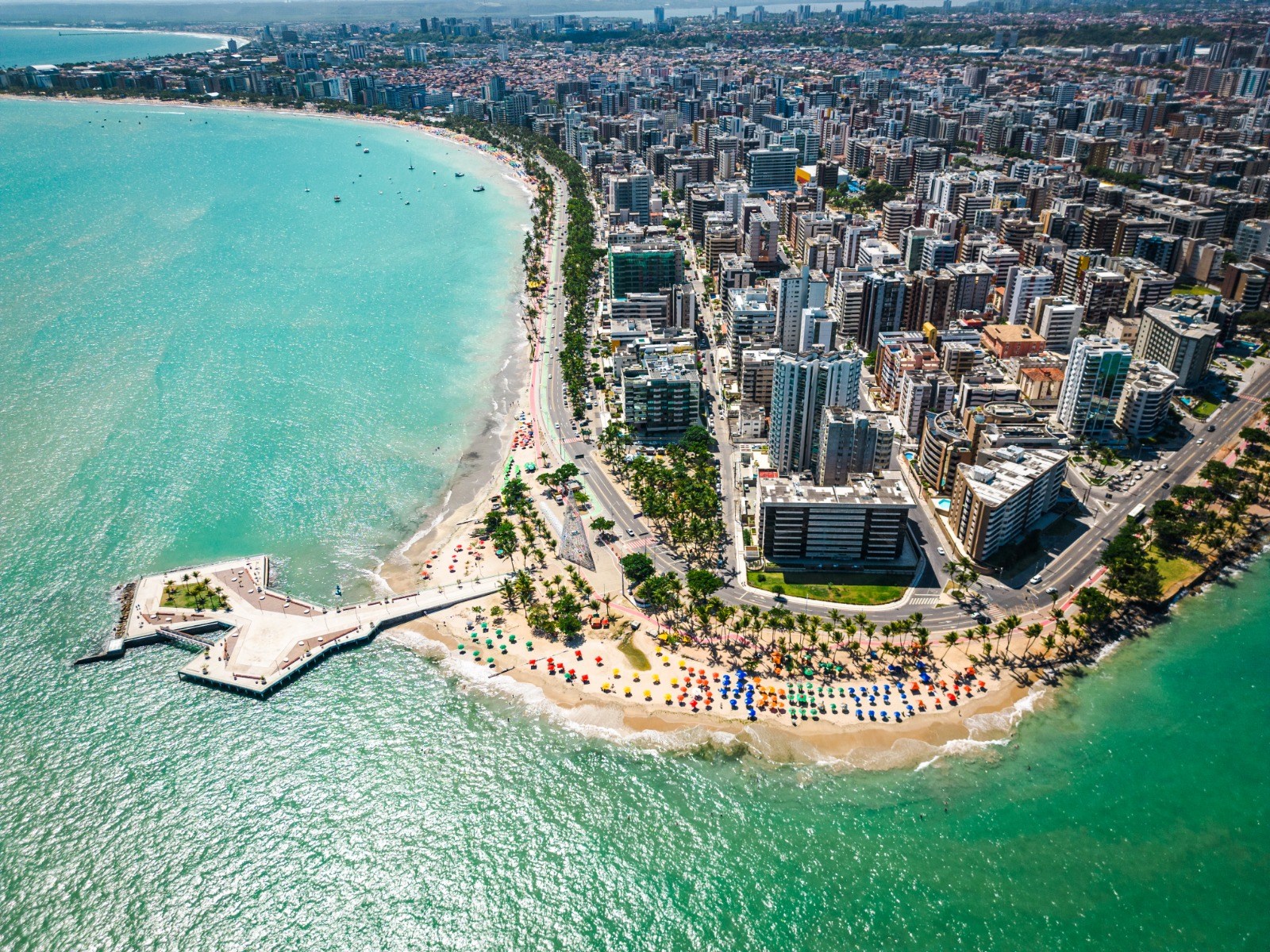
Maceió from above — the emerald green color of the water is produced by the shallow reef system that runs along the Alagoas coast, one of the most distinctive coastlines in Northeast Brazil.
Maceió is the capital of Alagoas and has some of the most distinctively colored water in Brazil — a deep emerald green produced by the shallow reef system that runs along the coast. The natural pools at Pajuçara are similar to Porto de Galinhas but less visited and equally impressive.
Further north, Praia do Gunga is considered one of the most beautiful beaches in the Northeast — a long stretch of white sand at the point where a lagoon meets the ocean, surrounded by coconut palms. It requires a boat transfer to reach, which keeps the crowds low.
Maceió is significantly less visited by international tourists than Recife or Fortaleza, which means lower prices, fewer tourist traps, and a more genuinely local experience on the beaches.
Canoa Quebrada, Ceará

Canoa Quebrada — red sandstone cliffs carved by wind and rain into abstract shapes above a wide beach, with a bohemian village on top and buggy tracks along the cliff face below.
Canoa Quebrada sits on top of dramatic red sandstone cliffs above a wide beach — the cliff face has been carved by wind and rain into abstract shapes that glow orange at sunset. The village on top of the cliffs has a bohemian character that dates back to the 1970s when it was discovered by Brazilian hippies, and some of that atmosphere survives in the mix of pousadas, bars, and craft stalls along the main street.
Buggy tours along the cliff tops and down to the beach below are the main activity — the same red cliff landscape extends for kilometers in both directions and is best appreciated from a buggy rather than on foot. The beach itself is wide, the surf is moderate, and the sunset from the cliffs is one of the better ones on the Northeast coast.
Fortaleza Beaches
Fortaleza’s urban beaches — Praia do Futuro and Meireles — are busy, lively, and backed by barracas (beach restaurants) that serve fresh seafood and cold beer through the day. Praia do Futuro is the better beach for swimming — wide, with consistent waves and the Thursday barracas tradition that draws half the city every week.
The real draw around Fortaleza is the day trips. Cumbuco (30km west) for kitesurfing. Canoa Quebrada (160km east) for the red cliffs. Jericoacoara (300km west) for the full dune-and-lagoon experience. Fortaleza works best as a base for exploring the surrounding coast rather than as a beach destination in itself.
Lençóis Maranhenses
Lençóis Maranhenses is not a conventional beach destination — it’s a national park of white sand dunes filled with freshwater lagoons after the rainy season. But it belongs on any list of Northeast Brazil’s best coastal landscapes. The beach at Caburé, where the Rio Preguiças meets the Atlantic, is one of the most unusual in Brazil — river on one side, ocean on the other, sandbank in between.
Visit between May and September when the lagoons are full. The rest of the year the lagoons evaporate and the landscape changes completely.
Practical Tips for Northeast Brazil Beaches
- The dry season runs July to January — this is when the Northeast is at its best. March to June is the rainy season with rougher seas and less reliable sun.
- July and January are Brazilian school holiday peaks — beaches fill up and prices rise. September to November is the best value window with dry weather and lower crowds.
- Natural reef pools only work at low tide. Always check tide tables before planning visits to Porto de Galinhas, Maceió, or João Pessoa.
- Fly into the nearest airport to your destination — Recife for Porto de Galinhas, Natal for Pipa, Fortaleza for Jericoacoara and Canoa Quebrada, Maceió for Alagoas beaches.
- The trade winds are consistent and strong in most Northeast destinations — good for kitesurfers, worth knowing about if traveling with children.
- SPF 50+ is essential — the Northeast sun is intense and the white sand reflects UV more than you expect.