
Maceió Travel Guide
Maceió is the capital of Alagoas — a small state with an outsized coastline. The water here is a shade of green-blue that looks almost too vivid to be real, the natural pools offshore from Pajuçara beach are among the best in Brazil, and the whole place is significantly less crowded with international tourists than Fortaleza, Recife, or Salvador. This is one of the Northeast’s best beach destinations and one of its least discovered.
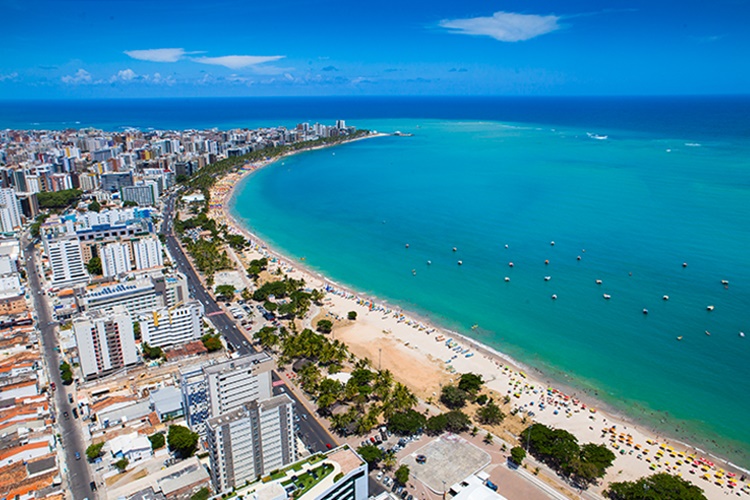
Maceió and the Alagoas coast — turquoise water, offshore natural pools, and a coastline that stretches north to Maragogi and south to Gunga Beach.
About Maceió
Maceió sits on a narrow strip of land between the Atlantic Ocean and the Lagoa Mundaú — a tidal lagoon that feeds the city’s most distinctive dish (sururu, the local clam) and provides a different kind of waterfront from the beach side. The city’s tourist zone is compact: three beach neighborhoods — Pajuçara, Ponta Verde, and Jatiúca — connected by a flat seafront promenade that makes the whole area walkable.
What sets Maceió apart from other Northeast beach capitals is the water. The offshore coral reefs that create the natural pools also protect the coastal beaches, keeping the water consistently calm, warm, and clear. At noon in the dry season, the sea along the Maceió waterfront is a color that has no good name in English — somewhere between emerald and turquoise, depending on the depth.
Why Visit Maceió
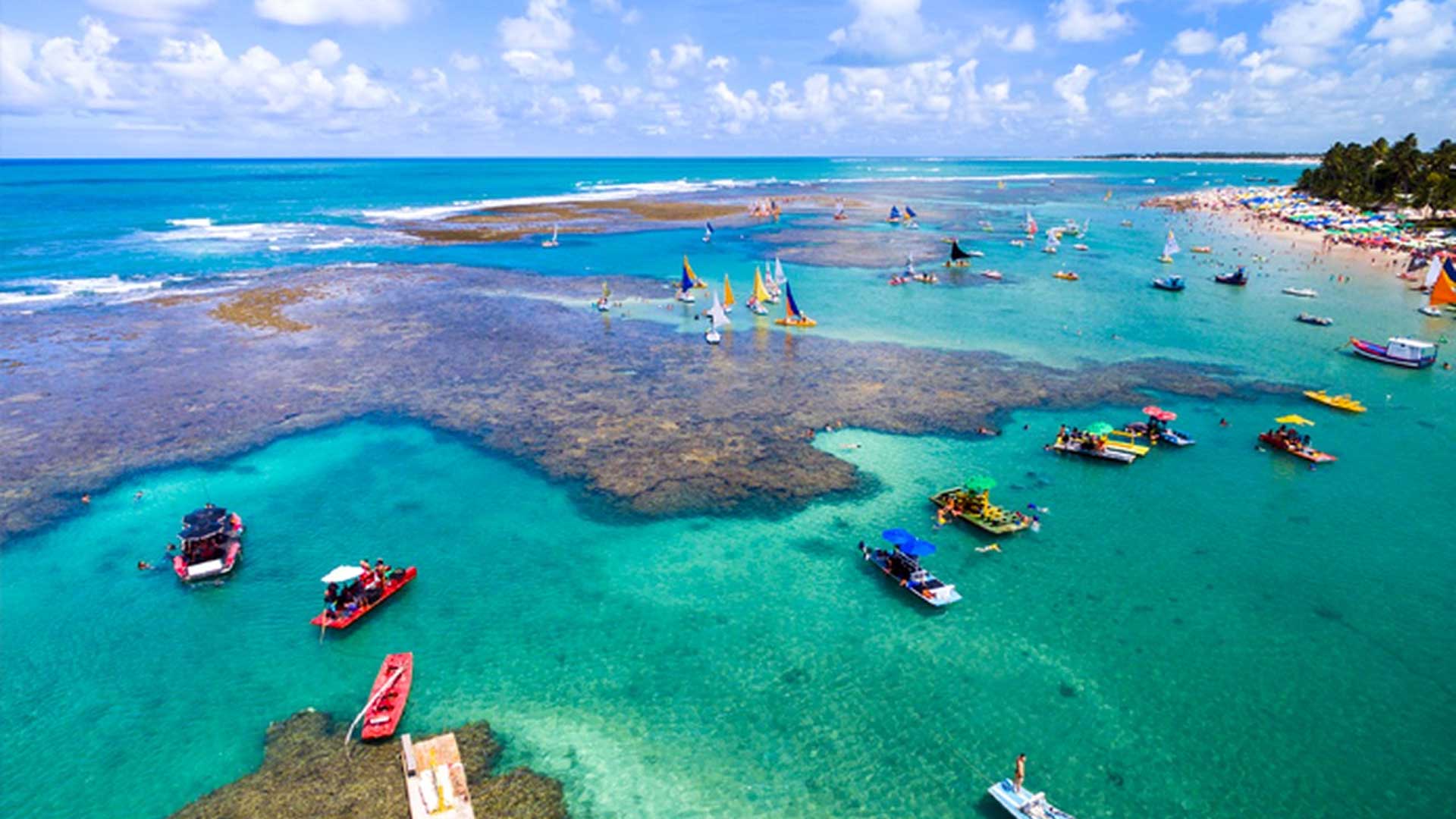
- The natural pools. The piscinas naturais of Pajuçara are one of the most distinctive natural attractions in the Northeast — offshore reef pools accessible by traditional jangada boats, with warm clear water and no crowds. Nothing in Fortaleza or Salvador has an equivalent.
- Maragogi. 130km north, Maragogi’s galés natural pools have marine life that rivals the Maldives at a fraction of the cost. An easy and worthwhile day trip from Maceió.
- The food. Alagoano cuisine is one of Brazil’s most distinctive regional traditions — sururu, moqueca alagoana, fresh shrimp from the lagoon. Eating well in Maceió costs almost nothing.
- Fewer international tourists. Maceió receives far fewer foreign visitors than Fortaleza, Recife, or Salvador. The tourist zone is well-developed but not overrun. The beaches feel less like tourist productions and more like places where Brazilians actually go.
- Affordability. Maceió is among the cheapest major beach destinations in Brazil. Daily costs are lower than almost any comparable destination in the Northeast.
Top Things to Do in Maceió
The natural pools at Pajuçara are the main event — a jangada ride to offshore reef pools at low tide, with water clear enough to see the bottom from the boat. Plan the visit around the tide table and go in the morning for the best conditions.
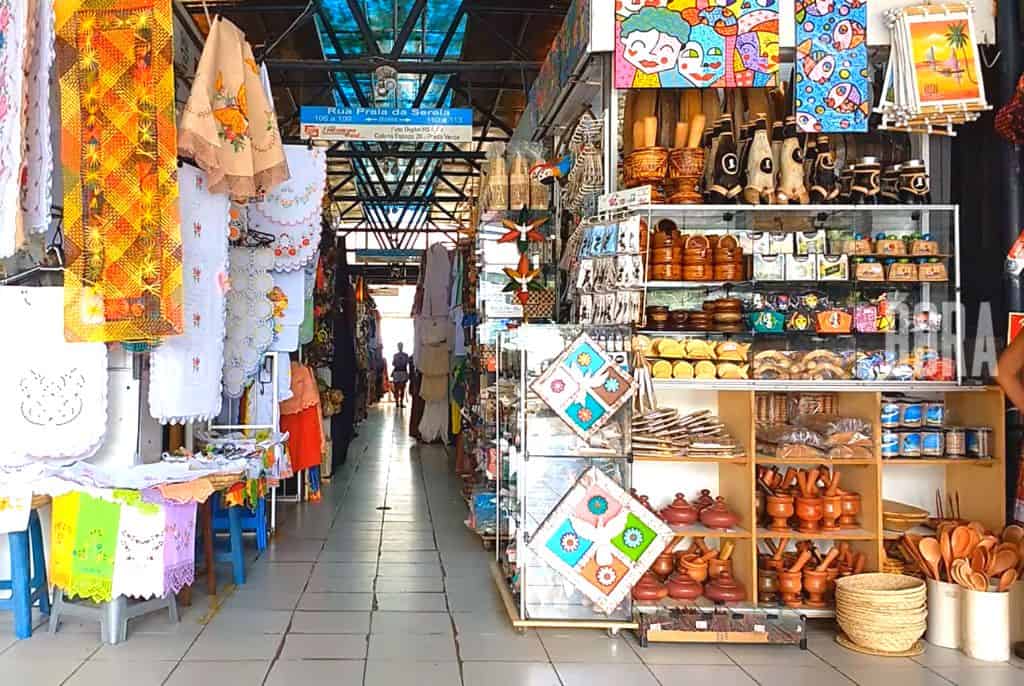
The orla connecting Pajuçara, Ponta Verde, and Jatiúca is worth walking end to end — palm-lined, flat, and dotted with kiosks serving coconut water, queijo coalho, and tapioca. The Cadeira Gigante photo spot in Ponta Verde and the handicraft fair at Pajuçara are both worth including.
Day trips define the broader Maceió experience. Maragogi to the north has the most spectacular natural pools on the Alagoas coast. Gunga Beach to the south offers a quiet lagoon-meets-ocean setting with almost no development. São Miguel dos Milagres, 100km north, rewards an overnight stay for visitors who want the undeveloped Alagoas coast at its most beautiful.
Best Beaches in Maceió

Pajuçara — Maceió’s most active beach neighborhood and the departure point for the natural pool jangadas.
Pajuçara is the most visited beach — lively, commercial, and the gateway to the natural pools. Ponta Verde has the clearest water in the city and the best hotels — the recommended base for most visitors. Jatiúca is quieter with the best nightlife. Further afield, Maragogi and Gunga Beach are the standout day trip beaches.
Best Areas to Stay in Maceió
Stay in one of the three beach neighborhoods — Pajuçara, Ponta Verde, or Jatiúca. Anywhere else adds complications without benefit. Ponta Verde is the best overall choice: clearest water, safest environment, and the best hotels. Pajuçara works for budget travelers and easiest natural pool access. Jatiúca is best for nightlife.
Is Maceió Safe?
Maceió is generally safe for tourists in the three main beach neighborhoods. The main risks are petty theft in crowded areas and walking in the wrong direction after dark. The tourist zone is a narrow coastal strip — stay within it and apply standard urban awareness. Use Uber after dark rather than walking between neighborhoods. The beaches are safe during the day with normal precautions.
How Much Does It Cost to Visit Maceió?
Maceió is one of the most affordable beach destinations in Brazil. Budget travelers can get by on $35–50 per day (hostel, local food, basic activities). Mid-range visitors with a good hotel and restaurant meals typically spend $80–130 per day. Most of the main activities — beaches, natural pools, the orla — cost almost nothing. The main cost variables are accommodation and day trips.
Best Time to Visit Maceió
September to November is the best time — dry season weather, fewer tourists than peak season, and accommodation prices 20–30% lower than December–February. October is consistently the best single month. The rainy season (April–August) brings afternoon showers that can disrupt beach days and day trips, but prices drop significantly.
All Maceió Guides



Ready to start planning? Our itinerary guide covers 3, 5, and 7-day plans combining the natural pools, Maragogi, and Gunga Beach.
Maceió Itinerary →