
Things to Do in Florianópolis, Brazil
Florianópolis is an island city in southern Brazil with over 40 beaches, a lagoon at its center, sand dunes, surf, Atlantic forest trails, and a colonial downtown that most visitors walk past on the way to the beach. It draws Brazilians and Argentinians in huge numbers every summer — and for good reason. The variety of landscapes packed into one island is genuinely unusual.
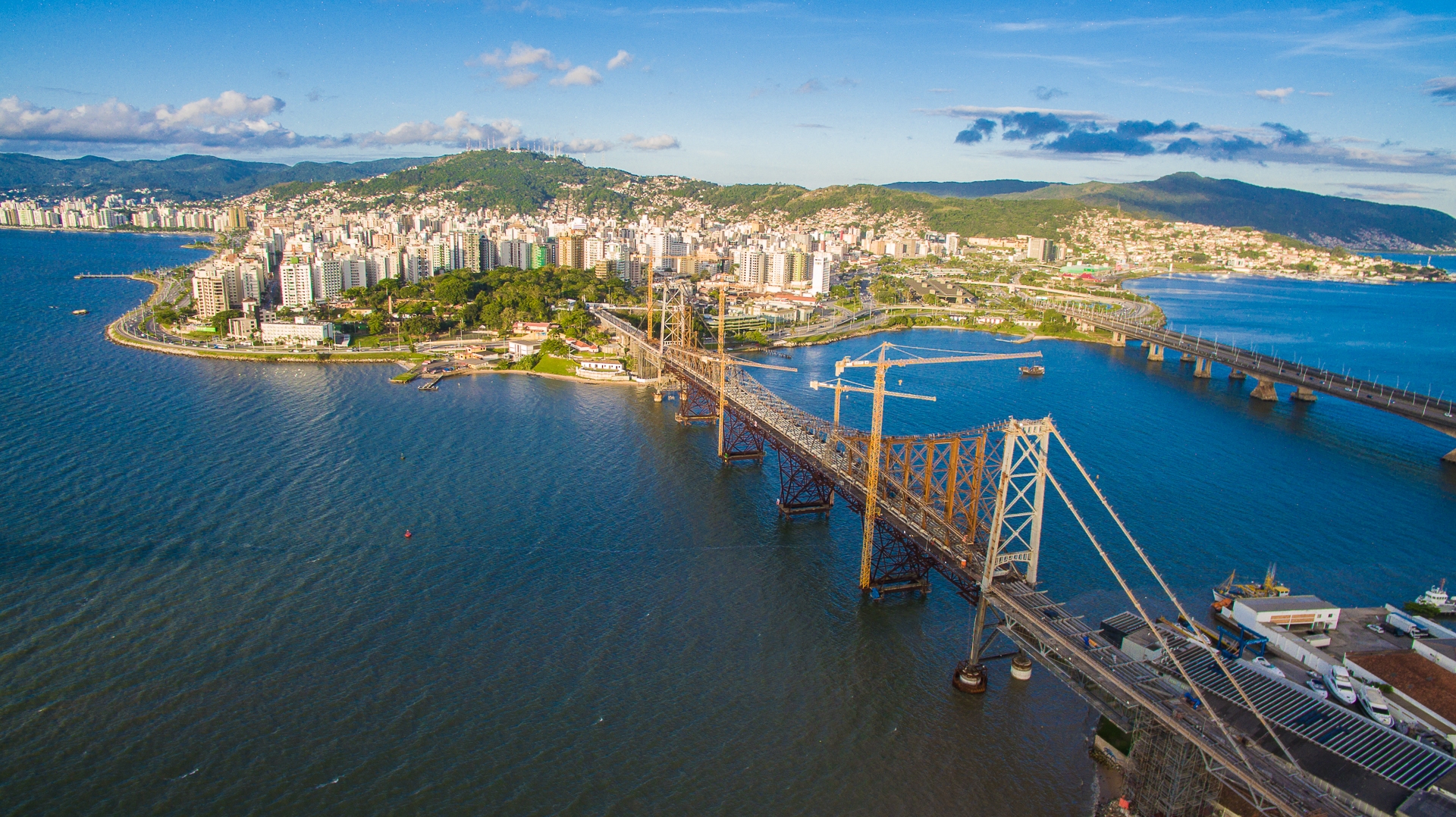
Florianópolis sits on an island connected to the mainland by two bridges — with ocean beaches on the east coast and the sheltered Lagoa da Conceição at its center.
1. Spend a Day at Lagoa da Conceição

Lagoa da Conceição — a saltwater lagoon at the center of the island, surrounded by dunes, restaurants, and one of Florianópolis’s most relaxed neighborhoods.
Lagoa da Conceição is the social and geographic center of the island. A large saltwater lagoon surrounded by dunes on one side and a village on the other, it’s where a lot of Florianópolis’s best restaurants, bars, and nightlife concentrate — and where many longer-term visitors end up spending most of their time.
The lagoon itself is good for swimming, stand-up paddleboarding, and kitesurfing — the wind picks up reliably in the afternoon, which makes it one of the top kite spots in Brazil. Several schools operate from the lagoon’s eastern shore and offer lessons for beginners at around R$200–300 for a two-hour session.
The Canal da Barra connects the lagoon to the ocean at Barra da Lagoa, and you can take a small boat across for a few reais — a short trip worth doing if you’re in the area. The village of Lagoa has enough restaurants and cafes to fill an afternoon without trying.
2. Surf or Sandboard at Joaquina
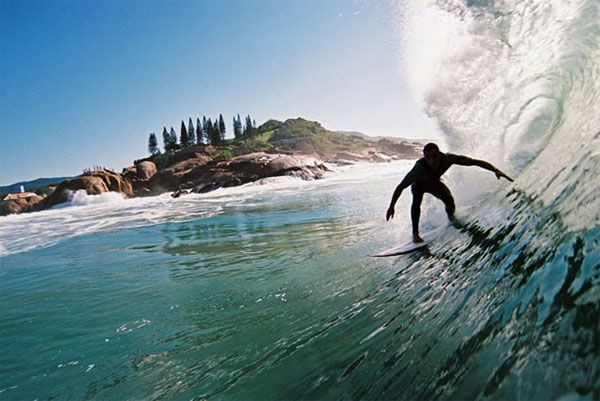
Joaquina — one of Brazil’s most respected surf beaches, with consistent Atlantic swells and a large dune system that rises directly from the sand.
Joaquina is Florianópolis’s most famous surf beach and one of the best in southern Brazil. The Atlantic swells here are consistent and powerful enough to have hosted national and international surf competitions for decades. It’s not a beginner beach — the waves are fast and the currents can be strong — but experienced surfers will find it one of the most rewarding spots on the island.
Behind the beach, the Dunas da Joaquina is a large dune system that you can climb and sandboard down. Boards rent for around R$20–30 per hour from vendors at the base. It sounds like a minor activity but the dunes are genuinely large — 40 meters at the highest point — and the views from the top take in both the ocean and the lagoon simultaneously.
Non-surfers and non-sandboarders can simply walk the dunes or watch the surf from the beach. The sheer scale of the landscape — dunes, ocean, and Atlantic forest all in one frame — makes Joaquina worth the trip even if you’re not there to do anything in particular.
3. Explore the Historic Center
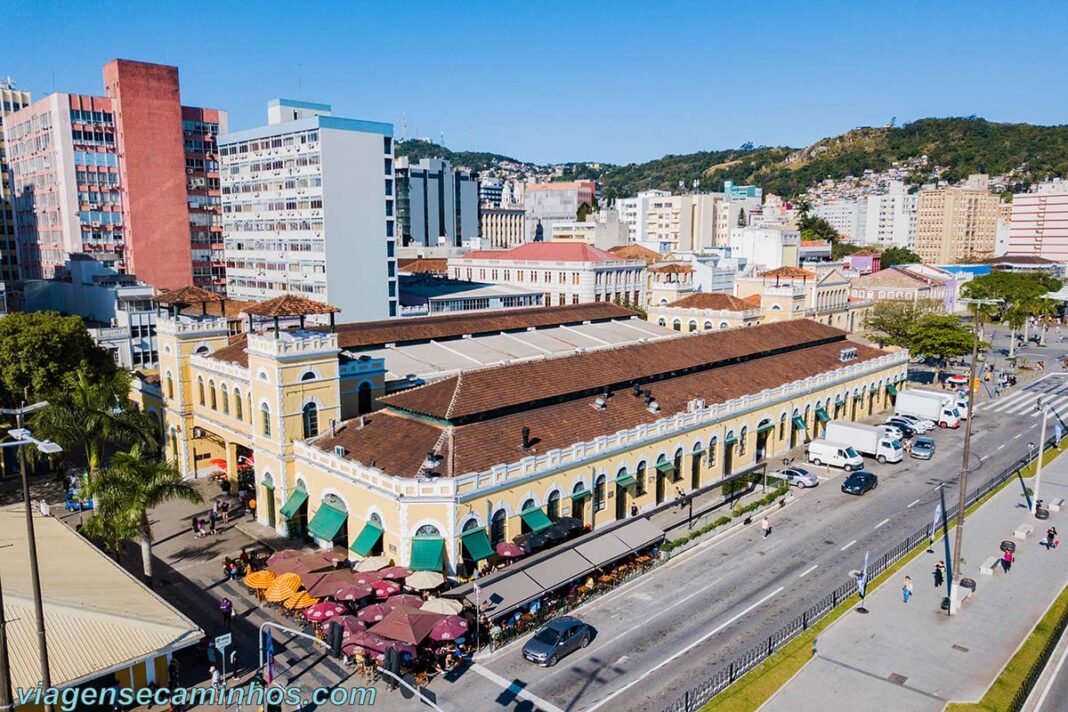
The Mercado Público — Florianópolis’s 19th-century public market, still very much in use as a place to eat, drink, and buy regional products from the island and surrounding areas.
Most visitors rush straight to the beaches and never spend time in central Florianópolis. That’s understandable — the island’s natural attractions are the main draw — but the historic center repays a half-day, especially if you arrive before or after peak summer season when it’s less frantic.
The Mercado Público, built in 1851, is the centerpiece. A large covered market with two floors of stalls selling fresh produce, regional foods, cachaça, and local crafts. The ground floor has a cluster of old-school bars that open in the morning and fill with locals drinking beer and eating oysters from Ilha de Santa Catarina — some of the best in Brazil, farmed right in the bays around the island. A portion of a dozen oysters costs R$25–40 depending on the stall.
A short walk from the market, the Ponte Hercílio Luz is worth seeing. Built in 1926 and now closed to traffic but restored for pedestrians, it’s one of the few remaining suspension bridges of its era in the country and the symbol of the city. Cross it in the early morning or at sunset for the best light over the bay.
The Praça XV de Novembro, the main square, has a large fig tree — the Figueira Centenária — that’s reportedly over 100 years old and shades most of the square. The surrounding streets have old colonial buildings, a cathedral, and a handful of good lunch restaurants doing traditional Azorean-influenced food.
4. Visit Ilha do Campeche
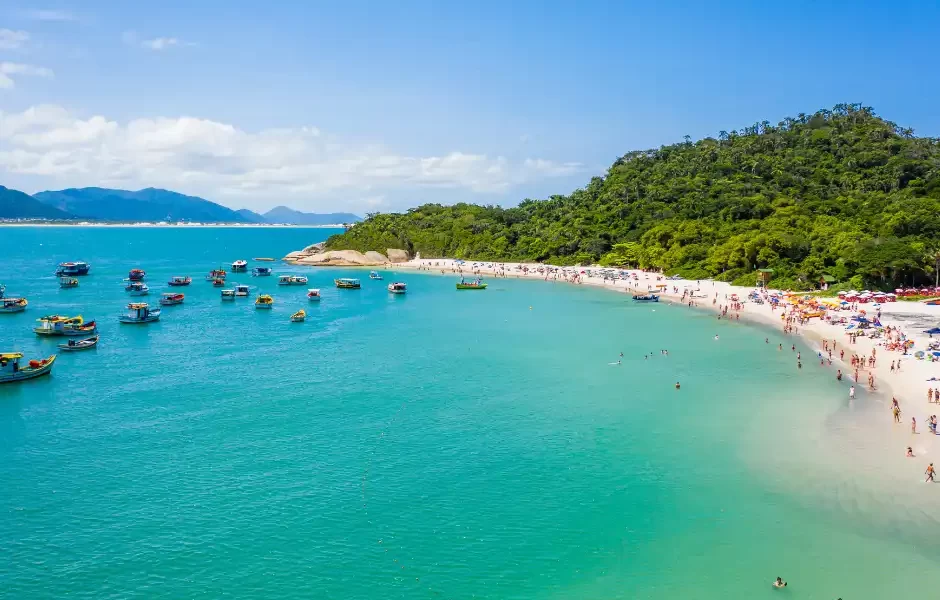
Ilha do Campeche — a small island off the south coast of Florianópolis, accessible only by boat, with clear water and pre-Columbian rock carvings on the island’s interior.
Ilha do Campeche is a small uninhabited island about 800 meters off the coast of Praia do Campeche in the south of the island. Access is by boat only — departures run from Praia do Campeche and take about 15 minutes each way, costing around R$60–80 per person return.
The appeal is twofold. The water around the island is exceptionally clear — visibility of 5–8 meters is common, which makes it one of the best snorkeling spots in the state. The island itself is a protected area and has a trail through Atlantic forest to pre-Columbian petroglyphs carved into the rock face — images attributed to the Tupi people who inhabited the island before European contact. The carvings are well-preserved and genuinely interesting, not a tourist fabrication.
Visitor numbers are capped daily to protect the environment. Boats stop running in the early afternoon — arrive at Praia do Campeche by 9am to secure a spot on the morning departures, especially in summer.
5. Hike to Lagoinha do Leste

Lagoinha do Leste — a wild beach and freshwater lagoon at the southern tip of the island, accessible only on foot through Atlantic forest. One of the most rewarding hikes in Florianópolis.
Lagoinha do Leste is the best hike on the island and one of the most rewarding short treks in southern Brazil. The trail starts from Pântano do Sul in the south of the island, passes through dense Atlantic forest, and emerges after about 90 minutes at a wild beach with a small freshwater lagoon — completely isolated, with no road access and no commercial infrastructure.
The beach itself is one of the most dramatic on the island: a long crescent of sand backed by hills, with the lagoon on one end and open Atlantic on the other. The water can be rough and is not always safe for swimming, but the scenery is worth the walk regardless.
The trail is well-marked and not technically difficult, but it’s hilly and can be muddy after rain. Allow three to four hours round trip including time at the beach. Bring more water than you think you need — there’s nothing at the destination and the walk back feels longer than the walk in.
6. Spend a Morning at Barra da Lagoa
Barra da Lagoa is a small fishing village on the east coast of the island where the Lagoa da Conceição meets the ocean through a narrow canal. It’s one of the few places in Florianópolis that still feels like a working fishing community rather than a beach resort — boats come in with the catch in the early morning, the canal is lined with simple seafood restaurants, and the pace is noticeably slower than the main tourist beaches.
The beach at Barra is good for swimming — calmer than Joaquina and less crowded than the beaches further south. The canal itself is crossed by a small footbridge and a wooden boat ferry (R$3–5 per crossing) that takes you between the village and the beach. Walk over early, have breakfast at one of the canal-side places, and be back before the main crowds arrive from mid-morning.
From Barra da Lagoa you can also access the Trilha da Costa da Lagoa — a path along the western shore of the lagoon that passes through small communities with no road access. It’s a 7 km one-way trail, flat and easy, ending at a cluster of restaurants only reachable on foot or by boat.
Practical Notes
- Florianópolis requires a car or rideshares to get around — the island is large and public transport between areas is slow and infrequent.
- Summer (December–February) is peak season. Beaches are crowded, prices rise 40–60%, and traffic on the island’s main roads can be genuinely bad. October–November and March are significantly better for getting around.
- Ilha do Campeche boat departures depend on sea conditions — trips are cancelled when the swell is too high. Check conditions the morning before you plan to go.
- For the Lagoinha do Leste hike, start early — by 10am the trail gets busy and the exposed sections become very hot.
- The Mercado Público is closed on Sundays. Plan the historic center visit for a weekday or Saturday morning.
- For more on getting around the island, see our Florianópolis where to stay guide — neighborhood choice makes a big difference to how much you drive each day.