Best Time to Visit Florianópolis
Florianópolis has a clear answer to this question — and it’s not the one most people expect. The peak summer months bring the best weather but also the worst crowds, highest prices, and most frustrating traffic the island has to offer. For many visitors, the shoulder seasons are a considerably better experience. Here’s the honest breakdown.
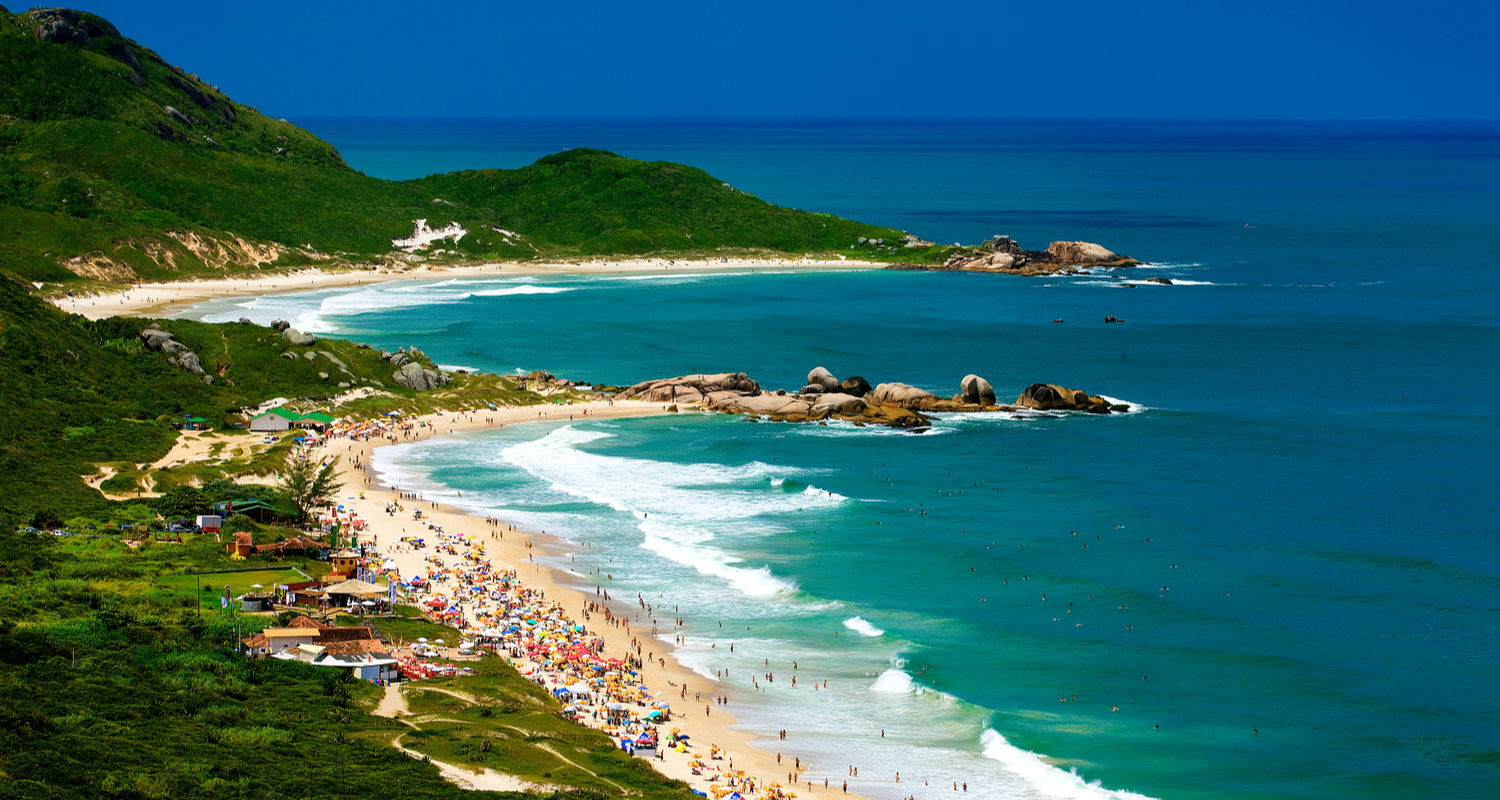
Florianópolis in summer — brilliant weather, turquoise water, and beaches packed with Brazilian and Argentine tourists. The experience depends heavily on when exactly you arrive.
The Seasons at a Glance
Florianópolis is in southern Brazil — latitude 27° south — which means it actually has four distinct seasons, unlike the Northeast. Summers are hot and humid, winters are mild but can be cold and grey, and the shoulder seasons offer the best balance of weather, price, and crowd levels.
November and March
Warm, sunny, uncrowded. Prices at shoulder levels. The sweet spot — good weather without the summer chaos.
December to February
Best weather of the year but enormous crowds, double prices, and serious traffic. Great if you plan ahead; miserable if you don’t.
April and October
Quieter, cheaper, generally pleasant. Some rain possible. Good for hiking and exploring without the summer pressure.
June to August
Winter. Cold winds, grey days, and most beach infrastructure closed. Fine for a city visit, poor for beaches.
Best Months to Visit
November is the single best month for most visitors. The weather is warm and sunny, the summer crowds haven’t arrived yet, accommodation prices are 40–50% below January peaks, and the island feels like it belongs to the people who live there rather than a temporary population of tourists. The beaches are good, the restaurants have availability, and you can actually drive across the island in a reasonable amount of time.
March runs a close second. The summer crowds have gone home, the weather is still genuinely warm — often the best swimming temperatures of the year — and prices drop sharply after Carnaval. The beaches are clean, the water is warm, and the island has a relaxed end-of-summer feeling that many visitors prefer to the intensity of January.
October is also solid — slightly cooler than November with a higher chance of rain, but uncrowded and significantly cheaper. Good for hiking and outdoor activities. The Lagoinha do Leste trail is most enjoyable in October and November when the Atlantic forest is green and the light is good.
Summer — December to February
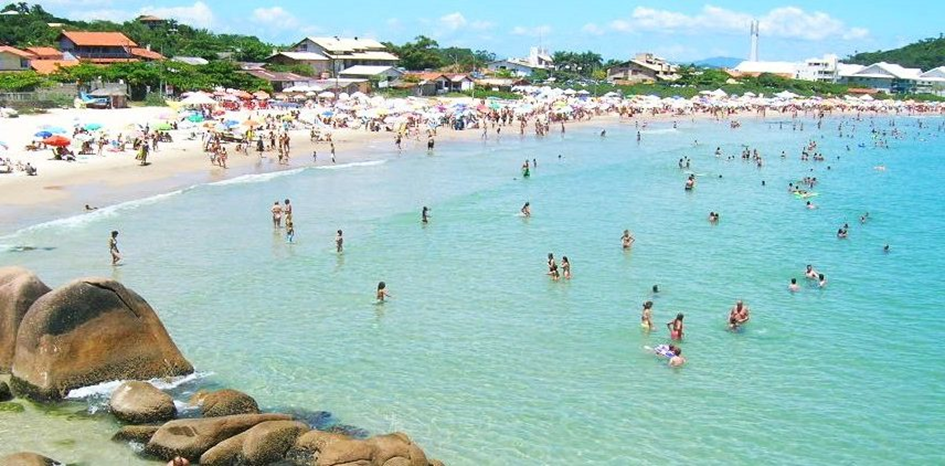
Peak summer in Florianópolis — the beaches fill up fast, the roads slow to a crawl, and accommodation prices double. Plan meticulously or it becomes an expensive frustration.
Brazilian and Argentine summer coincides exactly with the European and North American summer — December through February — which makes Florianópolis one of the most intensely seasonal destinations in South America. At peak, the island’s population effectively doubles.
The weather is genuinely excellent: temperatures of 28–34°C, long sunny days, warm water. But the infrastructure struggles under the load. The SC-401 — the main north-south road — can take two hours to drive in July what takes 25 minutes in October. Parking disappears. Restaurants have queues. Accommodation books out months in advance.
If you visit in summer, the experience is what you make of it. With proper planning — accommodation booked months ahead, early morning beach visits, avoiding weekend beach roads entirely — it can be excellent. Arriving without a plan and expecting to figure it out locally is a reliable way to have a bad time.
Winter — June to August

Florianópolis in winter — empty beaches, cold winds from the south, and most beach infrastructure closed. A completely different island from the one that fills up in January.
Florianópolis winters are mild by European standards but can feel harsh for a beach destination. Temperatures drop to 10–18°C, winds from the south can be cold and persistent, and the grey days outnumber the sunny ones. Most beach kiosks and some pousadas close entirely from June through August.
That said, winter has its uses. Prices drop to their lowest levels of the year. The historic center, Mercado Público, and Lagoa da Conceição village remain open and have a genuine local atmosphere without tourist crowds. The hiking trails are quieter, the Atlantic forest is green from winter rains, and Lagoinha do Leste is at its most atmospheric — dramatic skies, empty beach, cold but swimmable lagoon.
It’s not the Florianópolis most people come for, but winter suits a specific kind of traveler — one who wants the culture and landscape without the crowds, and doesn’t mind putting on a jacket.
New Year’s Eve in Florianópolis
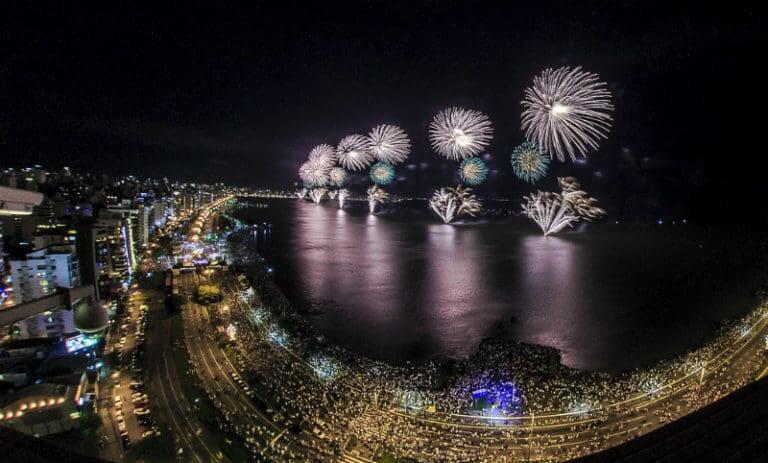
Réveillon in Florianópolis — New Year’s Eve draws enormous crowds to the beachfront, with fireworks, live music, and an atmosphere that makes the logistical chaos feel worth it.
New Year’s Eve — Réveillon — is Florianópolis’s biggest event of the year. Beachfront celebrations happen across the island, with the largest gatherings at Jurerê Internacional and along the Beira-Mar Norte avenue in the center. Fireworks, live music, and crowds that number in the hundreds of thousands across the island.
It’s genuinely spectacular if you’re prepared for it. The energy on the beachfront at midnight is hard to match. But the logistics require planning: accommodation booked months in advance, getting to the beach early (afternoon), and accepting that getting back will be slow regardless of how you travel.
If you want to experience Réveillon in Florianópolis, commit to it fully. Stay close to where you plan to celebrate, arrive early, and don’t plan anything demanding for January 1st.
Month by Month
Best weather, worst crowds. Double prices, heavy traffic. Book 4+ months ahead.
Still crowded. Carnaval brings parties but fewer visitors than Rio or Salvador.
Crowds gone, warm water, prices drop sharply. One of the best months overall.
Quieter and cheaper. Some rain. Good for hiking and exploring at a slow pace.
Cooling down, more rain. Shoulder prices. Better for city than beach.
Winter begins. Cold, grey days. Cheap. Beach infrastructure starts closing.
Coldest month. School holidays push prices up slightly despite the weather.
Still cool but winter winds easing. Prices low. Good for budget travelers.
Spring arriving. Warmer days, fewer clouds. Prices still low before summer rush.
Warm and uncrowded. Some rain. Excellent for hiking and outdoor activities.
Warm, sunny, empty beaches, shoulder prices. The best month to visit.
Great weather but crowds and prices rising fast. Réveillon is the highlight.
Quick Answer by Traveler Type
- Best weather, don’t mind crowds: January — book 4+ months ahead.
- Best overall balance: November or March — warm, uncrowded, good prices.
- Budget traveler: June or July — cheapest accommodation, but accept cold weather and closed beaches.
- Hiking and nature: October or November — trails are green, weather is good, beaches uncrowded.
- Surfing: April to August — winter swells produce the most consistent and powerful waves at Joaquina and Praia Mole.
- New Year’s Eve: Late December — commit fully, book early, and enjoy it properly.
- Families with children: November — calm water, good weather, no school holiday crowds.
- Avoiding Argentines: Any month except January and February, when Argentine tourists arrive in large numbers during their own summer holidays.