
Things to Do in Pipa, Brazil
Pipa is a small village on the Rio Grande do Norte coast — dramatic red cliffs, dolphins in a lagoon, and beaches that get progressively wilder the further you walk. It doesn’t try to be more than it is, which is part of why it works.
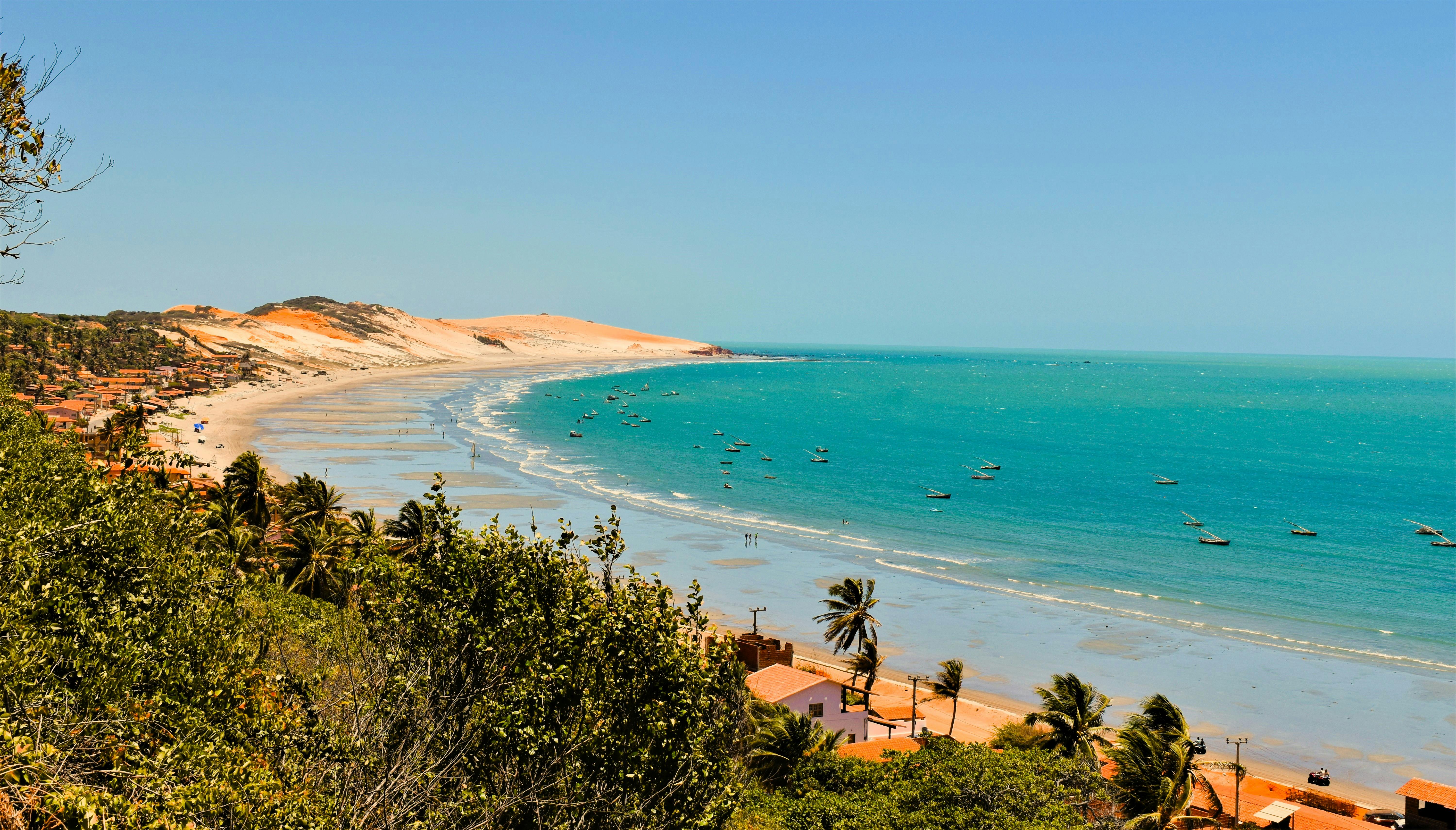
Pipa from above — red sandstone cliffs drop to a series of beaches along the Rio Grande do Norte coast, about 85km south of Natal.
1. Praia de Pipa

Praia de Pipa — the main beach in front of the village, framed by red cliffs on both ends and with reliable surf conditions for most of the year.
The main beach in front of the village is where most people start. It’s framed on both sides by red sandstone cliffs, which makes it one of the more visually striking beaches in the Northeast even by the standards of a coast full of dramatic beaches.
The surf here is consistent — good for intermediate surfers, less ideal if you want calm water for swimming. For calm swimming, Praia do Amor around the headland is better. Praia de Pipa is best for watching the surf, renting a board, or settling into a beachside bar for the afternoon.
The beach is a short walk from the village center. At low tide you can walk around the base of the cliffs to reach Praia do Amor — check the tide times before you go.
2. Praia do Amor

Praia do Amor — reached by a clifftop path or around the base of the rocks at low tide, with the best viewpoint over the Pipa coastline from the headland above.
Praia do Amor is a short walk from the main beach — down a clifftop path or around the base of the rocks at low tide. It’s smaller, more sheltered, and generally calmer than Praia de Pipa. The headland above it gives you one of the best views of the entire coastline.
The viewpoint at the top of the path is where most people take photos — the combination of red cliffs, turquoise water, and the village in the background is the image most associated with Pipa. It’s worth the short climb at any time of day, but sunset from here is particularly good.
3. Mirante do Chapadão
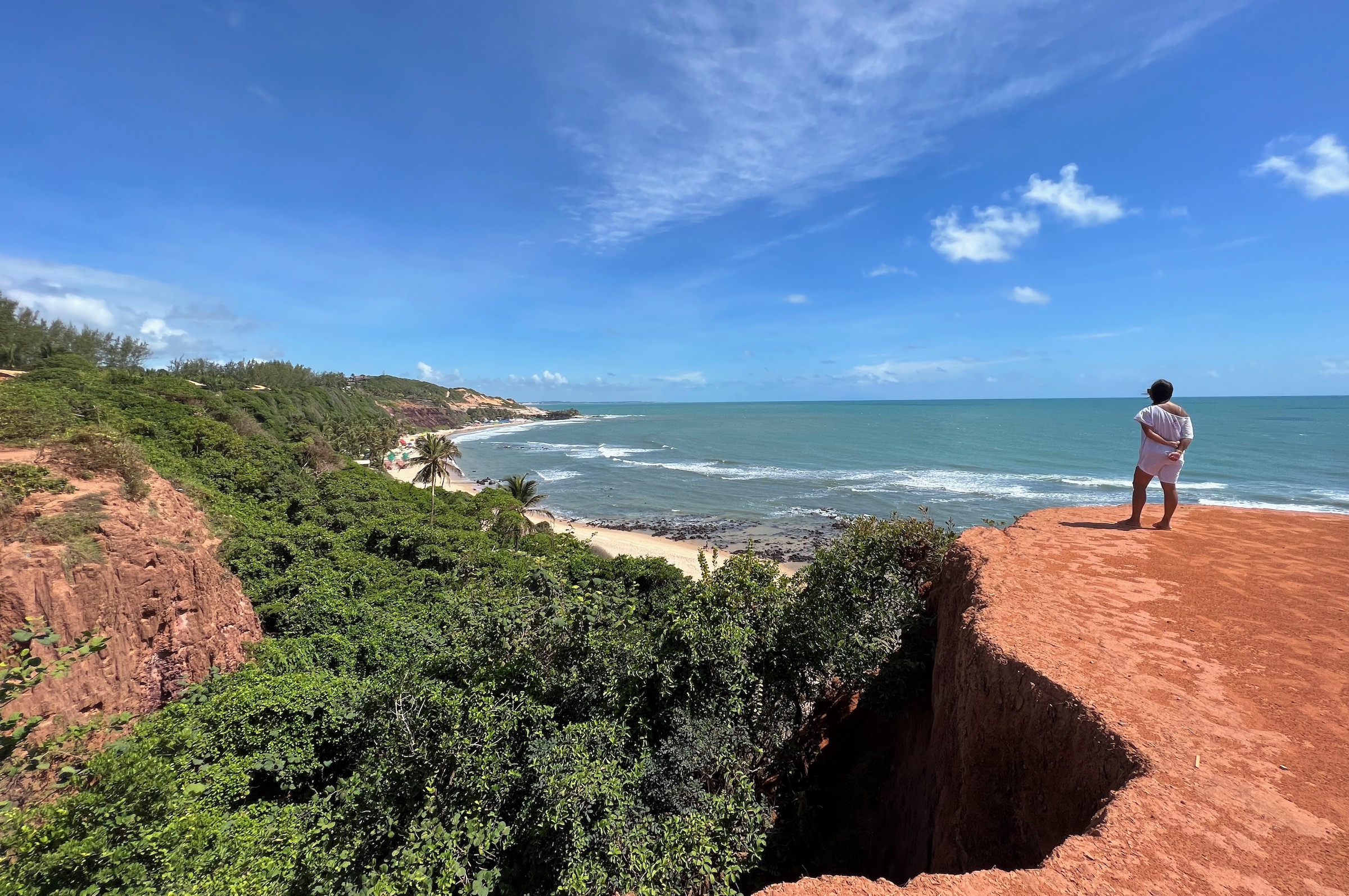
Mirante do Chapadão — the highest viewpoint in Pipa, with a panoramic view over the cliffs and beaches to both the north and south.
The Chapadão viewpoint is the highest point in Pipa — a flat-topped cliff with an unobstructed view over the entire coastline in both directions. From up here you can see Praia de Pipa to the north, Praia do Amor below, and the coastline stretching south toward Sibaúma and beyond.
The path up starts near the village and takes about 15 minutes on foot. It’s worth going twice — once in the morning for the light on the cliffs and once at sunset when the sky turns orange behind the headland. There’s usually a small bar at the top open in the evenings.
4. Lagoa de Guaraíras — Dolphins

Lagoa de Guaraíras — a large coastal lagoon where a resident pod of spinner dolphins can be seen regularly on boat tours in the early morning.
Lagoa de Guaraíras is a large tidal lagoon behind the dunes south of Pipa — calm, warm, and home to a resident pod of spinner dolphins. Boat tours leave from the lagoon edge in the early morning when the dolphins are most active. Sightings are frequent but not guaranteed — the dolphins are wild and move freely in and out of the lagoon.
Beyond the dolphins, the lagoon itself is worth the trip. At low tide, shallow sandbars appear in the middle of the water — the tour boats stop here and passengers wade in the warm, clear water surrounded by dunes. It’s a genuinely unusual landscape.
The most reliable way to see the lagoon and maximize dolphin sightings is through a guided boat tour on GetYourGuide — early morning departure, experienced guides who know the dolphin patterns, and sandbar stop included.
Pipa Dolphins & Lagoa de Guaraíras Boat Tour
- ✔ Early morning departure for best dolphin sightings
- ✔ Sandbar stop in the lagoon included
- ✔ Small group sizes
- ✔ Free cancellation
5. Praia do Madeiro
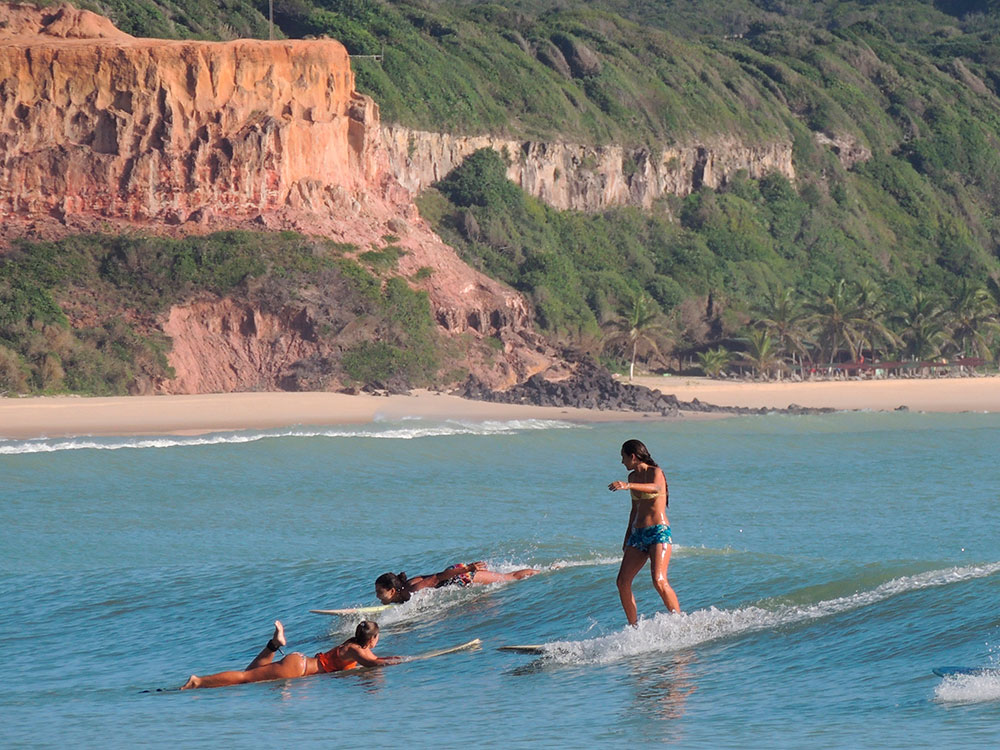
Praia do Madeiro — a wilder beach north of the main village, with consistent surf and far fewer people than Praia de Pipa on most days.
Praia do Madeiro is north of the village — a 20-minute walk or a short buggy ride. It’s wilder than the main beach, with fewer people, stronger waves, and a more remote feel. The cliffs behind the beach are higher here and the whole stretch has a less developed atmosphere.
This is where surfers who want less company tend to end up. The waves are good and consistent, the beach is long, and the walk back to the village along the clifftop path gives you good views over both beaches.
Deciding where to stay in Pipa? Our neighborhood guide covers the village center, Chapadão, and the options for different budgets.
Where to Stay in Pipa →6. Buggy Tours
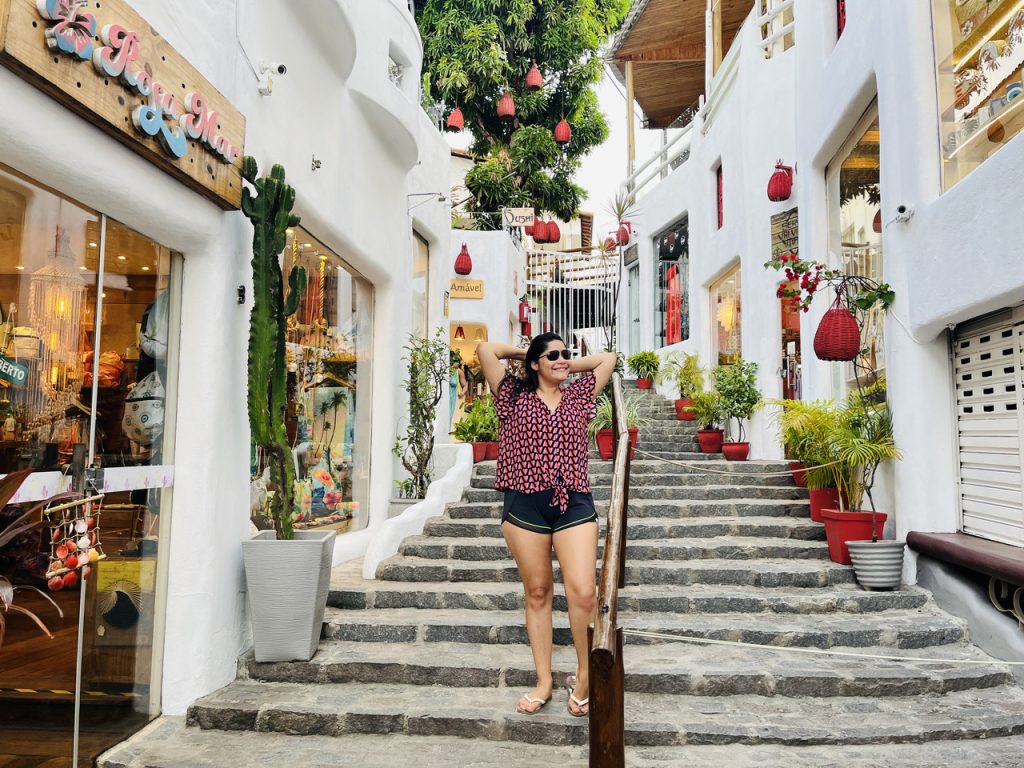
Buggy tours from Pipa cover the surrounding coastline, dune landscapes, and lagoons — the most efficient way to see the beaches both north and south of the village.
Buggy tours are the standard way to cover more ground around Pipa. Drivers take you along the coastline north toward Natal or south toward Sibaúma and the Lagoa de Guaraíras, stopping at beaches, lagoons, and viewpoints along the way.
A half-day buggy covers the main highlights — Praia do Madeiro, the lagoon, and the dune landscapes. A full-day extends north to the beaches toward Natal or south to the more remote stretches of coast. Prices range from R$120–200 per buggy depending on the route — split between four people it’s very reasonable.
Book through your pousada or directly with drivers at the village entrance. Most offer both fixed routes and customized circuits depending on what you want to prioritize.
7. The Village

The village of Pipa — a single main street with restaurants, bars, and shops that fills up in the evenings and stays active late into the night during high season.
The village of Pipa is compact — one main street (Avenida Baía dos Golfinhos) with restaurants, bars, shops, and pousadas branching off into the side streets. It takes about 10 minutes to walk end to end.
During the day it’s quiet. In the evenings it fills up — restaurants open, live music starts on the terrace bars, and the main street becomes the social center of the village. The atmosphere is relaxed but genuinely lively in high season, with a mix of Brazilian tourists and international visitors.
The food scene is better than you’d expect for a village this size. Seafood is the obvious choice — fresh fish, shrimp, and lobster at prices well below what you’d pay in Natal or Fortaleza.
8. Praia de Sibaúma

Praia de Sibaúma — a remote beach south of Pipa with almost no tourist infrastructure, accessible by buggy or a long walk through the dunes.
Sibaúma is about 10km south of Pipa by buggy — a long, undeveloped beach with almost no tourist infrastructure. A fishing village sits at the southern end; the rest is empty beach, dunes, and clear water.
It’s not for everyone — there’s no shade, no barracas in most sections, and no services if you need them. But if you want a beach that feels completely removed from the village scene, Sibaúma delivers. Bring water, food, and sunscreen.
Practical Notes
- Pipa is a small village — almost everything is walkable from the center. Buggies are for day trips, not city transport.
- Tide times matter significantly in Pipa — several walks and beach accesses are only possible at low tide. Check before you plan your day.
- The dolphin tour at Lagoa de Guaraíras is best booked for early morning — dolphins are most active before 9am.
- High season (December to February and July) brings significantly more people to the village. The beaches to the south — Madeiro, Sibaúma — stay quieter year-round.
- The main street gets crowded and loud on weekend nights in high season. If you need quiet evenings, stay in a pousada one street back from the main road.