
Best Time to Visit Pipa, Brazil
The best time to visit Pipa is September to February — dry season weather, reliable sunshine, and calm enough seas for the cliff walks and lagoon tours. That said, Pipa’s climate is warm year-round, and even the rainy season has more good days than bad ones.
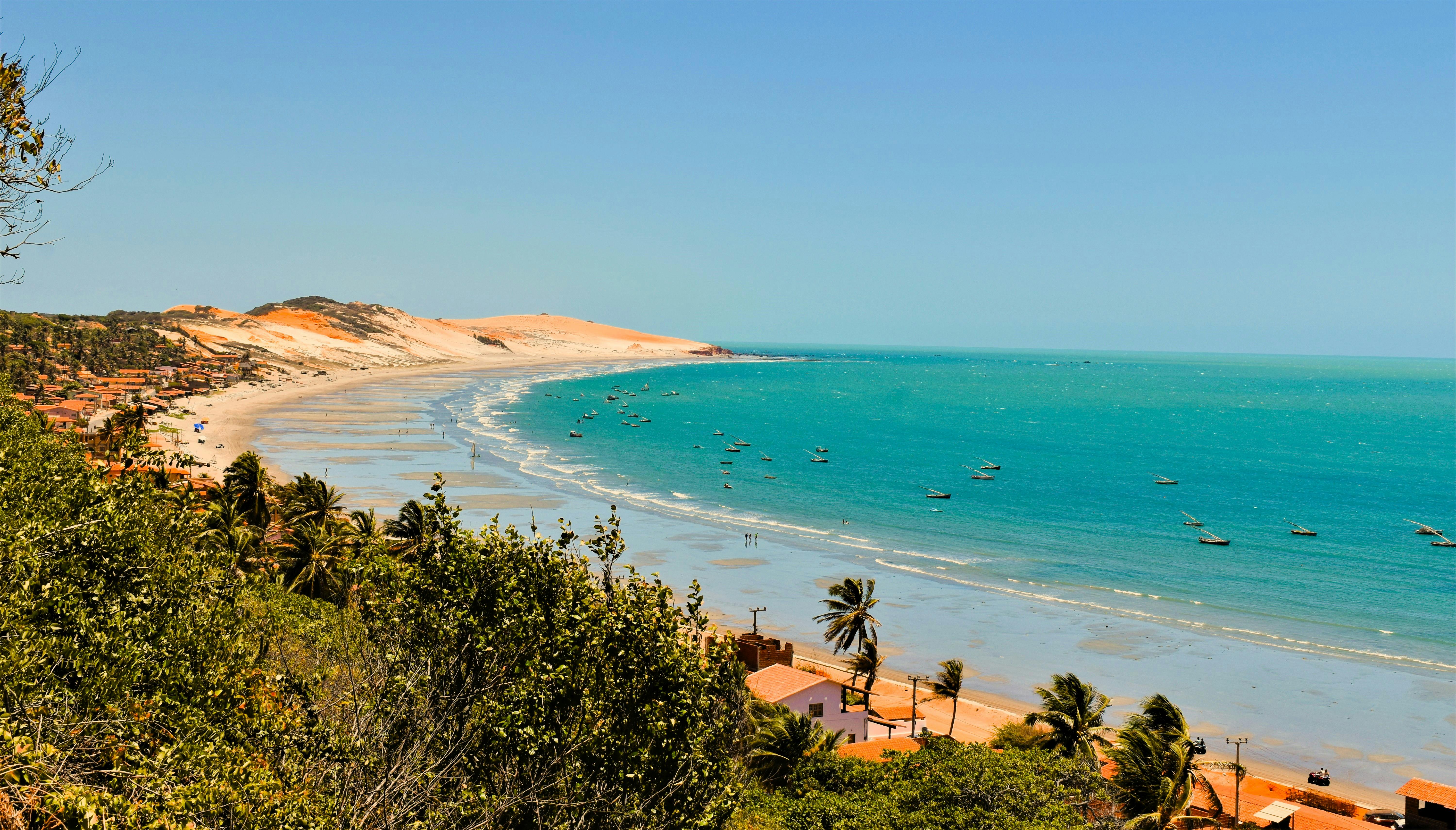
Pipa in the dry season — clear skies, calm seas, and the cliff walks fully accessible. September through February is the most reliable window for beach conditions.
Quick Answer
Best overall: September to November. Dry season, fewer tourists than December–February, lower prices than the peak summer months, and the best conditions for the lagoon tours and cliff walks. This is the sweet spot.
Best for atmosphere: December to February. The most lively time in Pipa — Brazilian summer holidays, the village fills up, and the nightlife is at its peak. Prices are significantly higher and accommodation books out fast.
Best for budget: May to July. The shoulder season into the rainy period. Prices drop, the village quiets down, and while rain is more likely, it tends to come in short afternoon bursts rather than all-day downpours.
Most challenging: March to April. Peak rainy season. Lagoon tours can be disrupted, some beaches are rougher, and the village is at its quietest. Not a reason to avoid it entirely, but manage expectations.
Season Breakdown
Month by Month
Once you’ve picked your dates, our 4-day itinerary covers the beaches, lagoon, and village in the right order for any season.
Pipa Itinerary →Crowds and Prices

Sunset at Cacimbinhas — one of the best viewpoints in Pipa, most accessible and photogenic during the dry season from August to February.
Pipa has two distinct crowd peaks. The Brazilian summer (December to February) brings the highest number of visitors — the village fills up, restaurants and bars are packed, and the main beach gets genuinely crowded on weekends. The second peak is July, when school holidays push domestic tourism up sharply for about three weeks.
Outside those windows, Pipa is significantly quieter. September and October in particular feel like a different village — the same beaches and infrastructure, but room to actually spread out. Pousada prices reflect this: the same room that costs R$350/night in January might be R$180–200 in October.
Practical Tips

Praia de Pipa during the dry season — clear water, consistent surf, and the cliff paths fully accessible for walks between beaches.
- The lagoon dolphin tours are most reliable in the dry season — calmer water means better conditions for the boat and higher dolphin activity near the surface. In the rainy season, tours can be cancelled or shortened due to choppiness.
- The cliff-base walk to Praia do Amor depends on tide, not season — check tide times regardless of when you visit.
- Pipa has no banks. Withdraw cash in Natal before arriving regardless of the season — ATM availability in the village is unreliable.
- High season accommodation books out genuinely fast — not a marketing line. If you’re visiting in December, January, or during Carnival, book 4–6 weeks ahead minimum for the better pousadas.
- Water temperature in Pipa stays around 26–28°C year-round. It doesn’t meaningfully change between seasons.
- Even in the rainy season (March–April), most days in Pipa are partially sunny. Rain tends to come in afternoon storms rather than full-day overcast — mornings are often clear enough for beach visits.