
Best Places to Visit in Brazil: The Complete Guide
Brazil is the fifth largest country in the world. Choosing where to go isn’t just about picking the prettiest photos — it’s about understanding what each region actually offers and whether it fits the kind of trip you want. This guide covers the best places to visit in Brazil with honest, practical advice on each one.

Rio de Janeiro — the most visited city in Brazil and the most common entry point for international travelers.
Top 3 Quick Picks
If you want a straight answer before reading the full guide, here are the three destinations that deliver the most for international first-time visitors.
Rio de Janeiro

Sugarloaf Mountain — one of Rio’s most recognizable landmarks, with cable car rides to the summit and panoramic views over the bay.
Rio de Janeiro is where most international trips to Brazil begin, and for good reason. It has the most direct flight connections, the most recognizable landmarks, and a concentration of things to do that few cities in the world can match.
Christ the Redeemer, Sugarloaf Mountain, Copacabana, Ipanema, the Tijuca Forest, Lapa, Santa Teresa — you could spend a week in Rio and still feel like you haven’t seen everything. The safety situation is real and worth knowing about, but manageable. Stick to the South Zone neighborhoods, use Uber at night, and don’t carry valuables to the beach.
To cover Rio’s highlights efficiently on your first visit, the 6 Stops Highlights of Rio with Lunch on GetYourGuide hits all the main spots in a single day.

6 Stops Highlights of Rio de Janeiro with Lunch
- ✔ Christ the Redeemer + Sugarloaf included
- ✔ Santa Teresa, Lapa, and Selarón Steps
- ✔ Lunch included
- ✔ Free cancellation
Salvador

Pelourinho — Salvador’s UNESCO-listed historic center, with colorful colonial buildings and one of the most culturally significant squares in Brazil.
Salvador is the cultural capital of Black Brazil and one of the most distinct cities in the country. The African influence is everywhere — in the food, the music, the religion, and the architecture. Nowhere else in Brazil feels quite like this.
Pelourinho, the historic center, is a UNESCO World Heritage Site. The food alone is worth the trip — Bahian cuisine traces directly to West African cooking traditions and is unlike anything you’ll find in the rest of Brazil.
Recife & Porto de Galinhas
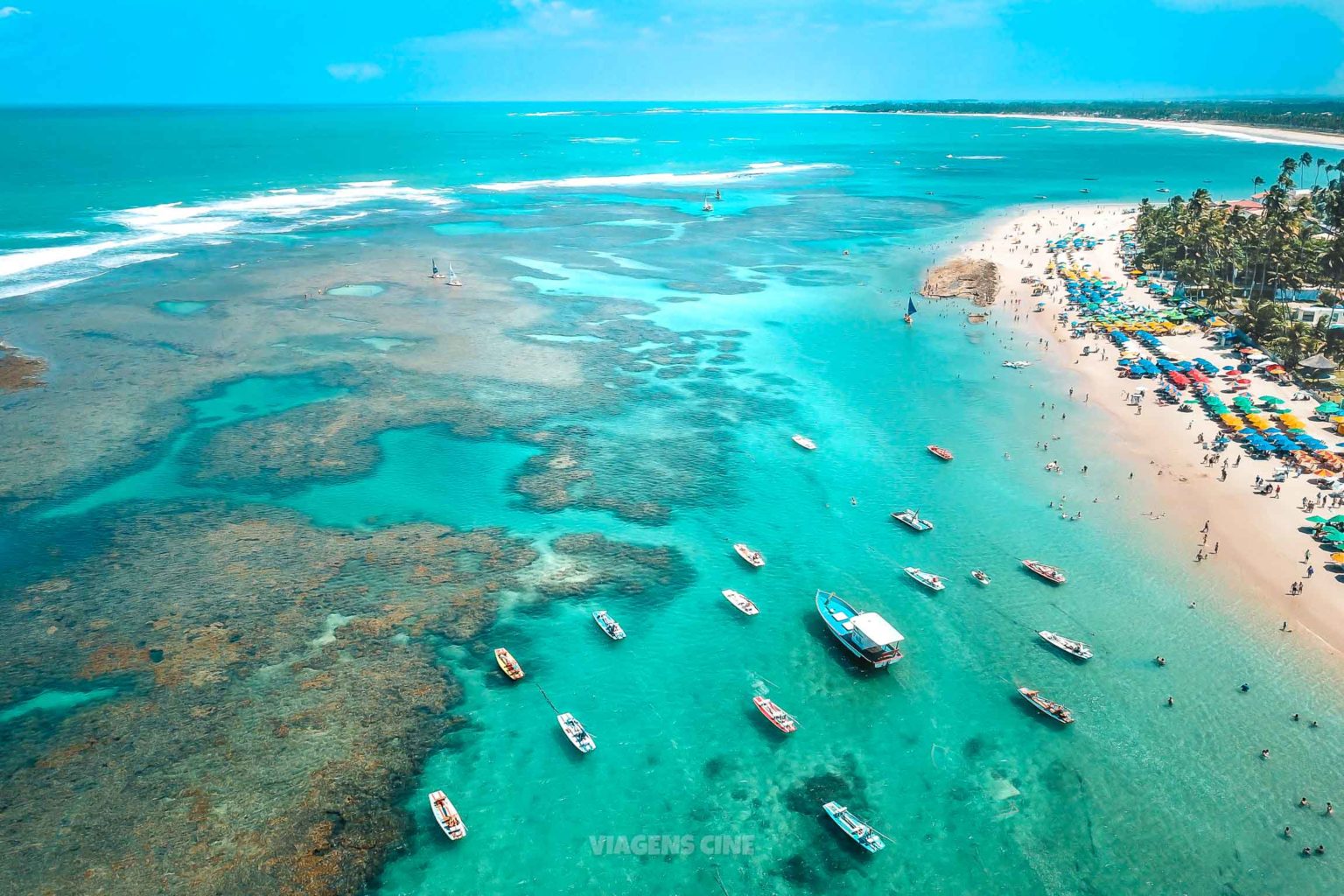
Porto de Galinhas — natural reef pools accessible by traditional jangada rafts, 70km south of Recife.
Most travelers visit Recife primarily to access Porto de Galinhas — the most famous beach in the Northeast and one of the best in Brazil. Natural pools formed by offshore reefs fill with warm, clear water at low tide. Recife itself rewards exploration: the restored Recife Antigo waterfront and colonial Olinda nearby are genuinely good.
The easiest way to visit Porto de Galinhas from Recife is a guided day trip on GetYourGuide — transport, jangada ride, and a guide who times the visit around low tide.

Porto de Galinhas Day Trip from Recife
- ✔ Hotel pickup included
- ✔ Jangada ride to the natural reef pools
- ✔ Local guide included
- ✔ Free cancellation
Fortaleza
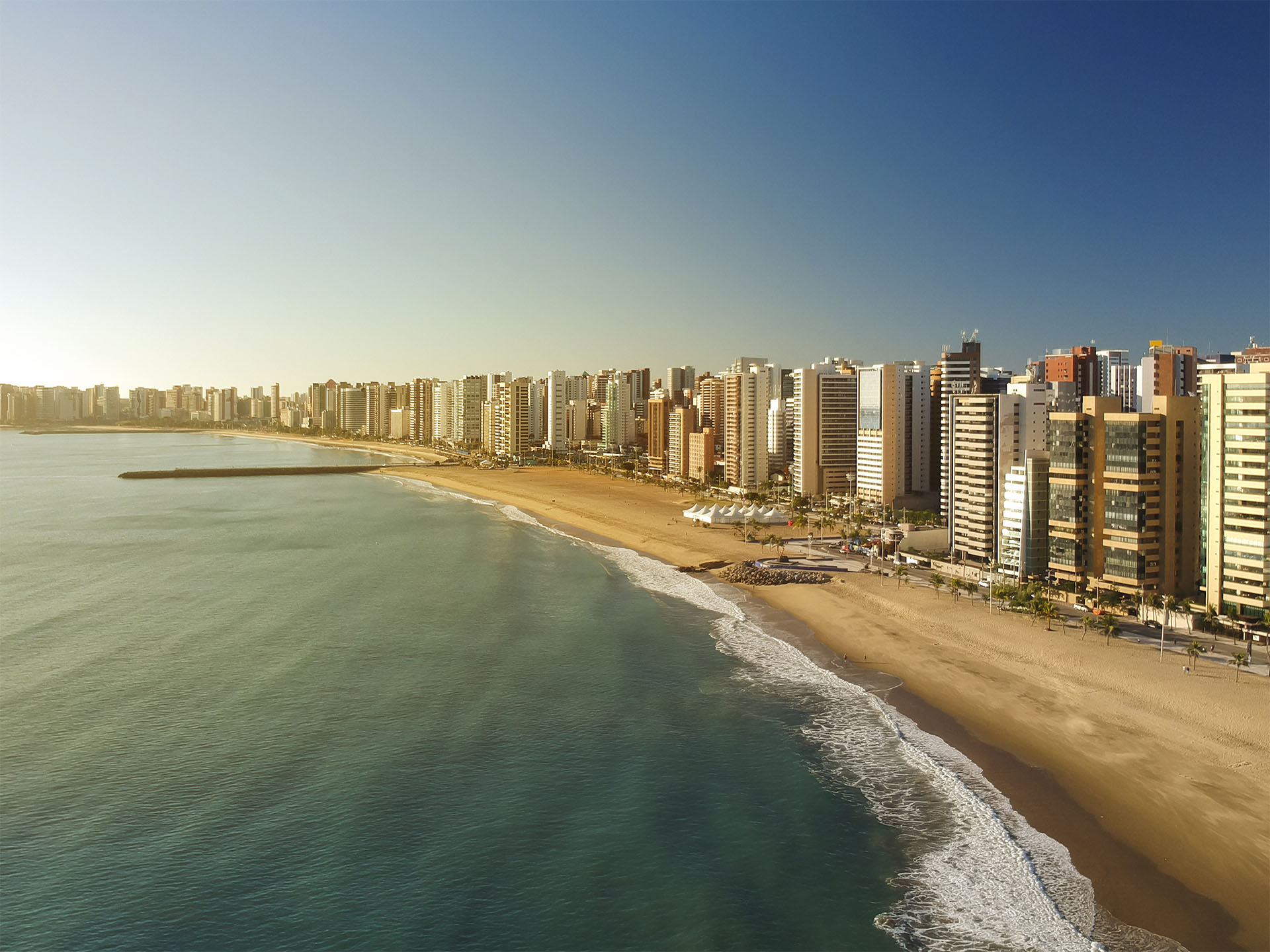
Fortaleza — the main gateway to the far Northeast, with over 300 sunny days per year and some of the best day trips in Brazil within easy reach.
Fortaleza is the capital of Ceará and the main logistics hub for the far Northeast. With over 300 sunny days per year and consistent trade winds, it’s one of the sunniest cities in Brazil. The urban beaches — Praia do Futuro and Meireles — are lively and well served by beach restaurants.
The real reason to base yourself in Fortaleza is the day trips. Jericoacoara — a car-free village in the dunes 300km west — is one of the best beach destinations in Brazil. Canoa Quebrada to the east has dramatic red sandstone cliffs. Cumbuco is the kitesurf capital of the Northeast. All are reachable from Fortaleza.
João Pessoa
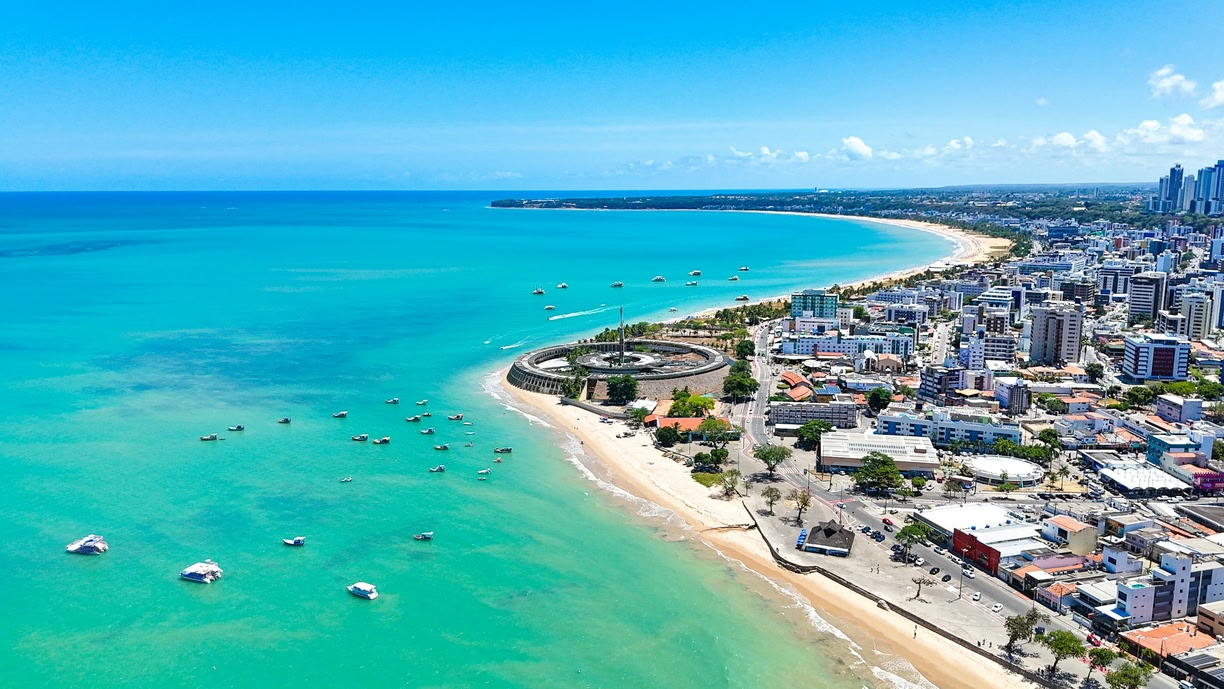
João Pessoa — the easternmost city in the Americas, with calm beaches, natural reef pools, and almost no international tourists.
João Pessoa is one of the most underrated cities in the Northeast. As the easternmost city in the Americas, it’s the first place on the continent to see the sun rise — a fact that locals celebrate at Cabo Branco lighthouse every morning. The beaches are calm, the water is warm and clear, and the city is significantly safer and cheaper than Fortaleza or Recife.
Picãozinho — a reef system offshore accessible by jangada at low tide — creates natural pools similar to Porto de Galinhas with a fraction of the crowds. Further south, Coqueirinho is considered one of the most beautiful beaches in Paraíba. The sunset at Jacaré beach, accompanied by live saxophone music every evening, is one of the more unexpectedly memorable experiences on the Northeast coast.
Pipa

Praia do Amor in Pipa — red sandstone cliffs above a curved bay of clear water, with resident spinner dolphins visible from the clifftops most mornings.
Pipa is a small village built on red sandstone cliffs above a series of beaches in Rio Grande do Norte — Praia do Amor, Praia da Pipa, Praia do Madeiro, and Praia dos Golfinhos. The cliffs give the beaches a dramatic character that distinguishes them from the flat coastline found elsewhere in the Northeast.
Spinner dolphins are resident in the bay year-round and visible from the cliffs above Praia dos Golfinhos early most mornings. The Lagoa de Guaraíras — a large lagoon behind the village — is used for kitesurfing and sunset boat tours. The village has a good concentration of restaurants and pousadas without feeling overbuilt — compact enough to walk everywhere, enough variety to stay for a week.
Planning a Northeast Brazil trip? Our full guide covers how to route the coast, sample itineraries, and the best time to visit.
Northeast Brazil Travel Guide →Florianópolis
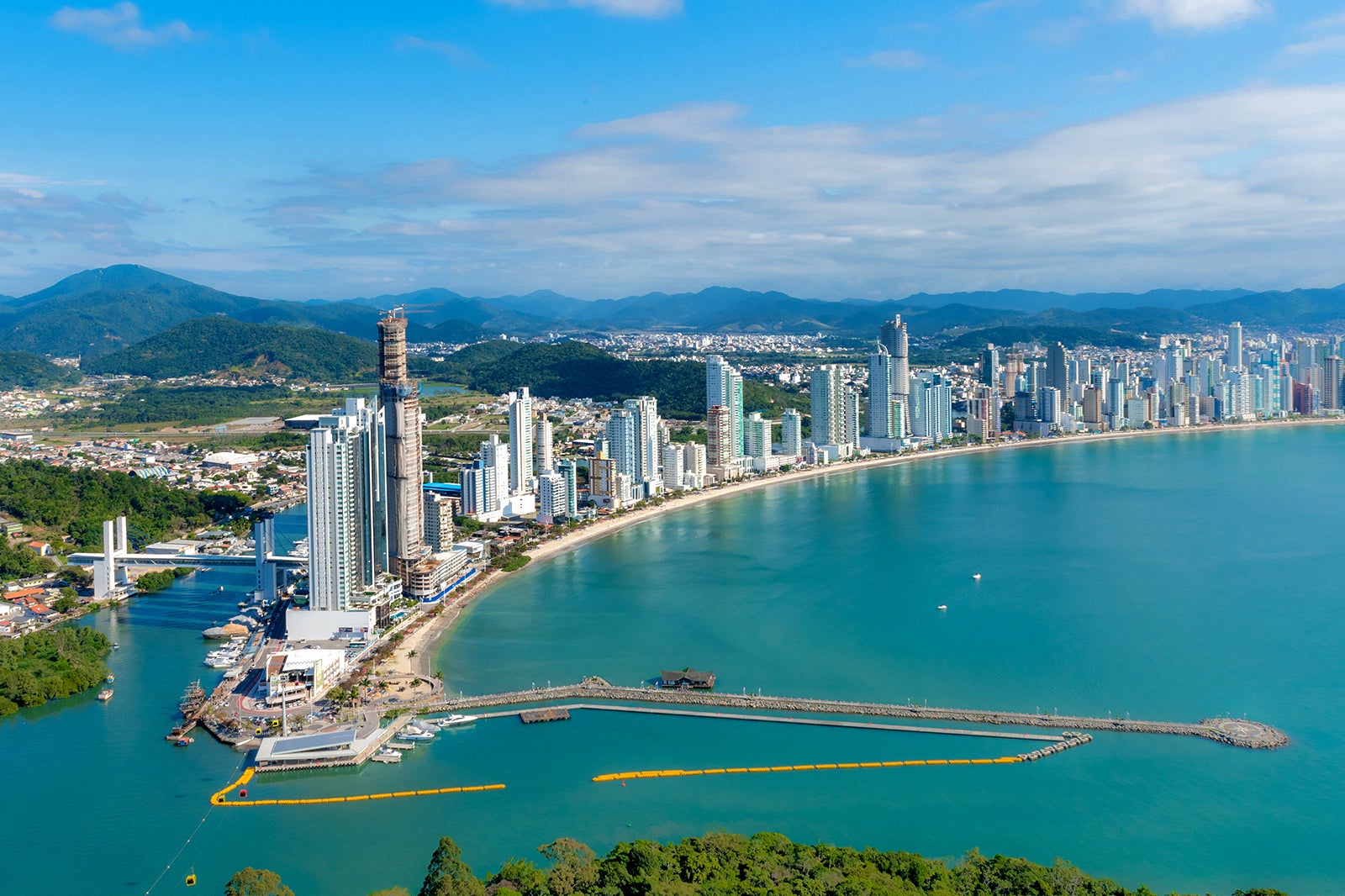
Florianópolis — an island city with over 100 beaches, freshwater lagoons, and some of the clearest water in southern Brazil.
Florianópolis is an island city in Santa Catarina state with over 100 beaches, a freshwater lagoon system, and some of the best surf spots in Brazil. It’s consistently ranked one of the safest and highest quality of life cities in the country. January and February are very crowded — this is where Argentines and Uruguayans spend their summer. December or March are better windows if you want Florianópolis without the peak crowds.
São Paulo

São Paulo — South America’s largest city and Brazil’s economic, cultural, and gastronomic capital.
São Paulo has no beaches and no obvious landmarks. What it has is depth — it’s the largest city in South America, the economic capital of Brazil, and home to the best restaurant scene in the country. The Museu de Arte de São Paulo (MASP) is one of the most important art museums in Latin America. São Paulo rewards travelers who enjoy cities on their own terms — food, art, nightlife, architecture.
Lençóis Maranhenses

Lençóis Maranhenses — 1,500 square kilometers of white dunes filled with hundreds of freshwater lagoons after the rainy season.
Lençóis Maranhenses is one of the most visually extraordinary places in Brazil — a vast field of white sand dunes filled between May and September with hundreds of blue and green freshwater lagoons. The combination of desert dunes and clear swimming lagoons is found nowhere else on Earth. The lagoons disappear as the dry season progresses — visit between May and September for the best conditions.
The main base is Barreirinhas, from which 4×4 tours take visitors into the park. The village of Atins at the western edge of the park gives direct walking access to the dunes and a more immersive experience.
The Amazon
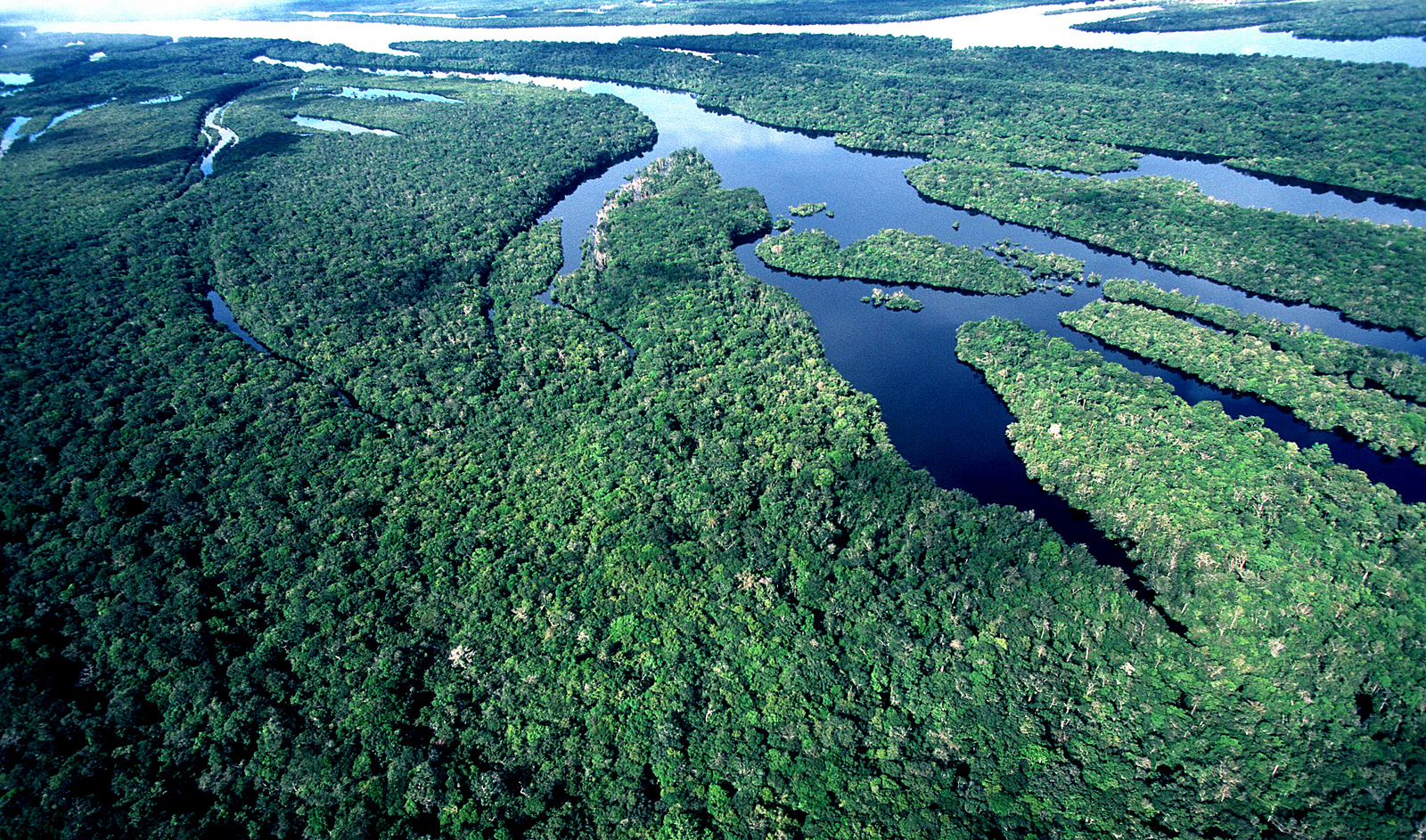
The Amazon — the world’s largest tropical rainforest, covering over 5 million square kilometers of northern Brazil.
The Amazon is not a single destination — it’s a region covering over 5 million square kilometers of northern Brazil. Most visitors use Manaus as a base and take river or jungle lodge tours from there. The dry season (June–November) is the best time to visit — rivers drop, trails open, and wildlife concentrates around water sources.
The Pantanal

The Pantanal — the world’s largest tropical wetland, home to the highest density of jaguars on Earth.
The Pantanal is the world’s largest tropical wetland and Brazil’s best destination for wildlife. Unlike the Amazon, where dense canopy makes spotting animals difficult, the Pantanal’s open landscape gives you clear views of capybaras, caimans, giant anteaters, tapirs, hyacinth macaws, and — with some patience — jaguars. The jaguar population along the Cuiabá River is the most accessible in the world.
Best Destination for Your Type of Trip
How to Plan Your Route in Brazil
Brazil is larger than the continental United States. The distance between Rio de Janeiro and Manaus is roughly the same as New York to Los Angeles. A route that tries to cover everything in one trip almost always ends in exhaustion and rushed experiences.
The most common mistake
Trying to combine the Northeast, Southeast, and Amazon in two weeks. Each region requires a minimum of 3–5 days to experience properly. A two-week trip works well for two regions — not five.
Suggested routes
Two weeks, first-time visitor: Rio de Janeiro (4 days) + Salvador (3 days) + Recife (2 days) + Pipa or João Pessoa (4 days). Fly between each. Covers the cultural and beach highlights without rushing.
Two weeks, Northeast focus: Fortaleza (3 days including Jericoacoara day trip) + Lençóis Maranhenses via São Luís (3 days) + Recife (2 days) + João Pessoa (2 days) + Pipa (3 days). One-way route, fly in Fortaleza, fly out Recife or Natal.
Two weeks, nature focus: Manaus/Amazon (4 days) + Pantanal via Cuiabá (4 days) + Lençóis Maranhenses (3 days) + São Paulo (3 days). Logistically complex but extraordinary for wildlife and unique landscapes.
One week, beach focus: João Pessoa (2 days) + Pipa (3 days) + Natal (2 days). Stay in the Northeast, go deep rather than wide. Cheapest and most relaxed option.