
Things to Do in Salvador, Brazil
Salvador is one of Brazil’s most culturally rich cities — and one of the most misunderstood by first-time visitors. Most people picture beaches, and yes, there are good ones. But the real draw is the city’s deep African heritage, its music, its food, and its architecture.

Pelourinho — Salvador’s historic center and one of the best-preserved colonial districts in Latin America.
1. Explore Pelourinho
Pelourinho is the historic center of Salvador and the neighborhood you’ll see in every photo of the city. The colonial architecture is genuinely impressive — colorful 17th and 18th century buildings stacked along steep cobblestone streets, with churches around every corner.
The most iconic spot is Largo do Pelourinho, the central square where you’ll find the Igreja de Nossa Senhora do Rosário dos Pretos — a church built by enslaved Africans in their limited free time. It’s a place with real historical weight.
Tuesday nights are the best time to be here. The streets fill with live music, capoeira performances, and food stalls. It’s the most atmospheric the neighborhood gets all week.
To get the most out of Pelourinho and Salvador’s highlights, the Private City Highlights Tour on GetYourGuide covers the key spots with a local guide — ideal for first-time visitors who want context, not just photos.
Salvador Private City Highlights Tour
- ✔ Pelourinho, churches, and historic viewpoints
- ✔ Private local guide included
- ✔ Flexible itinerary — tailored to your interests
- ✔ Free cancellation
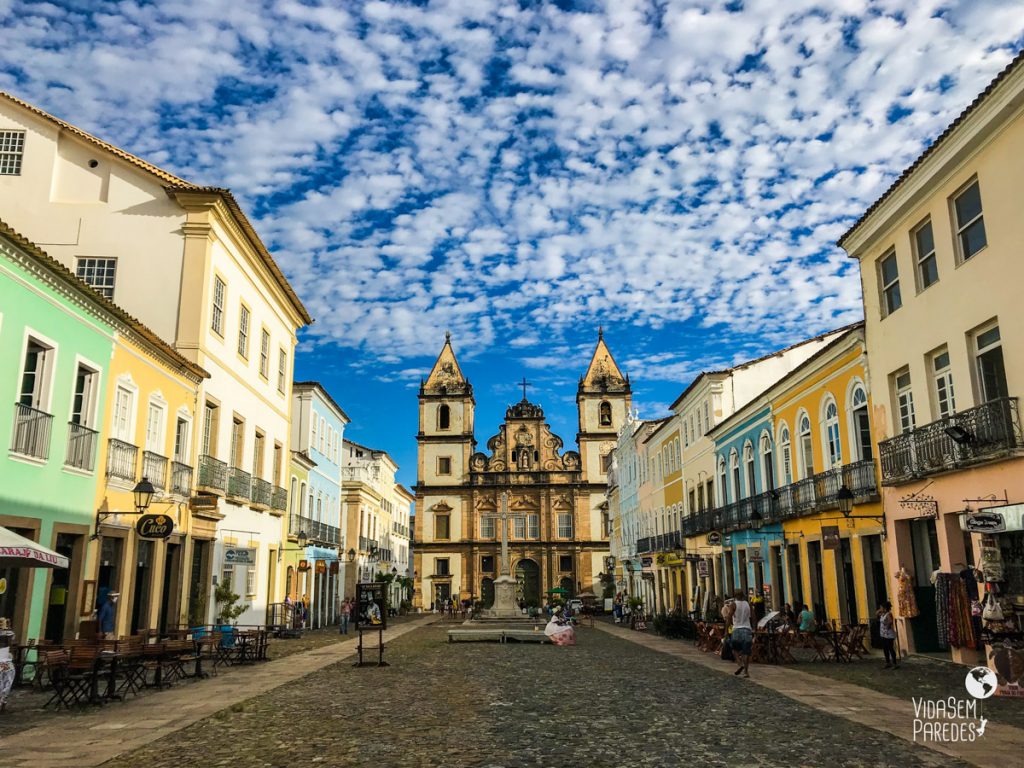
Largo do Pelourinho — the central square of Salvador’s historic district.
2. Visit the Mercado Modelo
The Mercado Modelo sits at the foot of the cliff below Pelourinho, right on the bay. It’s a large covered market selling Bahian crafts, woodwork, leather goods, and local food products. Worth an hour, especially if you want to bring something home from Bahia. Prices are negotiable.
The building has history — it was once a customs house and a holding area for enslaved people arriving in Brazil.
Take the Elevador Lacerda from the upper city down to the market. The view from the top over the Baía de Todos os Santos is excellent and costs almost nothing.
3. Take a Day Trip to the Baía de Todos os Santos
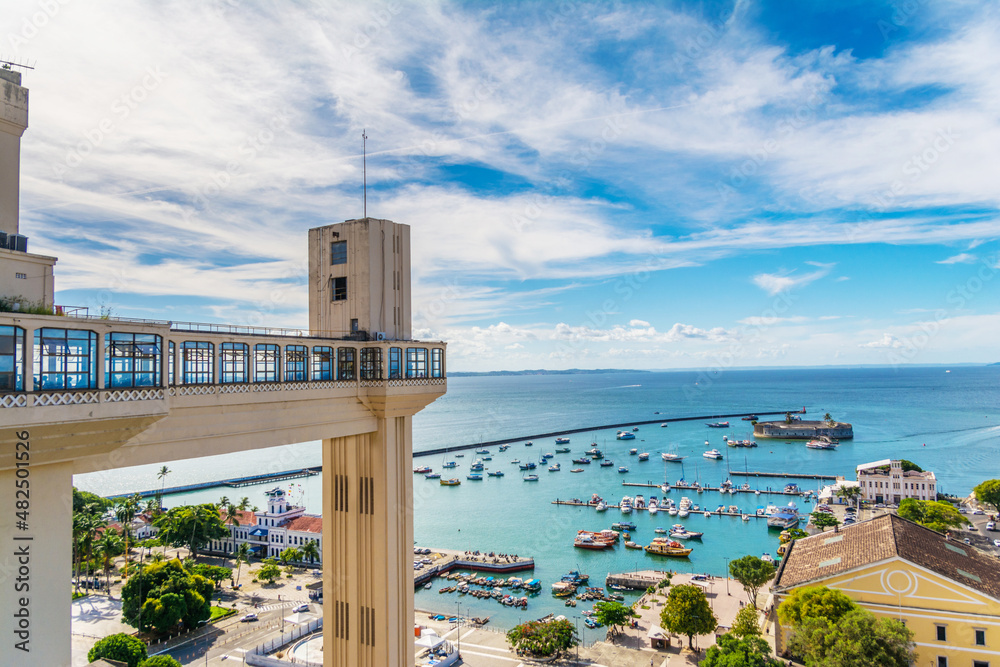
The view from Elevador Lacerda over the Baía de Todos os Santos — one of Salvador’s best free sights.
The Baía de Todos os Santos is the largest bay in Brazil, and Salvador sits right on its edge. Boat tours leave from the terminal near Mercado Modelo and go out to islands like Ilha de Itaparica, Ilha dos Frades, and Ilha de Maré.
Ilha de Itaparica is the most accessible — a large island with calm beaches, colonial churches, and small fishing villages. You can spend a full day there without rushing.
If you want to go further, Morro de São Paulo is one of the most impressive island destinations accessible from Salvador — car-free, beautiful beaches, and a very different pace from the city. Book in advance on GetYourGuide.
Morro de São Paulo Day Trip from Salvador
- ✔ Ferry transport included
- ✔ Car-free island with clear water beaches
- ✔ Guide included
- ✔ Free cancellation
4. Spend Time at the Beaches
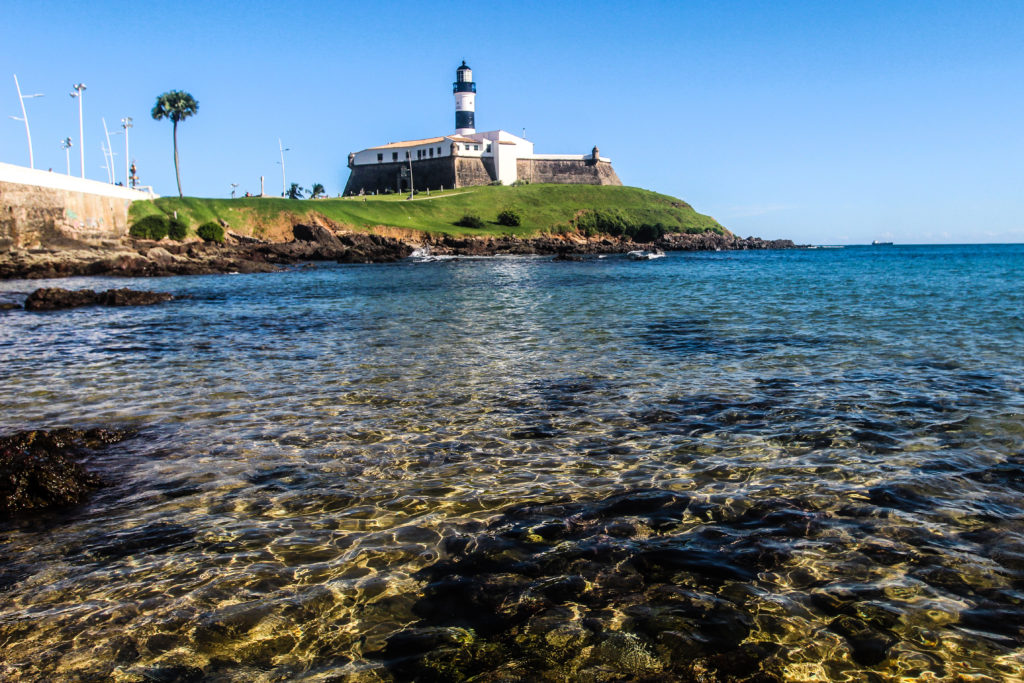
Farol da Barra — Salvador’s most recognizable landmark, with a beach right at its base.
Salvador’s beaches run along two main stretches. The city beaches — Barra, Ondina, and Rio Vermelho — are urban and lively. Barra is the most popular, anchored by the Farol da Barra lighthouse.
For better water and more space, head north toward Itapuã, Stella Maris, or Flamengo. These take 30–40 minutes by rideshare but are significantly less crowded and have cleaner water.
5. See a Capoeira Performance

Capoeira was developed in Bahia and Salvador remains its most important home.
Capoeira was developed in Brazil by enslaved Africans as a form of self-defense disguised as dance. Salvador is considered its spiritual home.
The best place to see authentic capoeira is at the Associação de Capoeira Mestre Bimba in Pelourinho, which runs regular classes and performances. You can also catch informal rodas in Largo do Pelourinho, especially on Tuesdays.
If you have more than a few days, some schools offer beginner classes where you can try the basic movements yourself.
6. Eat Your Way Through Bahian Cuisine
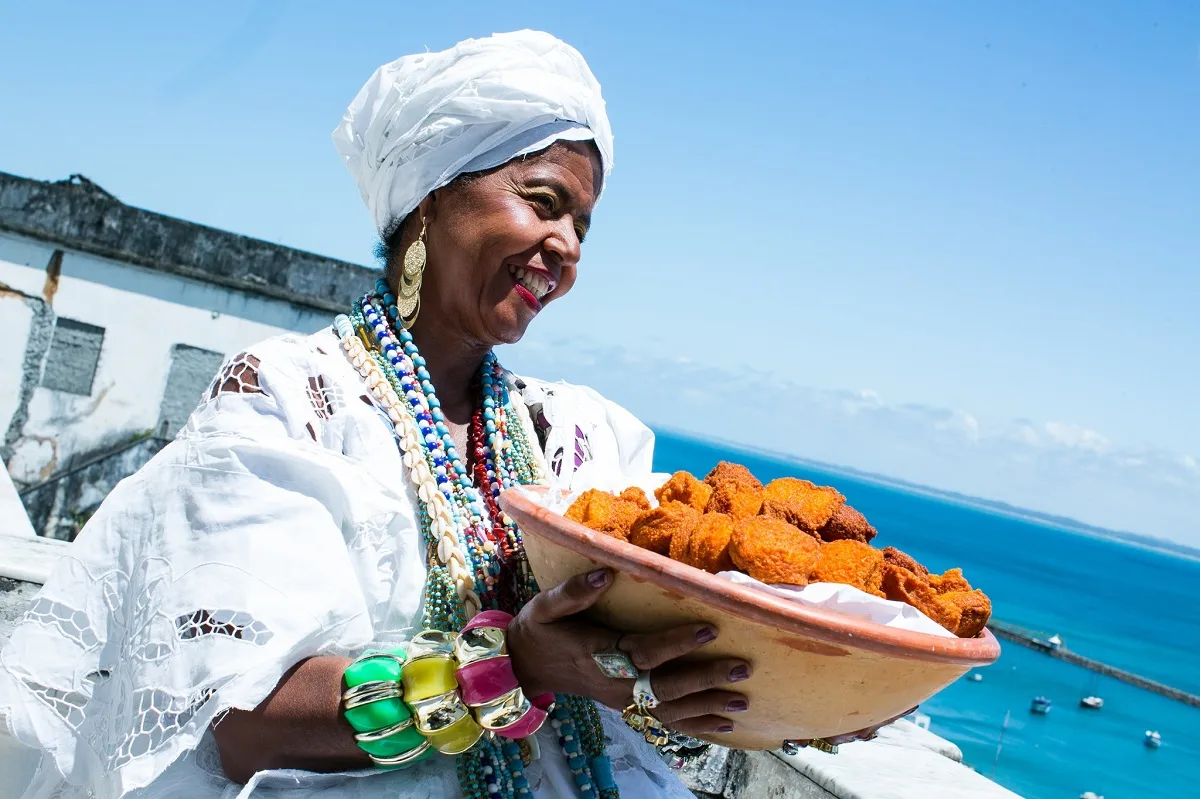
Baianas de Acarajé — the women who sell acarajé on the streets of Salvador are a cultural institution.
Bahian food is arguably the most distinct regional cuisine in Brazil. It’s built around dendê (palm oil), coconut milk, fresh seafood, and spices that trace directly back to West Africa.
What to try
- Acarajé — black-eyed pea fritters fried in dendê oil, stuffed with shrimp, vatapá, and caruru. Buy from street vendors in white dresses (Baianas de Acarajé). The ones at Largo do Santana are the most popular.
- Moqueca baiana — seafood stew with coconut milk and dendê. Order it at Casa de Teresa or Yemanjá in Rio Vermelho.
- Bobó de camarão — shrimp in a creamy cassava and coconut sauce.
7. Visit the Museu Afro-Brasileiro
Located inside the former Faculty of Medicine building in Pelourinho, this is one of the most important cultural museums in Brazil. The collection documents the African roots of Bahian culture through sculpture, textiles, ritual objects, and historical records.
The carved wooden panels depicting Candomblé orixás (deities) are particularly impressive. Entry is around R$5 (~$1 USD) and takes about 90 minutes to go through properly. One of the most undervisited spots in Salvador.
8. Experience Candomblé (Respectfully)
Candomblé is an Afro-Brazilian religion brought to Bahia by enslaved Yoruba people from West Africa. It’s still actively practiced in Salvador, and some terreiros (houses of worship) open certain ceremonies to respectful outside visitors.
This isn’t a tourist show — it’s an active religious practice. Dress modestly, don’t photograph without permission, and follow the lead of whoever is hosting. Ask at your hotel or a local cultural center for recommendations.
9. Walk the Barra Neighborhood
Barra is one of the most practical neighborhoods in Salvador for tourists. It has the Farol da Barra lighthouse, a beach, good restaurants and bars, and streets that are safe to walk at night.
The lighthouse dates to the 17th century and has a small maritime museum inside. At sunset, the rocks below fill up with locals watching the sun drop into the ocean. One of the better free experiences in the city — no planning required.
10. Go to Rio Vermelho
Rio Vermelho is a bohemian neighborhood known for its bars, music venues, and local restaurant scene. It’s where Salvador’s artists, musicians, and younger crowd spend their evenings — less polished than Barra, less touristic than Pelourinho.
The main square, Largo de Santana, has outdoor bars and usually live music on weekends. The Festa de Iemanjá — Salvador’s most important street festival — takes place here every February 2nd, with offerings carried to the sea in a procession.
Practical Tips
- Salvador is hilly. The city is split between Cidade Alta (upper city) and Cidade Baixa (lower city), connected by the Elevador Lacerda and the Plano Inclinado.
- Use 99 or Uber for getting around, especially at night.
- Most cultural highlights are in Pelourinho and can be covered in 2 full days.
- Add 1–2 days for beaches and a day trip to the bay islands.
- Carnival in Salvador (February/March) is one of the biggest in Brazil — more street-level and participatory than Rio’s, built around blocos and trios elétricos.