
Is São Paulo Safe for Tourists?
São Paulo is a megacity of over 12 million people, and like any city that size, it has areas that are genuinely safe and areas that aren’t. The good news for tourists is that the neighborhoods you’re most likely to spend time in — Paulista, Jardins, Pinheiros, Vila Madalena — are among the safer parts of the city.

Avenida Paulista and the surrounding neighborhoods are among the safest and most policed areas of São Paulo, and where most tourists spend the majority of their trip.
The Honest Assessment
São Paulo’s crime statistics look concerning at a national level, but the picture changes significantly when you look at where tourists actually spend their time. The wealthier, more central neighborhoods — Jardins, Pinheiros, Vila Madalena, the area around Avenida Paulista — have meaningfully lower crime rates than the city average and a visible private and public security presence.
The risk in São Paulo isn’t random violent crime against tourists; it’s opportunistic theft. Phone snatching, bag grabs, and pickpocketing happen, particularly around crowded areas, public transport, and at night in less attended streets. Most visitors who stay aware and don’t flash valuables have completely uneventful trips.
São Paulo also benefits from being a business and cultural hub rather than a beach destination — the streets in the main tourist and business districts are busy with office workers and locals throughout the day, which naturally reduces the kind of isolated opportunities that crime depends on.
Safe Areas vs Areas to Avoid
Jardins
Upscale residential and shopping district. Well-policed, clean, and one of the safest areas in the city day and night.
Avenida Paulista
Busy financial and cultural corridor. High foot traffic throughout the day keeps it generally safe, though stay alert at night.
Pinheiros / Vila Madalena
Trendy, walkable neighborhoods popular with locals and tourists. Generally safe, especially during the day and early evening.
Centro (downtown)
Historic but rougher around the edges. Fine during the day for sightseeing; avoid wandering at night, especially near Cracolândia.
Cracolândia
An area near the center known for open drug use and associated crime. Not a tourist destination — there’s no reason to go.
Peripheral neighborhoods
Outer zones of the metro area have higher crime rates and limited tourist infrastructure. No reason for most visitors to go.
Common Risks for Tourists
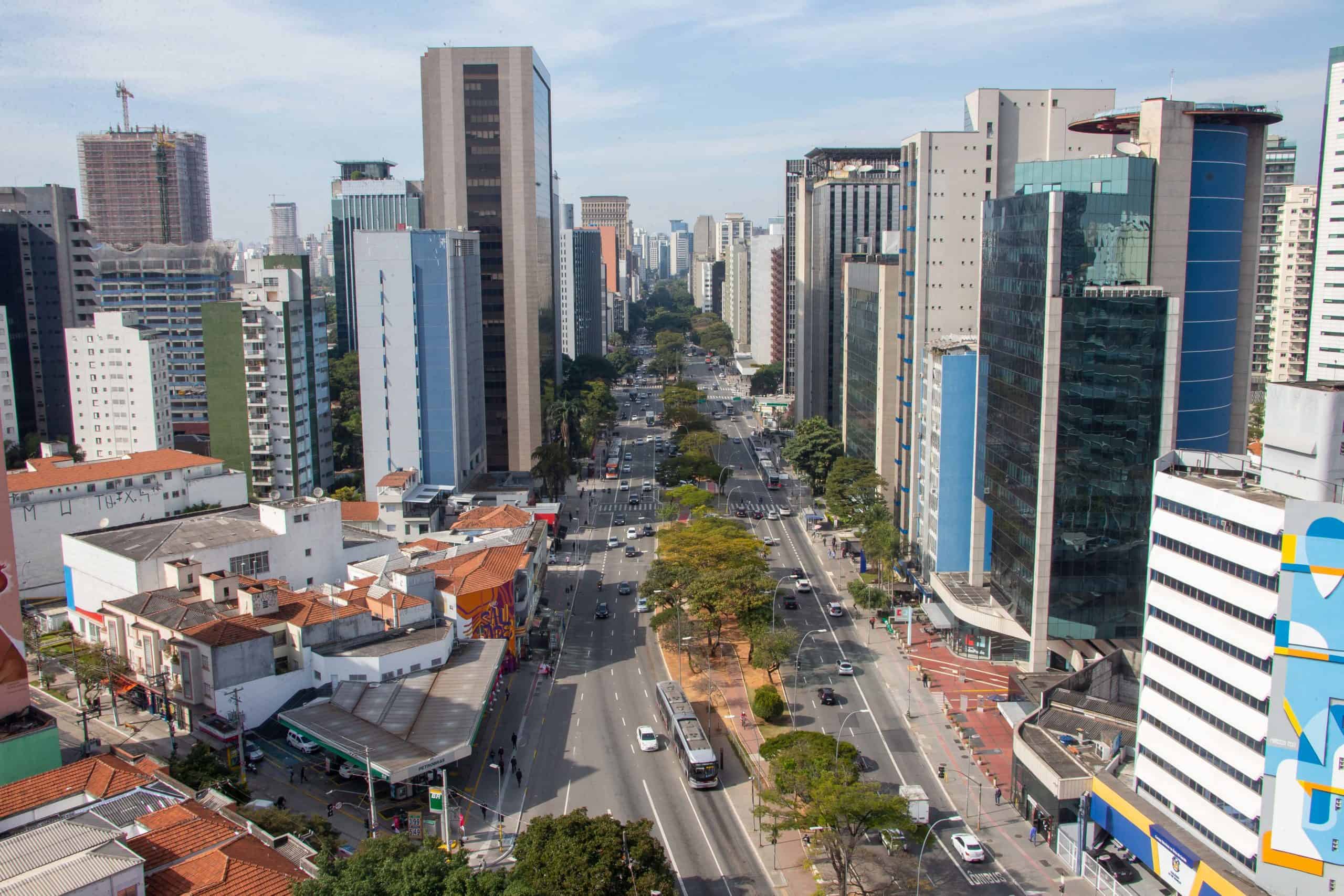
Avenida Faria Lima — one of São Paulo’s main business corridors, busy and well-attended throughout the working day.
Phone and bag snatching
The most common issue tourists face in São Paulo. It happens on busy streets, at bus stops, and especially around crowded public transport during rush hour. Keep your phone in your pocket rather than in hand, and keep bags zipped and in front of you on crowded buses or the metro.
Pickpocketing on public transport
The metro and buses are generally safe in terms of violent crime but are where pickpocketing is most likely to occur, particularly during rush hour when carriages are packed. Keep valuables in a front pocket or a bag you can see and feel.
Scams around tourist spots
Less common than in some other major cities, but distraction-based scams do occur around busy tourist areas. If someone approaches you with an elaborate story or unsolicited “help,” politely decline and keep moving.
Walking alone at night in unfamiliar areas
São Paulo is enormous, and neighborhood character can change within a few blocks. Stick to well-lit, busy streets at night, and use rideshares rather than walking through unfamiliar areas after dark, particularly downtown.
How to Stay Safe in São Paulo
- Use 99 or Uber for transport at night, especially in or near downtown
- Keep your phone in your pocket on the street and on public transport, particularly during rush hour
- Stick to Jardins, Paulista, Pinheiros, and Vila Madalena for accommodation and evening activities
- Avoid Cracolândia entirely — it has no tourist relevance and carries real risk
- Don’t wear expensive jewelry or carry a visible camera in crowded or unfamiliar areas
- Withdraw cash from ATMs inside shopping malls or bank branches during the day
- If you’re robbed, hand over what they want — nothing you’re carrying is worth resisting over
Want to base yourself in one of São Paulo’s safer neighborhoods? See our full guide to where to stay.
Where to Stay in São Paulo →Verdict
São Paulo is safer for tourists than its reputation as a massive Brazilian metropolis might suggest, largely because the areas where visitors actually spend time — Jardins, Paulista, Pinheiros, Vila Madalena — are well-attended, busy, and reasonably well-policed. Stay aware on public transport, keep your phone out of sight, use rideshares at night, and avoid Cracolândia, and you’ll almost certainly have a trouble-free trip. The risk here is theft, not violence.