
Things to Do in São Paulo, Brazil
São Paulo is the largest city in the Southern Hemisphere and doesn’t try to charm you the way Rio does. There’s no postcard beach or mountain backdrop — what it has instead is one of the best food and culture scenes in South America, packed into a city that rewards people willing to actually explore it.

São Paulo’s skyline stretches further than the eye can follow — one of the largest urban areas on the planet, with neighborhoods that each feel like a different city.
1. Walk Avenida Paulista and Visit MASP

Avenida Paulista — the financial and cultural spine of São Paulo, closed to cars on Sundays and home to the city’s most important art museum.
Avenida Paulista is the closest thing São Paulo has to a single defining street. Lined with bank headquarters, cultural centers, and the elevated glass-and-concrete MASP (Museu de Arte de São Paulo), it’s the place most visitors start their trip, and for good reason.
MASP’s permanent collection includes works by Renoir, Van Gogh, Picasso, and one of the most significant collections of European art in Latin America — displayed in a distinctive format where the paintings are mounted on freestanding glass easels rather than hung on walls. Entry is free on Tuesdays; otherwise it’s around R$50.
On Sundays, the avenue closes to traffic and becomes a pedestrian space filled with street performers, food vendors, and locals out for a walk. It’s one of the best free things to do in the city and worth planning your schedule around if your trip includes a Sunday.
2. Eat Lunch at the Mercado Municipal
Known locally as the Mercadão, São Paulo’s central market is a cathedral-like building from 1933 with stained glass windows and stalls selling everything from spices to tropical fruit most visitors have never seen. It’s touristy in parts, but the food makes it worth navigating around that.
The single dish everyone goes for is the sanduíche de mortadela — a sandwich stacked absurdly high with mortadella, served at a handful of counters on the upper floor. Hortifruti, a stall specializing in exotic fruit, is also worth a stop if you want to try something genuinely unfamiliar.
Go in the late morning before the lunch rush. The building itself is reason enough to visit even if you’re not hungry — the architecture and the produce stalls below make for some of the best casual photography in the city.
3. Explore Vila Madalena and Beco do Batman

Beco do Batman in Vila Madalena — a narrow alley covered floor to roofline in murals that change constantly, one of the best concentrations of street art in Brazil.
Vila Madalena is São Paulo’s bohemian neighborhood — narrow streets, independent bars, and a concentration of street art that culminates in Beco do Batman, an alley completely covered in murals by local and international artists. The art changes regularly, so even repeat visitors see something different.
The neighborhood is genuinely good for wandering without a fixed plan. Side streets off the main alley have more murals, small galleries, and design shops. By early evening the bars fill up, and Vila Madalena becomes one of the better neighborhoods in the city for a casual night out.
Saturday afternoons are the busiest time for photography at Beco do Batman — if you want the alley without crowds, go on a weekday morning instead.
4. Visit the Museu do Futebol
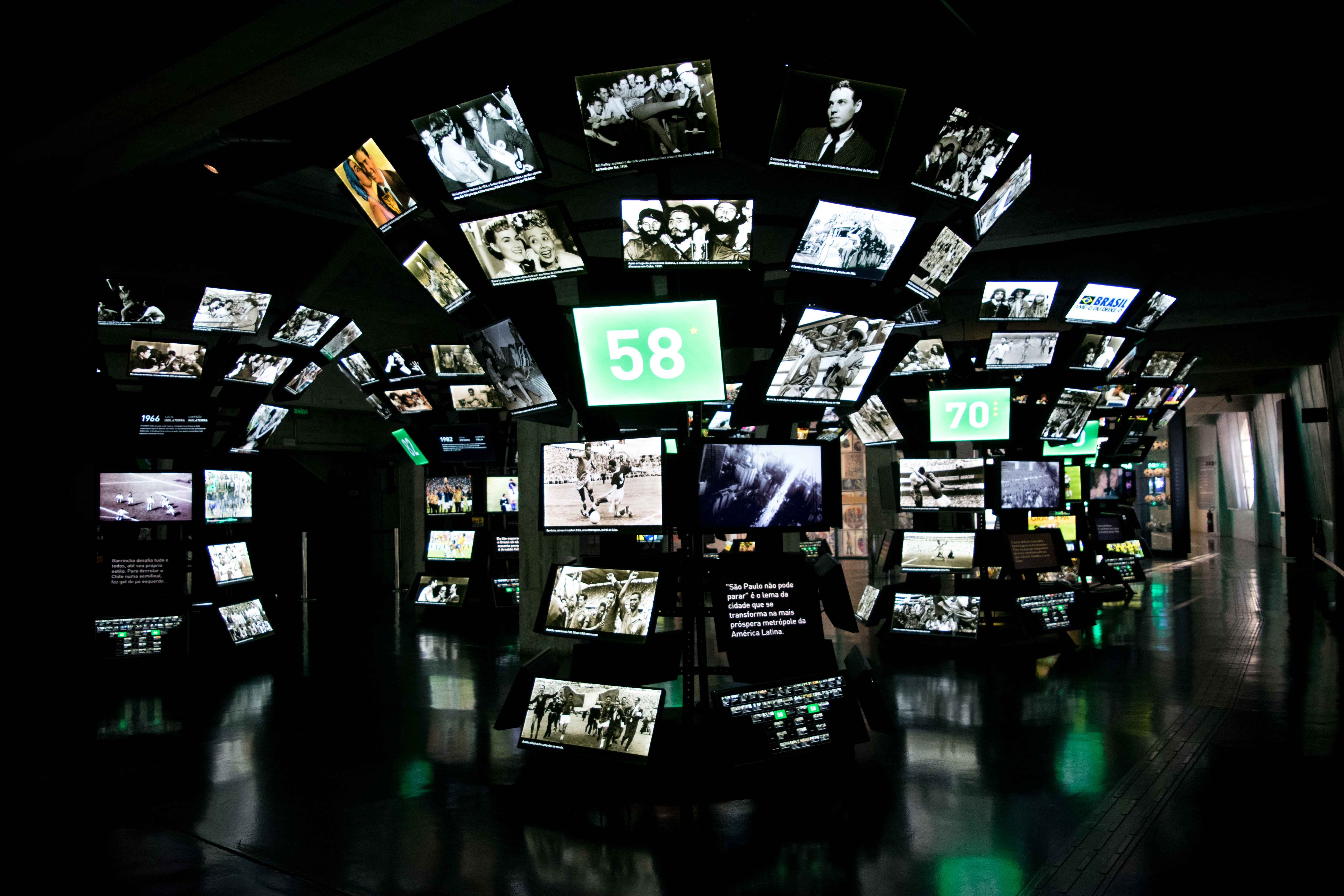
The Museu do Futebol, built into the structure of the historic Pacaembu stadium, traces the cultural and social history of football in Brazil.
Built into the concrete structure beneath the historic Estádio do Pacaembu, the Museu do Futebol is one of the most genuinely interesting museums in São Paulo, regardless of how much you care about the sport itself. It treats football as a lens for Brazilian social history — covering race, class, politics, and national identity through the story of the game.
The exhibits are interactive and well-designed, mixing archival footage, photography, and physical artifacts from the sport’s history in Brazil, including material from the 1950 World Cup final played at the Maracanã. Even visitors with no interest in football tend to come away impressed by how the museum is put together.
Entry costs around R$20–30. Allow 90 minutes to two hours. The Pacaembu neighborhood around the stadium is residential and pleasant for a short walk afterward.
5. Spend a Morning at Parque Ibirapuera

Parque Ibirapuera — São Paulo’s answer to Central Park, with museums, a lake, and joggers, families, and street vendors filling its paths every morning.
Ibirapuera is São Paulo’s largest and most important urban park, designed in part by Oscar Niemeyer and Roberto Burle Marx. It’s where the city goes to exercise, relax, and escape the concrete for a few hours — joggers circle the main lake from early morning, and on weekends the park fills with families, cyclists, and street performers.
Several of the city’s best museums sit on the park grounds, including the Museu Afro Brasil and the Oca, a distinctive domed exhibition space. The Bienal pavilion, also by Niemeyer, hosts major art exhibitions throughout the year.
Rent a bike at one of the stations near the entrance if you want to cover more ground — the park is large enough that walking the whole thing takes a couple of hours.
6. Walk Through Liberdade
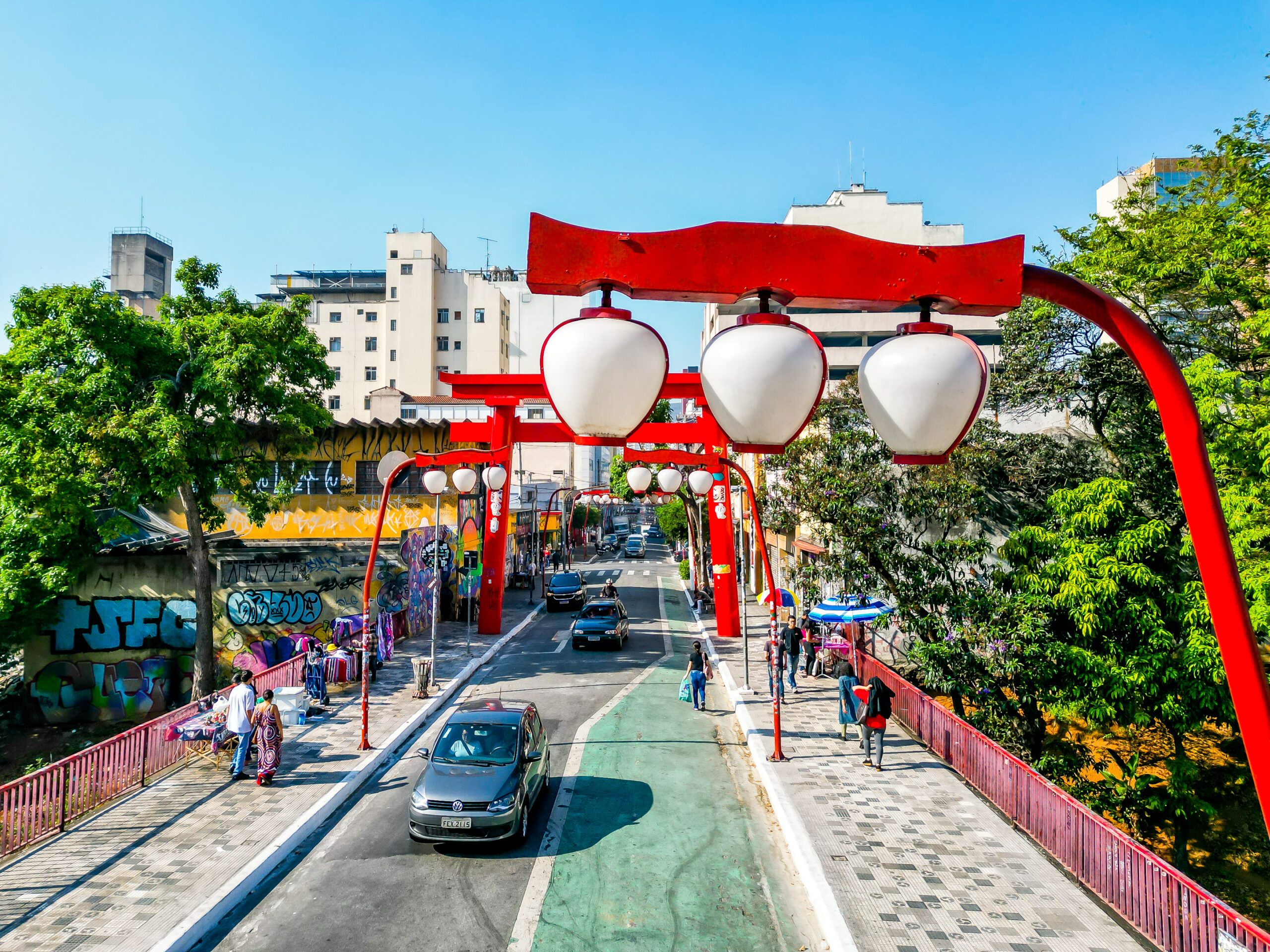
Liberdade — home to the largest Japanese community outside Japan, with red lanterns lining the main street and one of the best food markets in the city on weekends.
Liberdade is the center of São Paulo’s Japanese community — the largest concentration of Japanese descendants outside Japan, a legacy of immigration that began in the early 20th century. The neighborhood’s main street is lined with red lanterns, torii-style gates, and a dense cluster of Japanese, Korean, and Chinese restaurants.
On weekends, the Feira da Liberdade takes over the main square with food stalls selling yakisoba, takoyaki, and other Asian street food, alongside crafts and small performances. It’s one of the most atmospheric weekend markets in the city and worth timing your visit around if possible.
The neighborhood also has the Museu da Imigração Japonesa, a small but well-curated museum tracing the history of Japanese immigration to Brazil — useful context for understanding why this particular corner of São Paulo looks and feels the way it does.
Deciding where to base yourself in São Paulo? See our full neighborhood and hotel guide.
Where to Stay in São Paulo →Practical Notes
- São Paulo is enormous — group activities by neighborhood rather than trying to cover the whole city in a day. Centro, Avenida Paulista, and Liberdade pair well together; Vila Madalena and Pinheiros pair well separately.
- The metro is the most reliable way to move between neighborhoods. Traffic on the surface streets, especially during rush hour, can turn a 15-minute trip into an hour.
- Museums and the Mercado Municipal are best visited on weekdays to avoid the largest crowds.
- Sunday is the single best day to be on Avenida Paulista, when the street closes to traffic.
- For more on getting around safely, see our São Paulo safety guide.