
Best Time to Visit Salvador, Brazil

Salvador sits on the coast of Bahia with warm temperatures year-round — but the seasons make a real difference to your experience.
Salvador has a tropical climate with warm temperatures all year, so there’s no truly bad time to visit in terms of weather. The real variables are rainfall, crowds, and prices — and these shift significantly depending on when you go.
The best time to visit Salvador depends on what you’re after. This guide breaks it down by season, month, and traveler type so you can make an informed decision.
Quick Answer
The best months to visit Salvador are September through January. This is the dry season — temperatures are warm, rainfall is low, and the beaches are at their best. December and January are peak months with higher prices, but the weather is reliably good.
If you want good weather and lower prices, September and October are the sweet spot. The rains haven’t arrived, crowds are manageable, and accommodation costs less than in December or Carnival.
Seasons Overview
Month by Month
Carnival in Salvador
/i.s3.glbimg.com/v1/AUTH_b0f0e84207c948ab8b8777be5a6a4395/internal_photos/bs/2024/6/w/JwoSNSQfCwxtg06pF10g/carnaval-barra-aerea-foto-valter-pontes-secom24.jpg)
Salvador’s Carnival is built around street blocos and trios elétricos — a completely different experience from Rio.
Salvador’s Carnival is one of the largest in the world and runs for six days, usually in February or early March depending on the year. It’s a completely different event from Rio — less choreographed, more participatory, built around trios elétricos (enormous sound trucks) and blocos that move through the city streets.
The two main circuits are Dodô (Barra to Ondina, along the beachfront) and Osmar (Campo Grande to Praça Castro Alves, through the city center). Most people buy an abadá — the official bloco shirt — which gives you access to the roped-off area around a specific bloco with security and a more controlled environment.
Carnival in Salvador is genuinely worth experiencing once. Just go in knowing it’s loud, crowded, and requires planning. If big crowds aren’t your thing, this is the one week of the year to avoid Salvador entirely.
Festa de Iemanjá — February 2nd
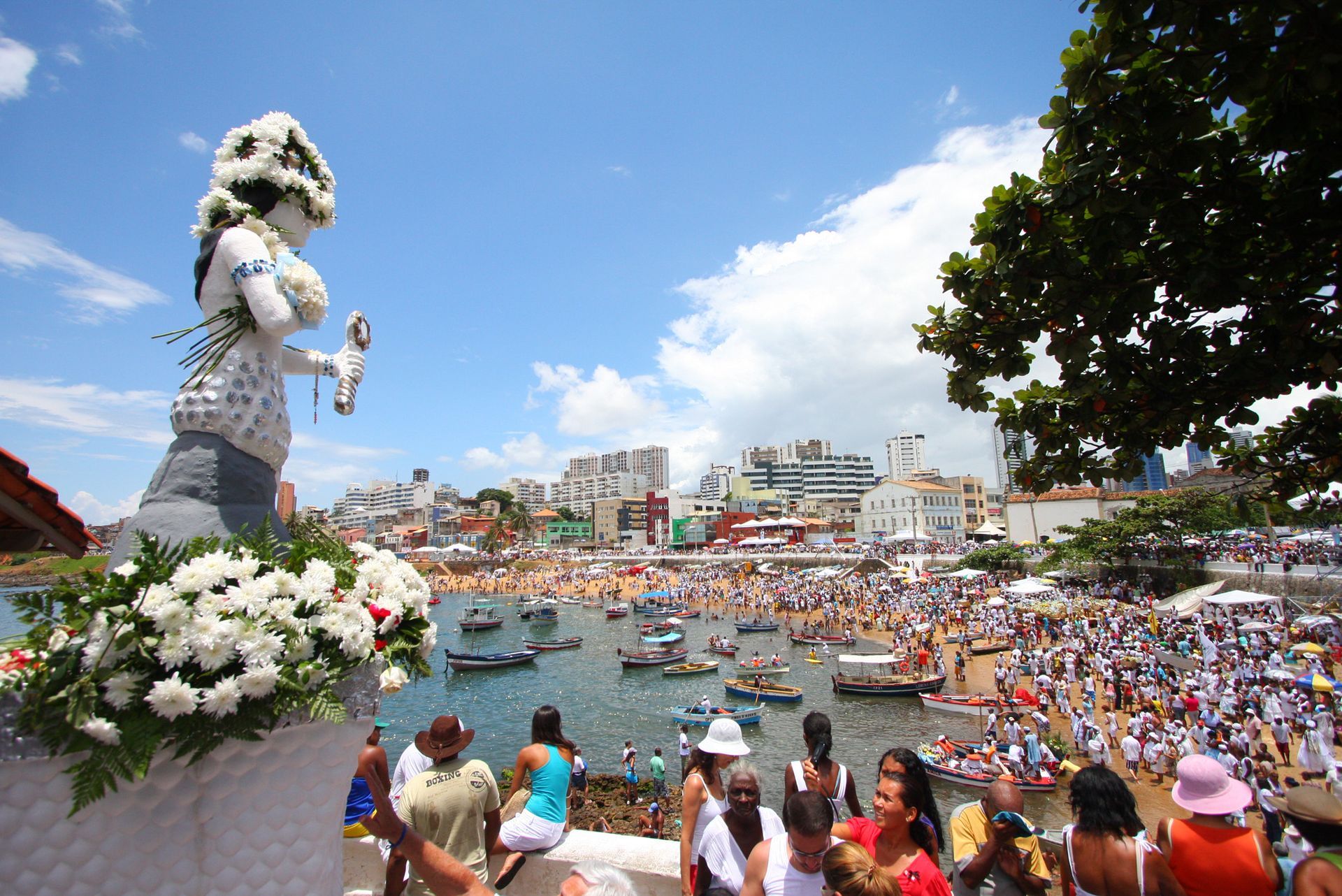
The Festa de Iemanjá draws thousands of people to Rio Vermelho every February 2nd for one of Salvador’s most important cultural events.
The Festa de Iemanjá takes place every February 2nd in Rio Vermelho — one of Salvador’s most important cultural events and one of the most visually striking things you can witness in Bahia.
Iemanjá is the Candomblé deity of the sea. On this day, thousands of people dressed in white carry offerings of flowers, perfume, and food to the beach, where fishing boats take them out into the ocean. The procession starts early in the morning and the beach fills up throughout the day.
It falls just before or during Carnival most years, which means if your trip overlaps with early February, you can potentially see both. February 2nd is worth planning around.
The Rainy Season — What It’s Actually Like
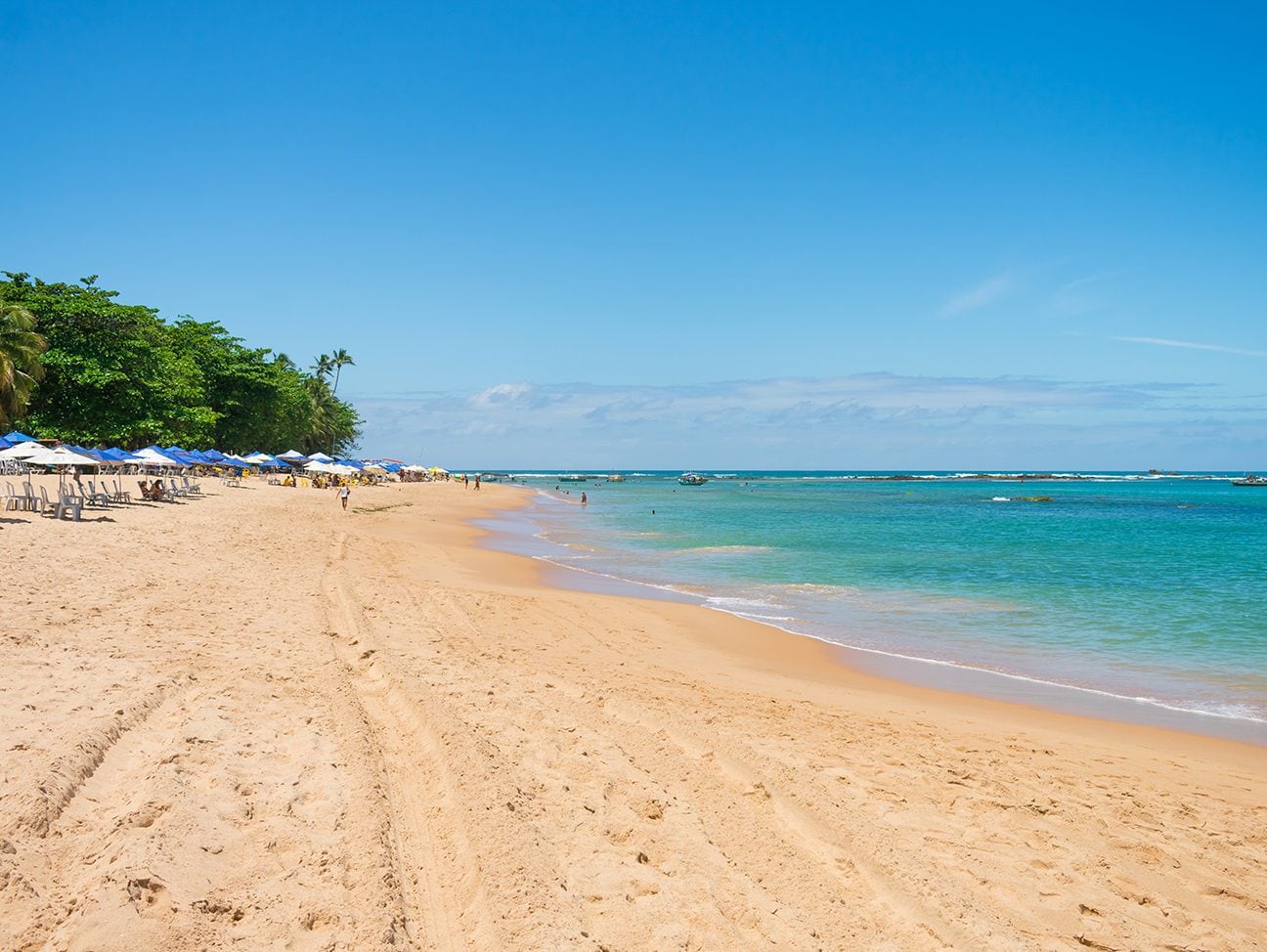
Outside the peak months, Salvador’s beaches are significantly less crowded — and hotel prices drop noticeably.
The rainy season (April–June) gets a bad reputation but it’s worth understanding what it actually means in practice. Salvador doesn’t get constant grey drizzle — it gets heavy tropical downpours, usually in the afternoon, that can last 1–3 hours and then clear up.
Mornings are often perfectly sunny. The issue is predictability — you can’t plan a full beach day with confidence. Museums, Pelourinho, food tours, and cultural activities work fine in the rain. Beach trips don’t.
The upside is real: hotel prices are at their lowest, Pelourinho is far less crowded, and you get a more authentic version of the city without the tourist density of December or Carnival.
Best Time by Traveler Type
- Beach focus: September–November. Dry, warm, and not yet at peak prices.
- Budget travelers: April–June for lowest prices, or March immediately after Carnival.
- Carnival experience: February — but book 3–4 months ahead for everything.
- Culture and history: Any time. Pelourinho and the museums work year-round. Rainy season is fine.
- Avoiding crowds: September–October or March. Avoid December–January and Carnival week.
- Families: October–November. Good weather, manageable crowds, and no Carnival chaos.