
How Much Does It Cost to Visit Rio de Janeiro?
Rio de Janeiro costs less than most major cities in Europe or North America — but it’s not as cheap as many travelers expect. How much you spend depends heavily on where you stay, how you eat, and which activities you choose. This guide breaks down real numbers across every budget so you can plan before you arrive.
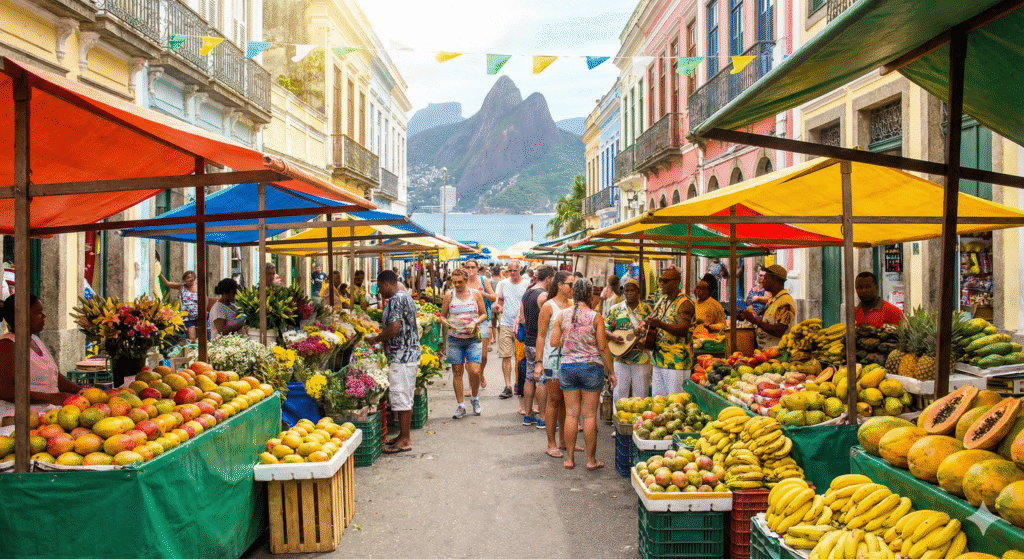
Local markets and street food in Rio — eating like a local keeps costs low without sacrificing quality.
How Much Does Rio de Janeiro Cost? — Daily Summary
Here’s a quick overview of what to expect at each budget level before we break down the details.
| Category | Budget | Mid-range | Luxury |
|---|---|---|---|
| Accommodation | $30–60 | $80–180 | $200–500+ |
| Food | $15–25 | $30–60 | $80–200+ |
| Transport | $5–10 | $10–20 | $20–50 |
| Activities | $10–20 | $30–60 | $80–200+ |
| Daily total | $60–100 | $150–300 | $400+ |
Accommodation Costs in Rio de Janeiro
Accommodation is usually the biggest variable in your Rio budget. The South Zone — Ipanema, Copacabana, Leblon — is where most tourists stay, and prices reflect the location.
Hostels in Botafogo and Copacabana. Dorm beds from $15–25. Private rooms in guesthouses from $40–60. Quality varies — read recent reviews before booking.
Good 3-star hotels in Copacabana and Ipanema. Breakfast often included. The most practical range for most travelers visiting Rio.
Beachfront hotels in Ipanema and Copacabana. The Copacabana Palace starts around $400/night. Grand Hyatt in Barra from $250.
Food and Drink Costs in Rio de Janeiro
Eating like a local is significantly cheaper than eating at tourist-facing restaurants. The gap between the two is bigger in Rio than in most cities.
Budget eating — $5–15 per meal
The most practical option for lunch is the kilo restaurant (restaurante por kilo) — you fill a plate and pay by weight. Expect to pay R$30–60 ($6–12 USD) for a solid lunch with meat, rice, beans, salad, and juice. These are everywhere in Rio and used by locals daily.
Kilo restaurants are the most practical and affordable lunch option in Rio — pay by weight, eat like a local.
Mid-range — $15–40 per meal
Sit-down restaurants in Ipanema and Leblon. A main course typically runs R$50–100 ($10–20 USD). Add drinks and tip and a dinner for two lands around $50–80 USD total.
Upscale — $50–150+ per meal
Rio has serious fine dining, particularly in Leblon and Ipanema. Budget $80–150 per person for a full dinner with wine at the better restaurants.
Drinks
Beer at a bar: $2–4 USD. Caipirinha: $4–8 USD. Coconut water on the beach: $2–3 USD. Coffee at a padaria (bakery): $1–2 USD.
Transport Costs in Rio de Janeiro
Uber is the most practical transport option for tourists and is very affordable by international standards. The metro covers the main tourist corridor and is worth using for short daytime trips.
Uber
Short trips within the South Zone (Ipanema to Copacabana): $3–5 USD. Medium trips (Ipanema to Santa Teresa or Lapa): $8–12 USD. Longer trips (South Zone to Barra da Tijuca): $15–25 USD.
Metro
Single ticket: R$5.80 (~$1.15 USD). The metro covers Ipanema, Copacabana, Botafogo, and downtown. Fast, safe, and cheap for daytime travel within those areas.

Rio’s metro is clean, safe, and covers the main tourist areas — the cheapest way to move between Ipanema, Copacabana, and downtown.
Activities and Attractions — What Things Cost in Rio
Some of Rio’s best experiences are free. The beaches, viewpoints, and neighborhood walks cost nothing. The main paid attractions are worth it — but book in advance to avoid selling out.
| Activity | Cost (USD) |
|---|---|
| Christ the Redeemer (cog train + entry) | $35–40 |
| Sugarloaf Mountain (cable car) | $30–35 |
| Maracanã Stadium tour | $15–20 |
| Hang gliding (Pedra Bonita) | $100–130 |
| Favela tour (guided) | $30–60 |
| Beach (Copacabana, Ipanema, Leblon) | Free |
| Chair + umbrella rental on beach | $4–8 |
| Selaron Steps | Free |
| Vista Chinesa viewpoint | Free |
| Mirante Dona Marta viewpoint | Free |

Copacabana beach is free — one of the best things in Rio costs nothing to enjoy.
Daily Budget Examples for Rio de Janeiro
Budget traveler — $60–100/day
Hostel dorm in Botafogo or Copacabana ($20–30), kilo restaurant for lunch ($8), street food or supermarket for dinner ($10), metro and Uber ($8), one free activity (beach, viewpoint). Total: around $60–80 per day.
Mid-range traveler — $150–250/day
3-star hotel in Copacabana or Ipanema ($100–150), sit-down lunch and dinner ($40–60), Uber for most transport ($15–20), one paid activity like Sugarloaf ($30–35). Total: around $185–265 per day.
Luxury traveler — $400+/day
Beachfront hotel in Ipanema ($250–400+), restaurant dinners in Leblon ($80–150 per person), private transfers ($40–80), guided tours. Easily $500–700/day once everything adds up.
Money Tips for Visiting Rio de Janeiro
ATMs
Use ATMs inside banks or shopping centers only — never standalone machines on the street after dark. Banco do Brasil, Bradesco, and Itaú are the most reliable for international cards. Withdrawal fees typically run R$15–30 per transaction.
Card payments
Most restaurants, hotels, and shops accept Visa and Mastercard. Beach vendors, street food stalls, and smaller local places are cash only. Bring small bills (R$10–50) for daily use.