
Where to Stay in Rio de Janeiro
Where to stay in Rio de Janeiro depends on two things: your budget and how you want to experience the city. The South Zone — Ipanema, Leblon, Copacabana — is where most tourists land, and for good reason. But it’s not the only option, and it’s not always the right one. This guide breaks down each neighborhood honestly so you can make the right call.

The Copacabana Palace — one of Rio’s most iconic hotels, facing the beach directly on Avenida Atlântica.
Best Areas to Stay in Rio de Janeiro
Rio’s tourist accommodation is concentrated in the South Zone. Most first-time visitors do well staying in Ipanema or Copacabana — both are close to the beach, well-connected, and have a wide range of hotels at different price points. Below is a breakdown of each neighborhood worth considering.
Ipanema
The most practical base for most visitors. Ipanema puts you within walking distance of the beach, good restaurants, and easy Uber access to the rest of the city. The neighborhood is upscale without being sterile — there’s real street life, local bars, and a mix of residents and tourists.
Hotels here lean mid-range to luxury. Budget options are limited. If price is a concern, Copacabana gives you more choices for less money just one neighborhood over.

The Marina Palace in Leblon — one of the best mid-to-luxury options in the South Zone with direct beach access.
Leblon
The quietest and most upscale of the South Zone beach neighborhoods. Leblon has fewer tourists than Ipanema, better restaurants, and a calmer atmosphere. It’s a good choice if you want to be close to the beach but prefer a more local feel.
The hotel options are fewer but generally higher quality. It’s not a budget destination — expect to pay a premium for the relative calm and location.
Copacabana
The most tourist-dense neighborhood in Rio, with the widest range of accommodation. You’ll find everything from basic guesthouses to five-star hotels on the beachfront. The iconic Copacabana Palace sits right on Avenida Atlântica facing the beach.
The tradeoff is atmosphere — Copacabana is louder, more crowded, and has more street vendors than Ipanema. During the day it’s fine. At night, stick to the well-lit main streets and avoid quiet side streets, particularly away from the beach.

A beachfront hotel in Copacabana — the neighborhood has the widest range of accommodation in Rio at every price point.
Botafogo
A residential neighborhood between the beach areas and downtown, Botafogo has grown into one of the best value-for-money places to stay in Rio. It’s popular with expats, has a good local food and bar scene, and is well-connected by metro.
The beach here isn’t suitable for swimming — it faces the bay rather than the ocean. But Copacabana is 10 minutes by metro, and Uber to Ipanema takes about 15 minutes. For a longer stay where you want to feel less touristy, Botafogo is a smart choice.
Santa Teresa
A hillside neighborhood above downtown with cobblestone streets, art galleries, and some of the most characterful small hotels in Rio. If you want atmosphere over convenience, Santa Teresa delivers. Boutique guesthouses and converted colonial houses are the standard here.
The downside is access. Santa Teresa has no metro station. Getting to the beaches requires Uber every time — about 20–30 minutes depending on traffic. At night, don’t walk alone through darker streets. Stick to the main areas around Largo do Guimarães.
Barra da Tijuca
A modern, car-dependent neighborhood about 40 minutes from Ipanema. Barra has large shopping malls, long beaches with less crowds, and more spacious accommodation for the price. It’s where many Brazilians from Rio live — less touristy, more suburban.
Not recommended for first-time visitors on a short trip. Without a car or frequent Uber rides, getting around is awkward. The beach is good and less crowded, but the neighborhood lacks the walkability and atmosphere of the South Zone.
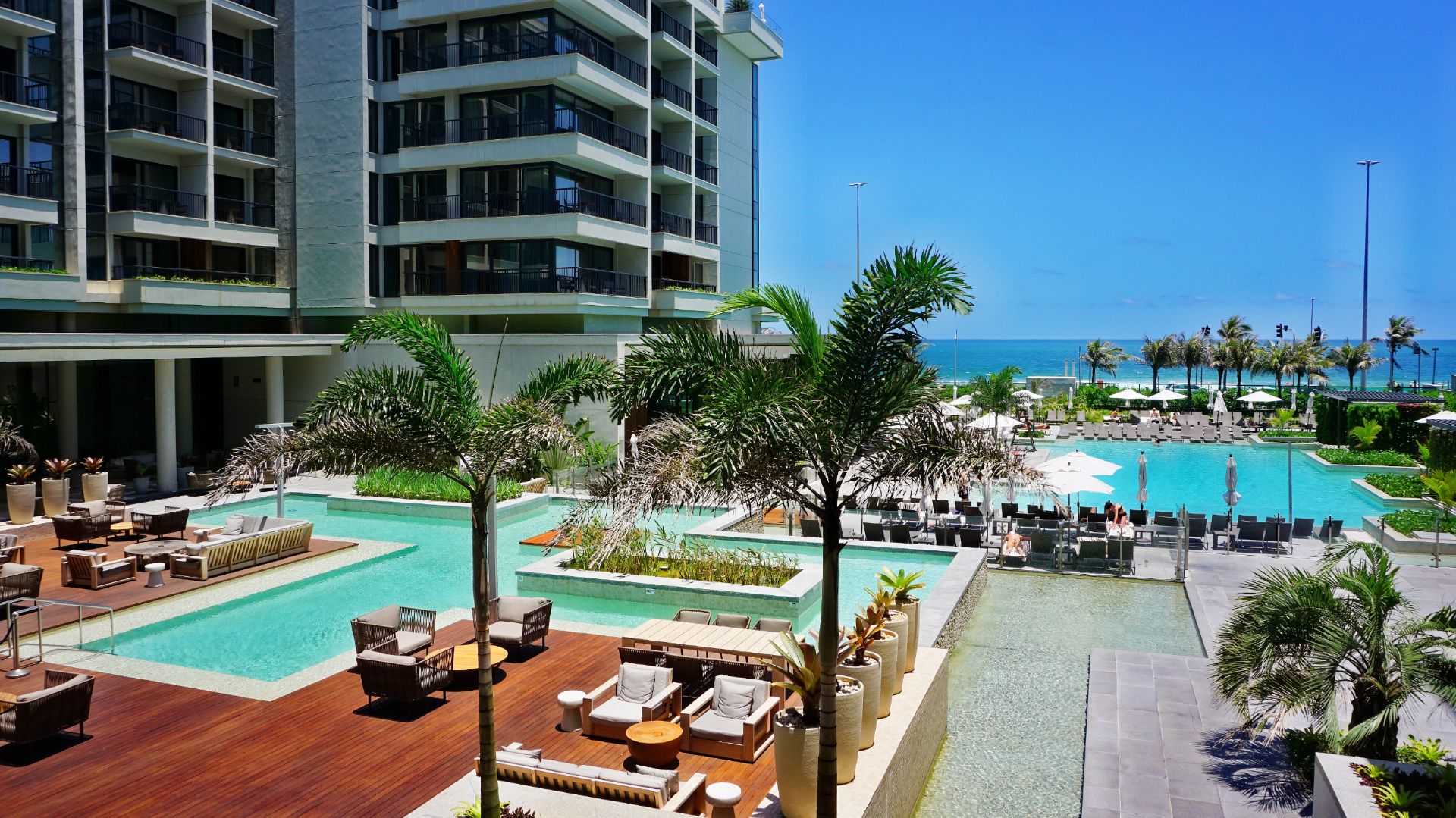
The Grand Hyatt Rio de Janeiro in Barra da Tijuca — a top luxury option away from the South Zone crowds.
Where to Stay in Rio de Janeiro — By Budget
Here’s a quick breakdown of what to expect at each price level across Rio’s main tourist neighborhoods.
Hostels and basic guesthouses. Best areas: Botafogo, Copacabana. Expect shared bathrooms at the lower end, private rooms available from ~$50.
Good 3-star hotels and boutique guesthouses. Best areas: Copacabana, Ipanema, Santa Teresa. Private rooms, breakfast often included.
4 and 5-star hotels. Best areas: Ipanema, Leblon, Copacabana beachfront, Barra. The Copacabana Palace and Grand Hyatt are the benchmarks.
Areas to Avoid When Booking in Rio
FAQ — Where to Stay in Rio de Janeiro
Is Ipanema or Copacabana better for first-time visitors?
Ipanema is generally the better choice — cleaner beach, calmer streets, and a slightly more upscale atmosphere. Copacabana is fine and offers more budget options, but requires a bit more caution at night. If price is a factor, stay in Copacabana and spend your days at Ipanema beach, which is easy to reach on foot or by metro.
Is it safe to stay in Santa Teresa?
Yes, during the day. Santa Teresa is a popular choice for tourists who want character and atmosphere over convenience. At night, use Uber instead of walking alone through less-lit streets, especially if you’re returning late. The main tourist areas around Largo do Guimarães are generally fine.
How far in advance should I book hotels in Rio?
For regular travel, 4–6 weeks ahead is enough. For Carnival, New Year’s Eve, or major football matches at Maracanã, book 3–6 months in advance. Prices spike sharply during those periods and good options sell out fast.
Are there good budget options in Rio?
Yes. Botafogo has the best concentration of well-run hostels and budget guesthouses. Copacabana also has affordable options, especially a few blocks back from the beach. Avoid the cheapest options in unfamiliar neighborhoods — location matters more in Rio than in most cities.