
Best Beaches in Brazil: The Complete Guide
Brazil has over 7,000 kilometers of coastline and more good beaches than most travelers will ever see. This guide cuts through the list and focuses on the ones that are genuinely worth the trip — with honest context on water quality, crowds, access, and what makes each one different.

Porto de Galinhas, Pernambuco — natural reef pools and clear water make it one of the most photographed beaches in Brazil.
Top 3 Quick Picks
If you want a straight answer before reading the full guide, here are the three beaches that consistently rank at the top for international visitors.
Northeast Brazil Beaches
The Northeast is where Brazil’s beach reputation was built. The combination of warm water year-round, consistent sunshine from September to February, and dramatic coastal scenery makes it the country’s premier beach region. Most international visitors who come specifically for beaches end up here.
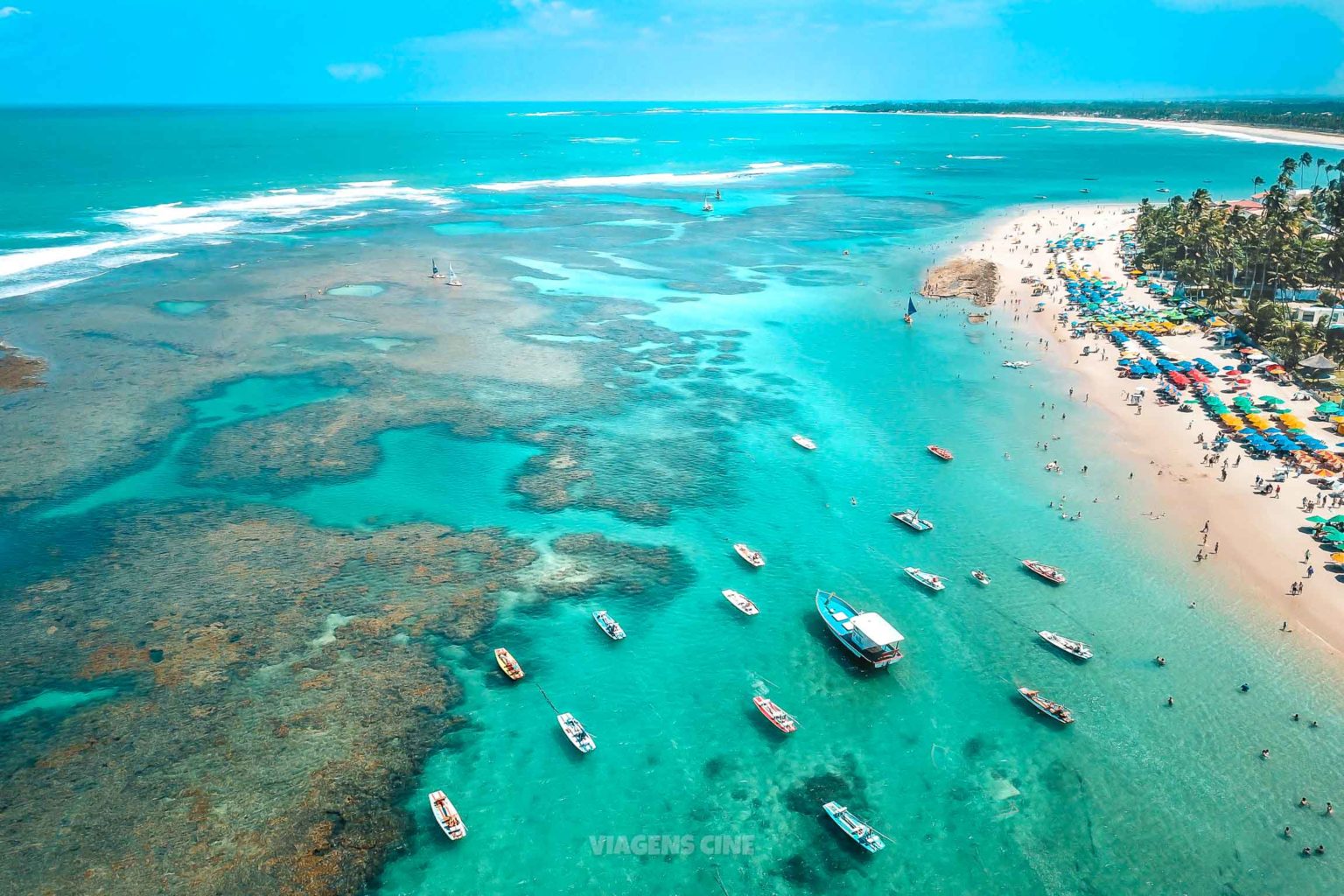
The natural pools at Porto de Galinhas — formed by offshore reefs at low tide, with calm, warm, clear water.
Porto de Galinhas
Porto de Galinhas is the most famous beach in the Northeast and for good reason. Offshore reefs create natural pools at low tide — warm, clear, calm water that you wade into on traditional jangada rafts. The pools have good visibility and are safe for children and non-swimmers.
The town has grown considerably around its beach tourism, with hotels, restaurants, and full tourist infrastructure. It can be crowded, especially on weekends and during Brazilian school holidays. Go early in the morning and on weekdays if you can.
The easiest way to visit from Recife is a guided day trip on GetYourGuide — transport included, jangada ride to the reef pools, and a guide who times the visit around low tide.

Porto de Galinhas Day Trip from Recife
- ✔ Hotel pickup included
- ✔ Jangada ride to the natural reef pools
- ✔ Local guide included
- ✔ Free cancellation
Morro de São Paulo
Morro de São Paulo sits on the island of Tinharé, off the southern coast of Bahia. It’s car-free, has no roads, and its beaches are numbered — First, Second, Third, Fourth — each with a different character. The Second Beach is the most lively with beach bars and music. The Fourth is quieter and more isolated.
The journey from Salvador takes about 2.5 hours by ferry or catamaran. Most people stay at least one night — it’s worth it. You can also visit as a day trip — GetYourGuide has organized trips with transport included, which is the most practical option if you want to avoid figuring out the ferry schedule yourself.
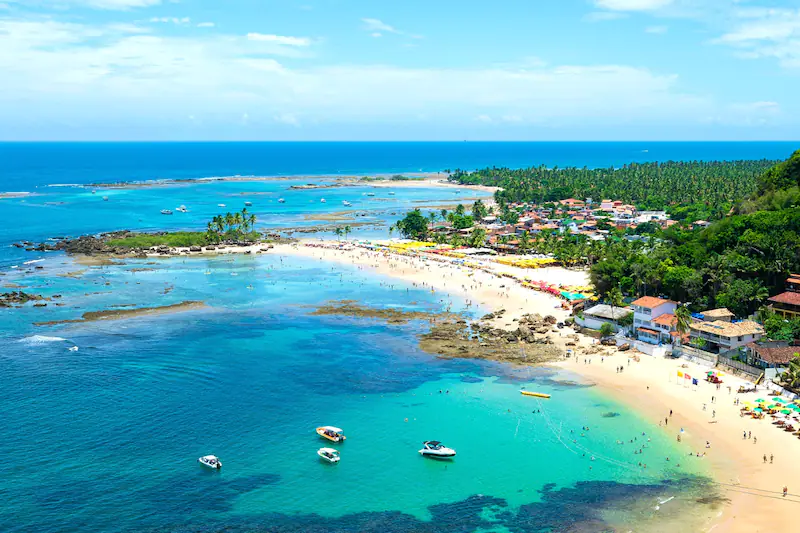
Morro de São Paulo — car-free island off the coast of Bahia, with clear water and beaches that get progressively quieter the further you walk from the village.
Jericoacoara
Jericoacoara — known as Jeri — is unlike any other beach destination in Brazil. Sand dunes run into the ocean, freshwater lagoons appear behind the beach, and the village itself has no paved roads. Electricity came relatively recently. It’s remote by design and that’s the point.
The main activities are watching the sunset from the dune, kitesurfing (Jeri is one of the best kitesurfing spots in the world), and finding a hammock at one of the lagoons. The ocean itself is rough — swimming is better in the lagoons like Lagoa Paraíso and Lagoa Azul.
Getting there requires a 4×4 transfer across sand tracks from the nearest town — you can’t drive a regular car. That barrier keeps the crowds manageable.
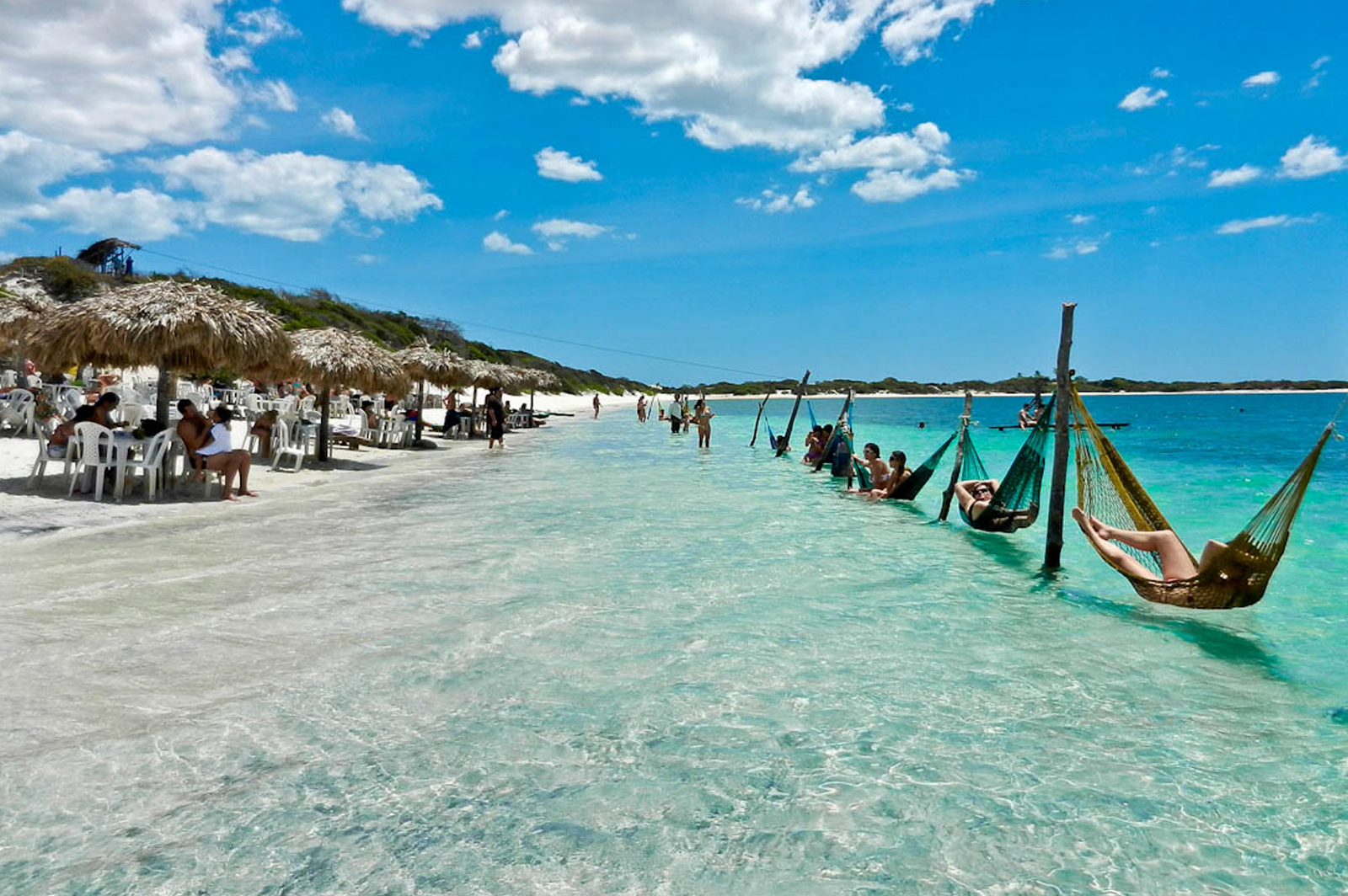
Jericoacoara — sand dunes, no paved roads, and one of the best sunsets in Brazil from the top of the main dune.
Pipa
Pipa is a cliff-top beach town with a consistent mix of beautiful beaches and a well-developed infrastructure. The main beach (Praia do Centro) is backed by the town itself. Praia do Amor and Praia das Minas are accessible by walking along the cliffs at low tide or by boat.
Dolphins are frequently spotted in the bay — there’s a protected area where they come close to shore regularly. It’s not a guarantee, but it happens often enough that it’s worth mentioning.
BahiaPraia do Forte
Praia do Forte is a village north of Salvador with a long beach, calm water, and a turtle conservation project (Tamar) that has been protecting sea turtle nesting sites on this stretch of coast since the 1980s. You can visit the Tamar project and, at the right time of year, watch turtle releases.
The village is well-organized and quiet. A good option if you want something more relaxed than Salvador but don’t want to travel as far as Morro de São Paulo.
Southeast Brazil Beaches
The Southeast — primarily Rio de Janeiro state — has a different character from the Northeast. The scenery is dramatic rather than tropical, with mountains coming down to the sea and clear Atlantic water. Less consistently sunny but often more striking.

Ilha Grande — car-free, covered in Atlantic Forest, with beaches only accessible on foot or by boat.
Ilha Grande
Ilha Grande is a car-free island about two hours from Rio de Janeiro by bus and ferry. The island is almost entirely covered by Atlantic Forest — one of the most biodiverse ecosystems on the planet — and its beaches are only accessible on foot or by boat. That’s the reason to go.
Lopes Mendes is considered one of the most beautiful beaches in Brazil — a long, wild sweep of sand with clear water that requires a 3km walk through forest to reach. Praia do Aventureiro is even more isolated and requires either a boat or a full-day hike.
If you only have one day, a boat trip from Rio to Ilha Grande on GetYourGuide is one of the most popular day trips from the city — transport included with stops at the best beaches and snorkeling spots along the coast.
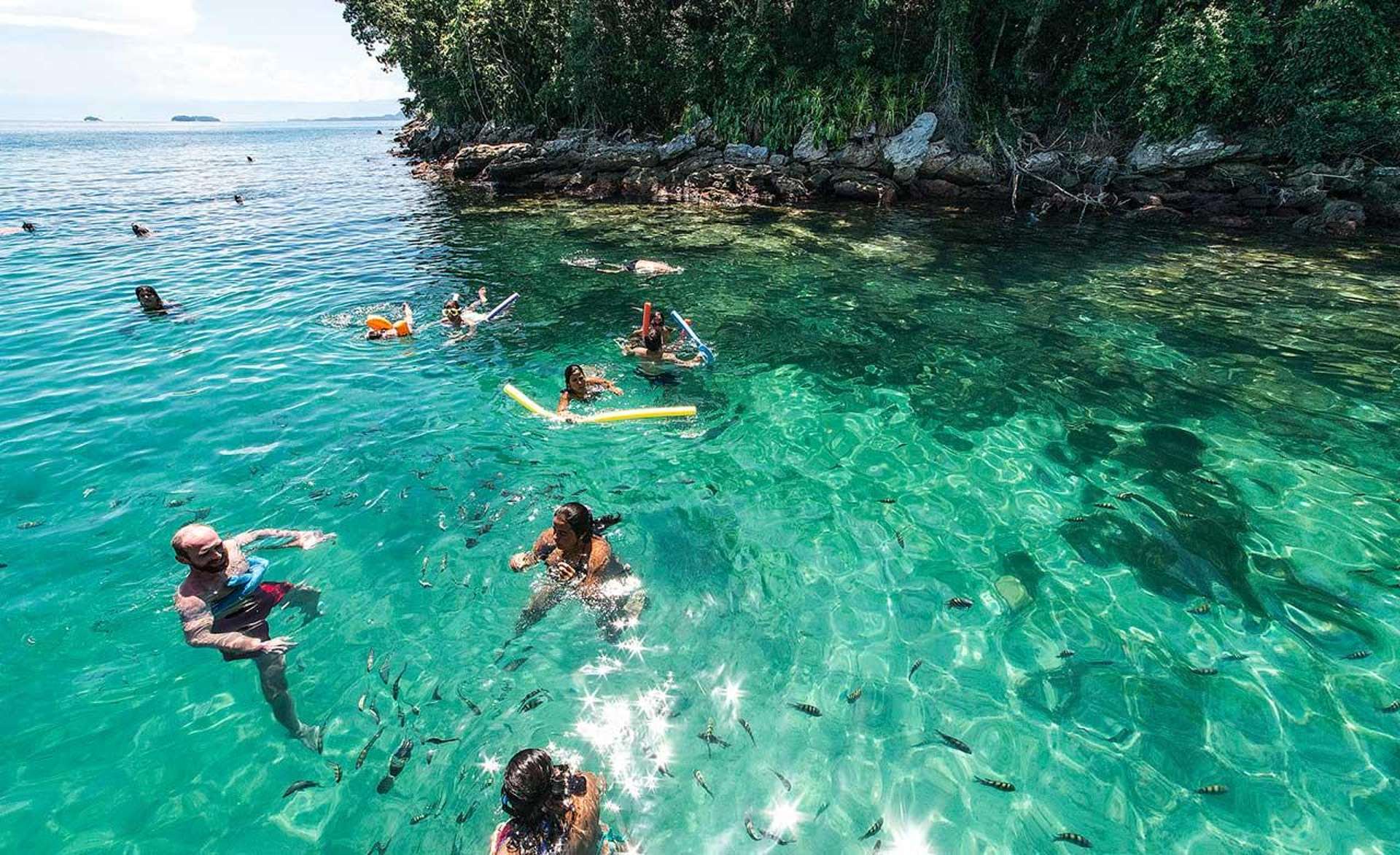
Ilha Grande Boat Trip from Rio de Janeiro
- ✔ Transport from Rio included
- ✔ Stops at the best beaches
- ✔ Snorkeling along the coast
- ✔ Free cancellation
Arraial do Cabo
Arraial do Cabo has some of the clearest water in Brazil — a cold, bright blue that’s unusual on the Brazilian coast. The town sits on a peninsula where Atlantic currents bring cold, nutrient-rich water that creates exceptional visibility for snorkeling and diving.
Praia do Farol and Praia das Conchas are the standouts. Both require a short boat trip from the main beach and that’s part of the experience. The water temperature is noticeably colder than the Northeast — worth knowing before you go.
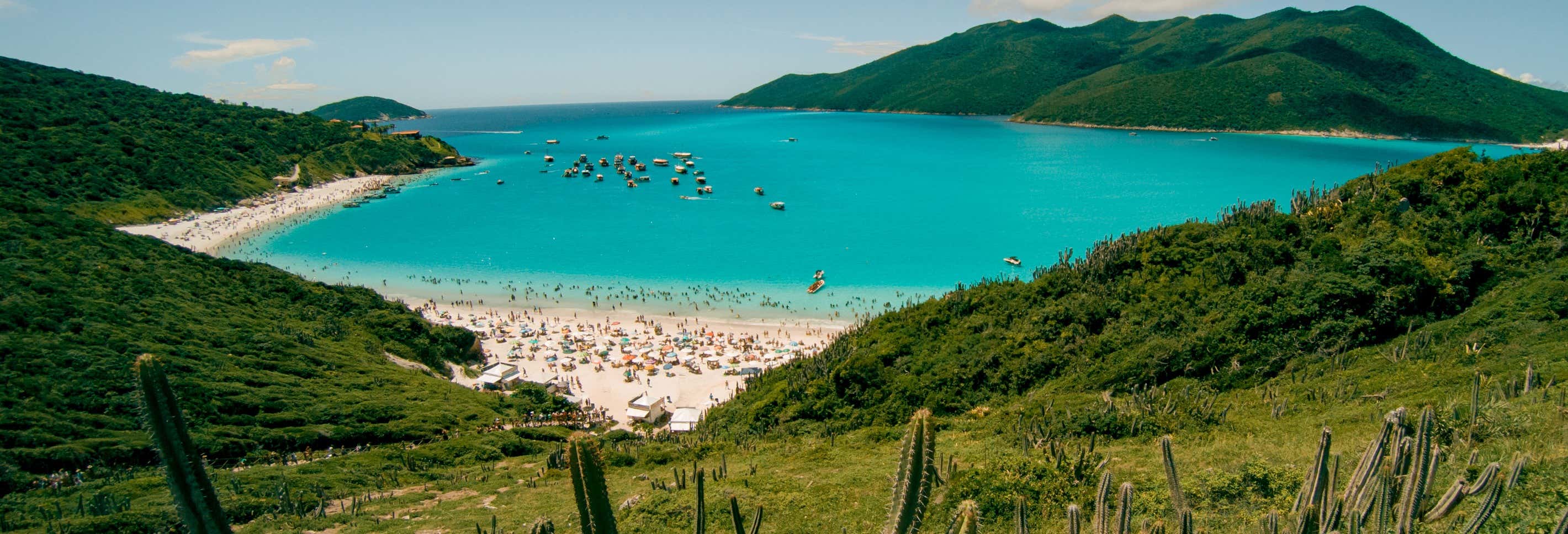
Arraial do Cabo — some of the clearest and coldest water on the Brazilian coast, with snorkeling visibility that rivals the Caribbean.
Búzios
Búzios is a peninsula with 27 beaches, a cobblestone main street, and a reputation as one of the most sophisticated beach resorts in Brazil. Brigitte Bardot famously visited in the 1960s and the town has been trading on that association ever since. The beaches on the calm bay side are best for swimming; the ocean-facing beaches have stronger waves.
It’s more upscale and more expensive than most Brazilian beach destinations. Worth it if you want the infrastructure — good restaurants, boutique hotels, and easy access from Rio.
South Brazil Beaches
South Brazil’s beaches are different from everything above. The water is colder, the scenery is greener, and the towns are more European in character — reflecting the German and Italian immigration that shaped the region. The best season is December to March, which coincides with Brazilian summer holidays and higher prices.

Florianópolis — an island city with 100 beaches ranging from busy urban stretches to remote surf spots backed by Atlantic Forest.
Florianópolis
Florianópolis is an island city with over 100 beaches. The variety is the point — from the surfing beaches of Joaquina and Praia Mole to the calm, family-friendly water of Lagoa da Conceição, to the remote, almost untouched beaches of the north coast.
Praia da Lagoinha do Leste is considered one of the most beautiful beaches in the South — accessible only by a 3km hike or by boat. Worth the effort.
January and February are extremely crowded — this is where Argentines and Uruguayans come for summer. If you want Florianópolis without the crowds, December or March are better windows.
Santa CatarinaBombinhas
Bombinhas is a small peninsula with some of the clearest water in the South. The coves on the eastern side — particularly Praia de Quatro Ilhas — have visibility that’s unusually good for Atlantic coast beaches. The town is small, the beaches are well-maintained, and it’s significantly less crowded than Florianópolis.
Best Beach for Your Type of Trip
Best Time to Visit Brazil’s Beaches
| Region | Best months | Avoid | Notes |
|---|---|---|---|
| Northeast (Ceará, Rio Grande do Norte) | Sep – Feb | Mar – Aug | Rainy season Apr–Aug. Best sunshine Sep–Feb with consistent trade winds. |
| Northeast (Bahia, Pernambuco) | Sep – Mar | Apr – Aug | Bahia has a milder rainy season. Still warm but more overcast May–August. |
| Southeast (Rio de Janeiro state) | May – Oct | Dec – Mar | Summer is hot and rainy. Dry season May–Oct has better conditions. Ilha Grande is good year-round. |
| South (Santa Catarina) | Dec – Mar | Jun – Aug | Southern winter is cold. Beach season runs December to March — which is also the most crowded period. |
Practical Tips for Brazil Beach Travel
Getting between beaches
Brazil is a large country. The distance between Porto de Galinhas (Pernambuco) and Jericoacoara (Ceará) is over 1,000km — a full day of travel even by flight. Plan your trip around one region rather than trying to cover the whole coast. Most international visitors do better spending a week in the Northeast than rushing between three regions in the same time.
Safety at the beach
Don’t bring valuables to any Brazilian beach. Phone, cards, and jewelry stay at the hotel. Bring only small bills for drinks and snacks. Beach theft is opportunistic and common — a towel and sunscreen is all you need on the sand.
Sunscreen
Brazil is close to the equator and UV intensity is extreme. SPF 50 minimum, applied before you arrive at the beach and reapplied every 90 minutes. Even on overcast days, UV levels are higher than most international visitors expect.
Tides matter
At Porto de Galinhas, Boa Viagem, and many Northeast beaches, the experience changes completely between high and low tide. Check tide times before any beach day — many of the reef pools only appear at low tide.