
Recife Travel Guide
Brazil’s Venice — a city of bridges, beaches, and one of the most distinctive cultures in the Northeast.
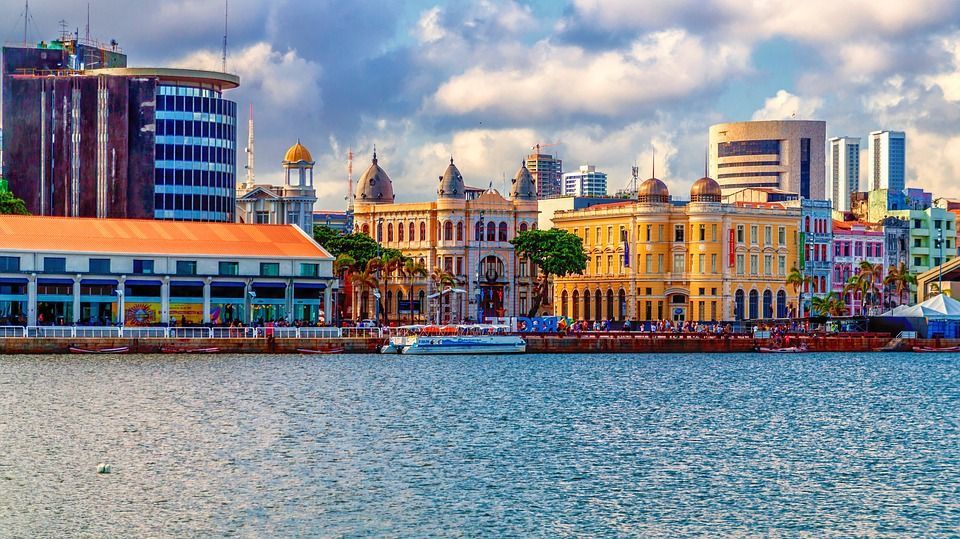
Recife Antigo — the restored historic island district where the city began, with Dutch colonial buildings along the old port waterfront.
About Recife
Recife is the capital of Pernambuco state and the largest city in Brazil’s Northeast. Built across a series of islands connected by more than 50 bridges, it earned the nickname “Brazil’s Venice” — though the city itself would probably describe that comparison as an understatement.
The historic district of Recife Antigo sits on one of those islands, with restored colonial buildings, a lively bar scene, and one of the best weekend markets in the Northeast. Just a few kilometers north, the hillside town of Olinda — a UNESCO World Heritage Site — is technically a separate city but functions as Recife’s cultural twin.
Recife’s Carnival is one of the most distinctive in Brazil. It’s built around frevo, a fast-paced, acrobatic music and dance style that originated here, and maracatu, a percussion-heavy Afro-Brazilian tradition. Louder, more chaotic, and arguably more authentic than the more famous carnivals further south.
Why Visit Recife
Top Things to Do in Recife

Recife Antigo
The restored historic island district. Go on a weekend night when the bars and live music are in full swing. Marco Zero square is the symbolic center of the city.

Olinda
Walk the cobblestone streets, visit the baroque churches, and stop at one of the many art studios. The view of Recife’s skyline from the top of Olinda is worth the climb alone.
Boa Viagem Beach
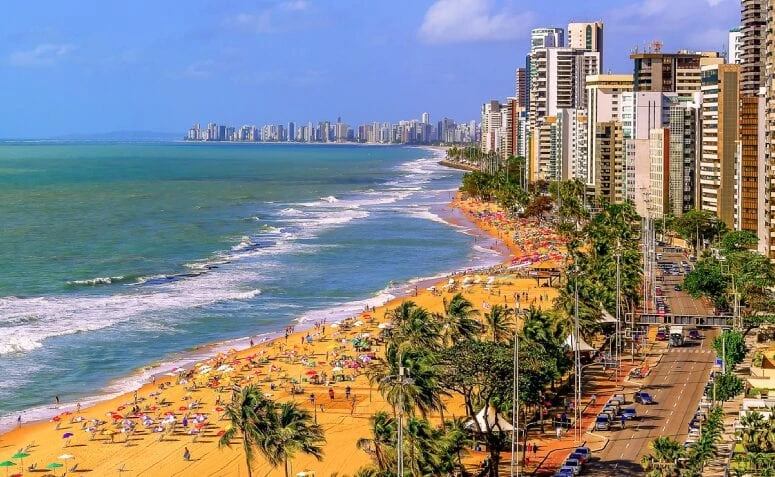
The main urban beach in Recife. A natural reef runs parallel to the shore, creating calmer water closer to the beach. Stay inside the reef — the shark warning signs are real.
Instituto Ricardo Brennand
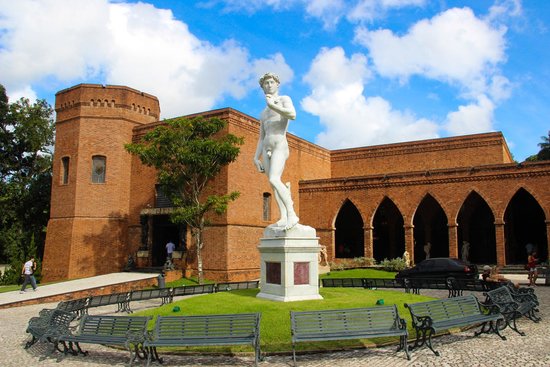
A private museum complex with one of the most impressive art collections in Brazil — including a full medieval castle replica and a gallery of Dutch colonial paintings.

Mercado de São José
The oldest iron market in Brazil, built in 1875. Spices, leather goods, regional food, and local crafts packed into a historic structure. Best visited in the morning.
Porto de Galinhas
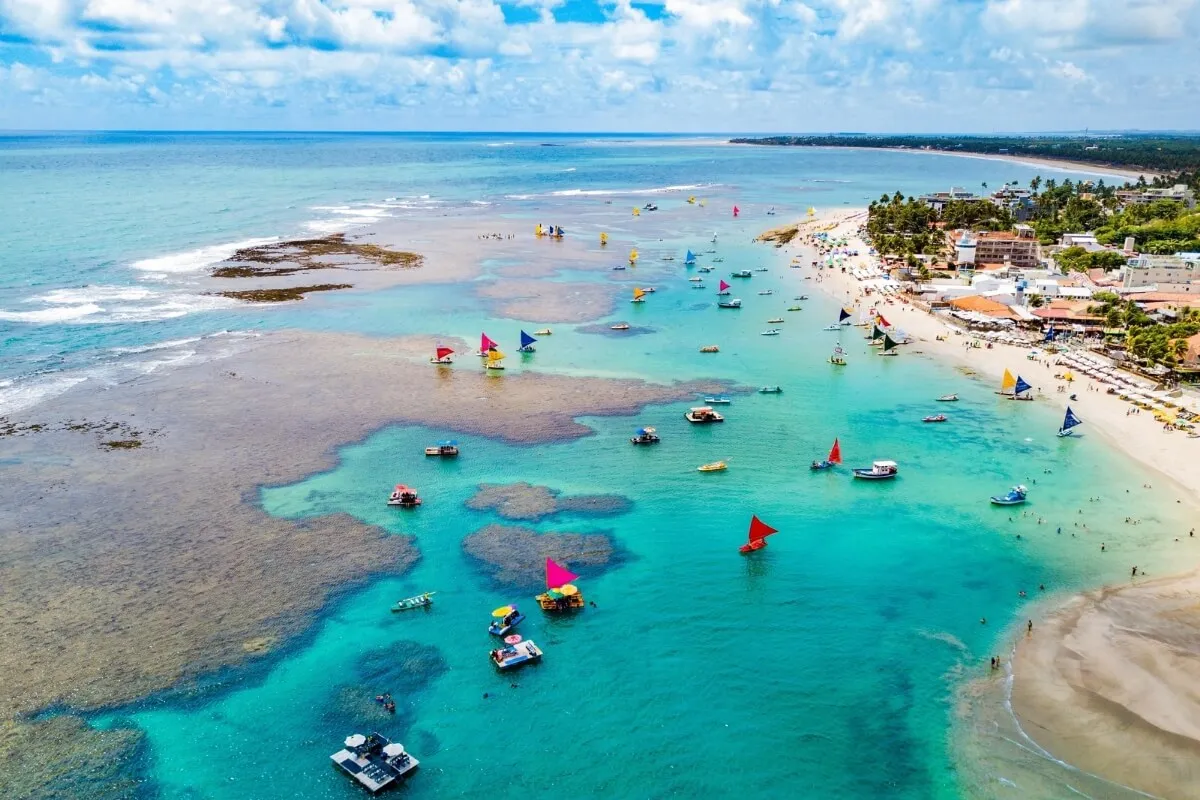
60km south of Recife, with natural tidal pools inside the reef where you can wade among tropical fish. One of Brazil’s most-visited beaches. Go early to beat the crowds.
Best Areas to Stay in Recife
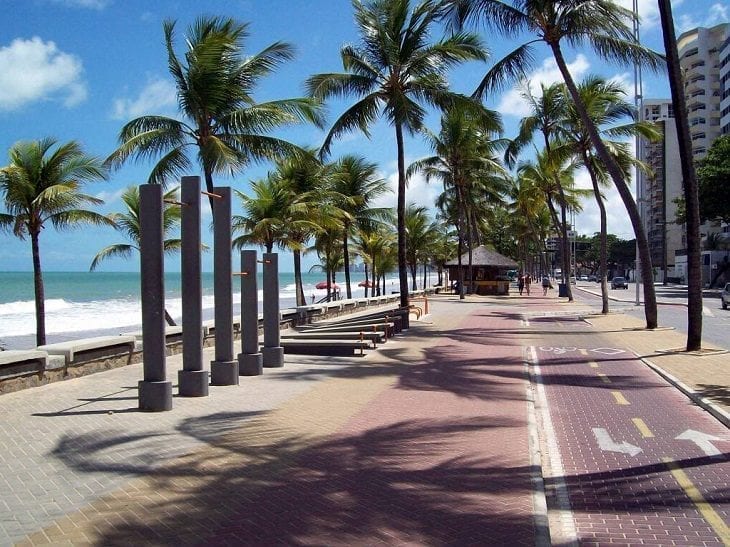
Boa Viagem
The main tourist neighborhood and the most practical base. An 8km beach, wide range of hotels at all prices, good restaurants, and easy access to the rest of the city. Most first-time visitors stay here.
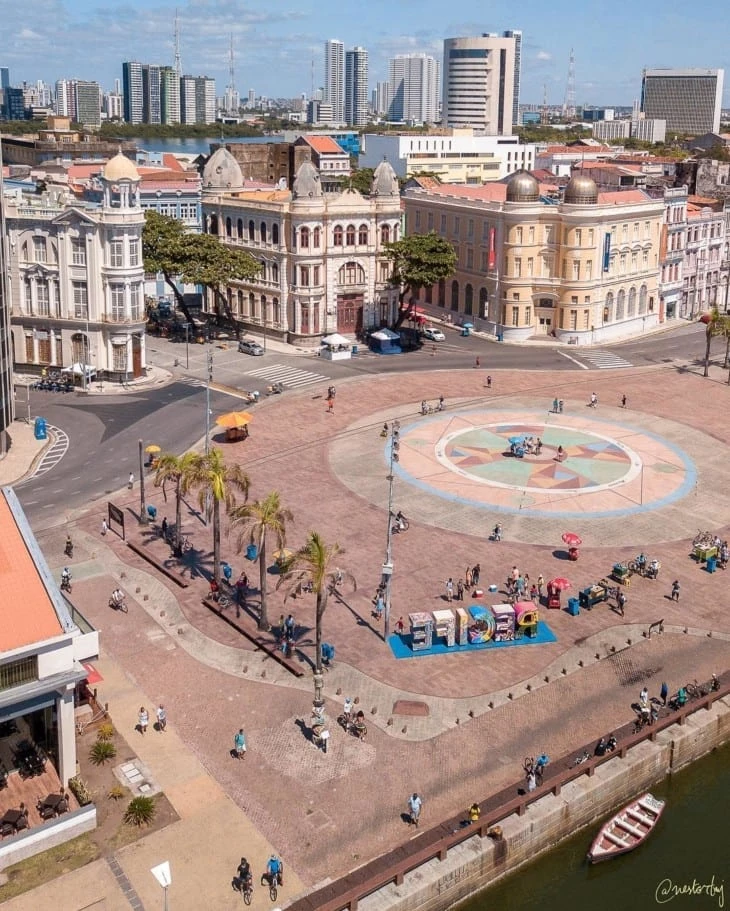
Recife Antigo
Staying in the old city puts you in the middle of the culture and nightlife. Good hostel and budget hotel options. Quieter during the week, very lively on weekends. Less practical for beach access.

Olinda
A short taxi ride from Recife but a completely different atmosphere. Charming pousadas in colonial buildings, cobblestone streets, and a quieter pace. The best option if you want character over convenience.
Best Beaches in Recife
-
Boa Viagem
The main urban beach — 8km of sand with a natural reef offshore. The reef creates calmer water near the shore but stay inside it. Shark attacks have occurred outside the reef and the risk is real.
-
Porto de Galinhas
60km south of Recife, with natural tidal pools inside the reef where you can wade among tropical fish. One of Brazil’s most photographed beaches. Worth a full day trip — go early to beat the crowds.
-
Praia dos Carneiros
About 110km south of Recife, this beach has calm, clear water and coconut palms right on the shore. Less developed than Porto de Galinhas and better for people who want quiet over infrastructure.
Is Recife Safe?
Recife has one of the higher crime rates among Brazilian cities, which already have higher crime rates than most of the world. That’s the honest context. Most tourists visit Boa Viagem and Olinda without incident — but this requires real awareness, not just luck.
How Much Does It Cost to Visit Recife?
Best Time to Visit Recife
FAQ About Recife
QIs Recife worth visiting or should I just go to Porto de Galinhas?
Both. Porto de Galinhas is a day trip from Recife — most visitors use the city as a base and go to the beach from there. Recife itself has Olinda, Recife Antigo, and a food scene worth two or three days on its own.
QHow do I get from Recife airport to Boa Viagem?
Recife’s Guararapes International Airport is about 10 minutes from Boa Viagem by Uber — one of the most convenient airport locations in Brazil. Expect to pay R$20–35 ($4–7). There are also buses but Uber is much easier with luggage.
QIs it safe to swim at Boa Viagem?
Inside the reef, yes — the water is calm and relatively safe. Outside the reef, no. Recife has a documented history of shark attacks in the deeper water beyond the reef. Follow the local signs and advice without exception.
QHow do I get to Porto de Galinhas from Recife?
By bus from the Recife bus terminal (TI Integrado), the trip takes about 90 minutes and costs around R$15–20 ($3–4). Many hotels organize day trips for R$80–150 per person including transport.
QHow many days do I need in Recife?
Two days covers Recife Antigo, Olinda, and Boa Viagem. Add a third day for Porto de Galinhas. Four to five days if you want to explore more beaches south of the city.
QWhat’s the difference between Recife and Olinda?
They’re neighboring cities separated by about 6km. Recife is the large, modern capital with urban beaches and a business center. Olinda is a hillside colonial town with a completely different atmosphere — slower, more artistic, and UNESCO-listed. Most visitors see both.
Final Tips for Recife
- Don’t skip Olinda. It’s 15 minutes from Boa Viagem by Uber and a completely different world — colonial, artistic, and one of the best half-days in the Northeast.
- Go to Recife Antigo on a Friday or Saturday night. The weekend street scene around Marco Zero is when the neighborhood comes alive.
- Book Porto de Galinhas early in your trip, not at the end. It’s the highlight for most visitors and you don’t want bad weather to be your last memory of Recife.
- Eat tapioca for breakfast at least once. The local version — filled with cheese, coconut, or carne de sol — is nothing like what you find elsewhere in Brazil.
- Stay inside the reef at Boa Viagem. The shark warning signs are not decoration. This applies to every visit, every time of day.
- Visit the Instituto Ricardo Brennand even if you’re not an art person. The medieval castle alone is worth the trip and most visitors are genuinely surprised by how good it is.
- If you’re visiting during Carnival, base yourself in Olinda. The street Carnival there — with giant puppets, frevo bands, and the whole town spilling into the cobblestone streets — is one of the most extraordinary things in Brazil.