
Best Time to Visit Recife, Brazil
Recife is a year-round destination, but the experience varies significantly depending on when you go. The city sits close to the equator, so temperatures stay warm throughout the year — the main variable is rain. Get the timing right and you’ll have dry days, good beaches, and lower prices. Get it wrong and you’ll spend a week dodging heavy afternoon downpours.
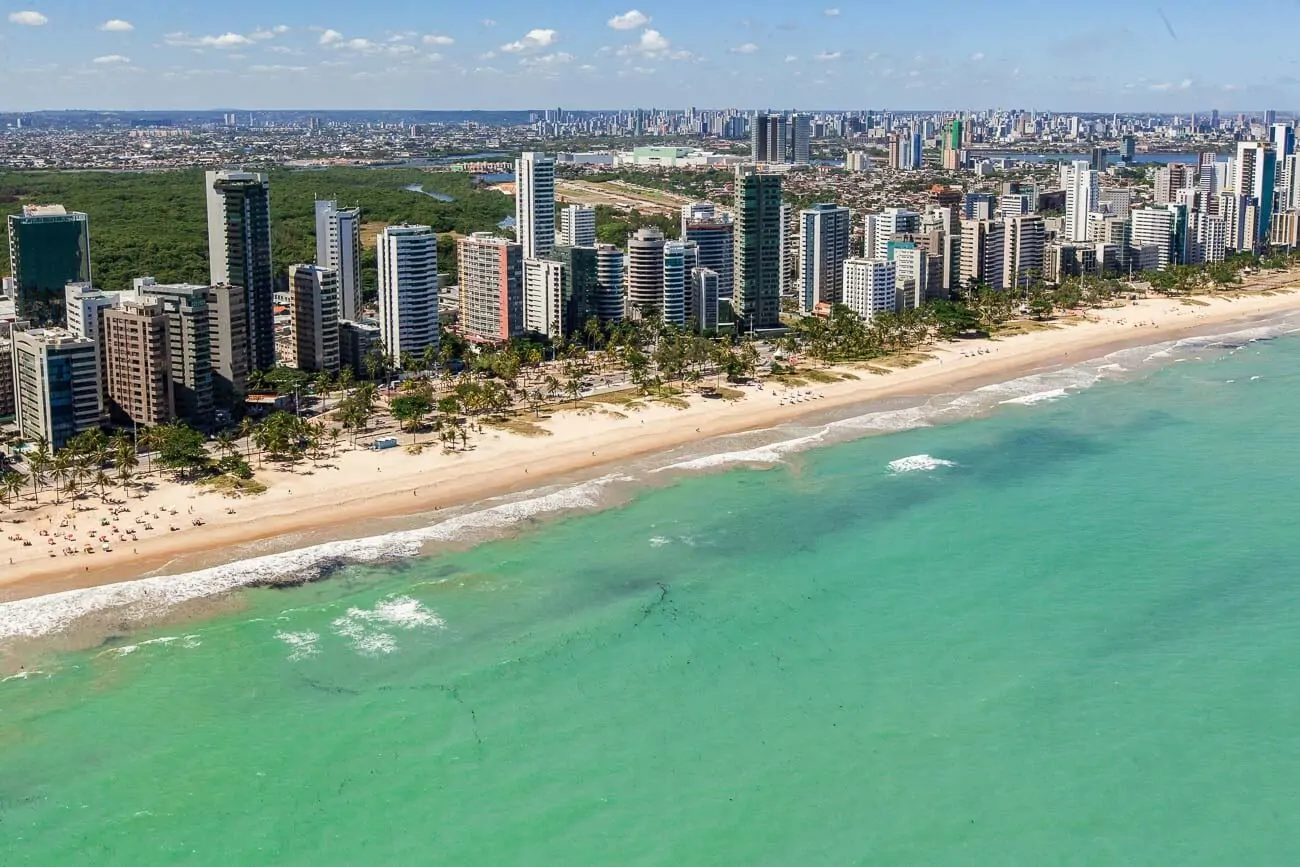
Recife’s dry season — September through February — brings consistently sunny days, calm seas, and the best conditions for beach trips and day tours.
The Two Seasons
Recife has a tropical climate with two distinct seasons — dry and wet. Unlike cities further south in Brazil, there’s no real “cold” season. Temperatures sit between 26–32°C (79–90°F) year-round. What changes is how much it rains and how often.
September to February
Low rainfall, sunny days, good sea conditions. Best time for beaches and day trips. December and January coincide with Brazilian summer holidays — expect more domestic tourists and higher prices.
March to August
Recife’s rainy season, with the heaviest rainfall in June and July. Rain typically comes in intense afternoon showers rather than all-day drizzle — mornings are often clear. Prices are lower and crowds thinner.
September and October
Rain decreasing, temperatures pleasant, prices not yet at peak. Arguably the sweet spot — good weather without December’s crowds and costs.
May to July
Peak of the rainy season. Heavy, frequent rain makes beach days unreliable. Still fine for cultural visits — Recife Antigo, museums, and food are unaffected by rain.
Best Months to Visit
October and November are the overall sweet spot. The rainy season is winding down, prices haven’t climbed to December peaks, and you avoid the heavy domestic tourist traffic of the summer holidays. The sea is calm, the beaches are good, and Recife has a relaxed pace.
September is also excellent — often the first month where you can reliably plan beach days without watching the forecast obsessively. Hotel prices start rising from November onward as Brazilians begin booking summer trips.
December and January bring the best weather of the year but also the most people. Boa Viagem fills up with domestic tourists, prices rise 30–50% above average, and Porto de Galinhas gets genuinely crowded on weekends. If you’re coming from abroad and have flexibility, October or November are better.
February is Carnaval — a completely different kind of trip. If you’re there for the festival, it’s extraordinary. If you’re not, avoid it entirely.
Carnaval in Recife and Olinda

Carnaval in Olinda — giant papier-mâché puppets (bonecos) parade through the narrow colonial streets, followed by enormous crowds and frevo music.
The Recife-Olinda Carnaval is widely considered one of the three best in Brazil alongside Rio and Salvador — and in some ways the most authentic of the three. It takes place in February (exact dates shift each year based on the Catholic calendar) and runs for about a week.
What makes it different: the street parties dominate over ticketed venues. In Olinda especially, the narrow colonial streets fill with people following the giant bonecos — papier-mâché puppets up to 4 meters tall, each one representing a specific character from local culture and history. There are hundreds of them, each with their own following and sound system.
The music is frevo — fast, syncopated, uniquely Pernambucan — and maracatu, an Afro-Brazilian rhythm with deep roots in Recife’s culture. Neither sounds quite like anything from Rio or Salvador.
If you want to come for Carnaval, book accommodation at least three months in advance. Prices double or triple for the period. Stay in Boa Viagem and take rideshares to Olinda and Marco Zero for the main events — trying to stay in Olinda itself during Carnaval is logistically complicated.
São João Festival

São João in Recife — colorful flags, forró music, and street parties that run through all of June across the city.
June is the month of São João — the Northeast’s biggest cultural festival and, for many Brazilians, more important than Carnaval. The entire region celebrates with forró music, quadrilha dances, colorful flags strung between buildings, bonfires, and food specific to the festas juninas tradition: pamonha, canjica, pé-de-moleque, quentão.
Recife and the wider Pernambuco region take São João seriously. Street parties happen throughout the city for the entire month, with the main events concentrated around the weekend of June 23–24 (the eve of São João). The Pátio de São Pedro in the historic center becomes one of the main gathering points.
The catch: June is also deep in the rainy season. The festas happen regardless of weather, but beach days are less reliable. If you’re coming specifically for São João, plan indoor and cultural activities as your primary focus and treat any beach days as a bonus.
Month by Month
Dry, hot, sunny. School holidays bring domestic tourists. Higher prices and busier beaches.
Carnaval month. Extraordinary if you’re there for it. Avoid entirely if you’re not.
Rainy season begins. Increasingly frequent showers. Prices drop after Carnaval.
Rainy season in full swing. Good for cultural visits, less reliable for beaches.
Heavy rain. Cheapest month for hotels. Fine for city sightseeing, poor for beaches.
Peak rain but São João festival dominates. Great cultural experience despite the weather.
School holidays push prices up despite rain. Still possible to have good days.
Rain beginning to ease. Prices moderate. A reasonable time to visit if flexibility is limited.
Dry season begins. Good weather, lower prices, fewer crowds. Excellent overall.
Consistently dry and sunny. Best value month — good weather before peak season prices.
Excellent weather. Prices starting to rise ahead of December. Still good value.
Best weather of the year but busiest and most expensive. Book well in advance.
Quick Answer by Traveler Type
- Beach-focused trip: September to December. October and November are the sweet spot.
- Budget traveler: May or August — cheapest hotels, fewer people, just accept the rain risk.
- Cultural visit (history, food, music): Any time of year. Rain doesn’t affect Recife Antigo, Olinda, or the food scene.
- Carnaval: February only. Book three months ahead minimum.
- São João festival: June, specifically the week of June 23–24.
- Avoiding crowds: September to October, or March to April (accepting rain).
- Families with children: October to November — good weather, no school holiday crowds, activities accessible.